LIST: 25 new Unesco World Heritage Sites added in 2026
MANILA, Philippines — From the beaches where Allied troops landed on D-Day to the legendary home of the Greek gods, Unesco has added 25 new sites to its World Heritage List for 2026.
The new inscriptions were approved during the 48th session of the World Heritage Committee held from July 19-29 in Busan, South Korea, bringing the total number of World Heritage properties around the world to 1,273.
Here’s a look at the newest additions:
Article continues after this advertisement
1. Aalto Works (Finland)
A collection of buildings designed by renowned Finnish architect Alvar Aalto, one of the pioneers of modern architecture.
2. Alamūt Castle and Related Fortifications (Iran)
These mountaintop fortresses once served as strongholds of the medieval Nizari Ismaili state.
3. Amazonia Theaters (Brazil)
Built during the Amazon rubber boom, these grand theaters reflect a period when wealth transformed cities deep in the rainforest.
4. Ancient Buddhist Site of Sarnath (India)
Sarnath is one of Buddhism’s holiest places and is traditionally believed to be where the Buddha first taught after attaining enlightenment.
5. Ancient Capitals of Asuka and Fujiwara (Japan)
The archaeological remains of Japan’s earliest imperial capitals offer a glimpse into the country’s formative years.
Article continues after this advertisement
6. Beaches of the D-Day Landings, Normandy, 1944 (France)
These beaches witnessed the Allied invasion of Nazi-occupied France on June 6, 1944, a defining moment in World War II.
7. Bulwarked Fortresses of the Raia (Portugal)
A chain of fortified towns built to defend Portugal’s border over several centuries.
Article continues after this advertisement
8. Gdynia Modernist City Centre (Poland)
The Polish port city is recognized for its remarkably preserved modernist architecture from the interwar period.
9. Jingdezhen Handicraft Porcelain Industry Sites (China)
For centuries, Jingdezhen has been synonymous with fine porcelain. The newly listed sites trace that long tradition of craftsmanship.
10. Mount Amel Castles (Lebanon)
Five medieval castles in southern Lebanon were inscribed for their historical and military significance.
11. Ribeira Sacra Waterscape (Spain)
Known for steep vineyards, river canyons and centuries-old monasteries, this cultural landscape has long been shaped by people and nature.
12. Rock Mosques and Associated Sacred Sites of Mangystau (Kazakhstan)
Pilgrims have visited these underground mosques and sacred rock-cut sites for generations.
13. Royal Capetian Fortresses of Languedoc (France)
These medieval fortresses strengthened the authority of the French monarchy in the country’s south.
14. Sebastia (Palestine)
The ancient city contains layers of history left behind by civilizations that occupied the area over thousands of years.
15. Silk Roads: Fergana-Syrdarya Corridor (Kazakhstan, Kyrgyzstan, Tajikistan and Uzbekistan)
This transnational listing highlights an important stretch of the Silk Roads that connected people, trade and cultures across Central Asia.
16. Tashkent Modernist Architecture: Modernity and Tradition in Central Asia (Uzbekistan)
The buildings reflect how Uzbekistan’s capital was rebuilt after the devastating 1966 earthquake.
17. Cemetery Complexes of the Xiongnu Nobility (Mongolia)
These burial sites provide insight into the powerful Xiongnu Empire, one of Inner Asia’s earliest nomadic civilizations.
18. Medinas of the Historic Sultanates of the Comoros (Comoros)
The historic towns preserve the islands’ blend of African, Arab and Swahili influences.
19. Roças of São Tomé and Príncipe: Colonial Agricultural System and Forced Migration (São Tomé and Príncipe)
The former plantation estates tell the story of colonial agriculture and the movement of forced labor across the Atlantic.
20. System of Italian-style Condominio Theatres of the 18th and 19th Centuries in Central Italy (Italy)
Unlike most theaters, these were collectively owned by members of the local community.
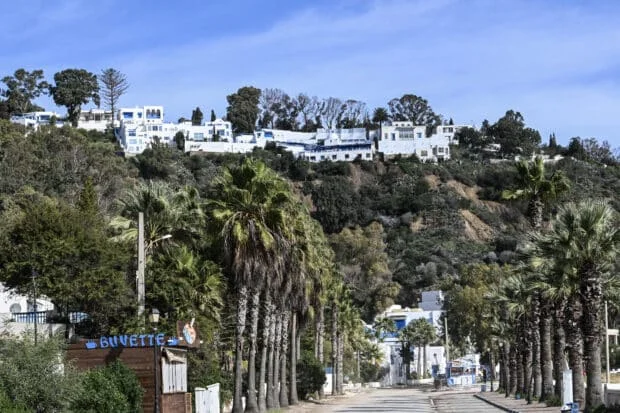
21. Village of Sidi Bou Saïd (Tunisia)
Famous for its whitewashed buildings and blue-painted doors and windows, the village has long attracted artists and visitors overlooking the Mediterranean.
22. Wat Phra Mahathat Woramahawihan (Thailand)
One of Thailand’s most revered Buddhist temples, it remains an important religious and cultural landmark.
23. Aqaba Marine Reserve (Jordan)
Jordan’s only marine reserve protects colorful coral reefs and a rich variety of marine life in the Red Sea.
24. Boma–Badingilo Migratory Landscape (South Sudan)
The protected landscape supports one of the world’s largest wildlife migrations and becomes South Sudan’s first Unesco World Heritage Site.
25. Wider Area of Mount Olympus (Greece)
Steeped in mythology as the home of the ancient Greek gods, Mount Olympus is also recognized for its exceptional biodiversity.
Unesco’s World Heritage List recognizes places considered to have “outstanding universal value” for humanity. Sites may be inscribed for their cultural, natural or mixed significance and are expected to be protected for future generations. /dl