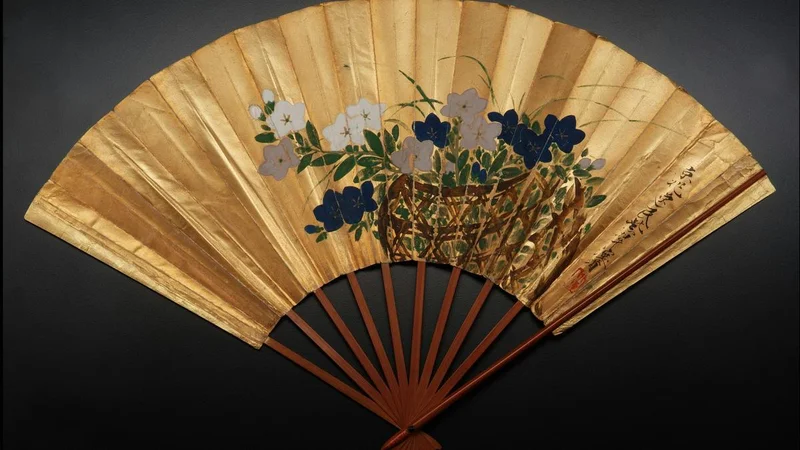
At first glance, it’s just a hand fan. Just a cute little prop for a dance performance, or something you use to cool off in the blazing heat. But every flick of the wrist unfolds a hidden gem. Let us look beyond the pretty designs and uncover how hand fans were used through history.
Fanning origins
The earliest hand fans originated in Ancient China and Egypt. They were either made from feathers, silk, palm leaves, or paper. They were more rigid, and flat, (as opposed to the folding fans we see today) and were used mostly for ceremonial purposes.
Folding fans were not invented until 8th Century Japan. They were called sensu.
Eventually, they made their way to Europe in the 16th Century via trade routes with East Asia. They would become a very popular accessory among women in the 18th and 19th centuries.
While they are replaced with electric, motor-driven hand fans today, the traditional ones are still in fashion today, although not as much as they used to be.
Fans for the fans
A necessity first
Using hand fans to cool off isn’t exactly a new thing. The practice of beating the heat with a few flicks of the wrist dates back 6,000 years ago. But, the fan served some other purposes around the world.
In Egypt, massive semi-circular fans decorated with ostrich feathers at the end were used by rulers. Sure enough, they were fanned by their servants. Some servants also used fans on pharaohs. Not just to keep them cool, but also to swat flies away.
In Korea, the hand fans were categorised into two types. Danseon (fans which were flat and rigid), and jeopseon (folding fans). They cooled people off, and shielded them from the sun as well.
In India, hand fans were called pankhas, and like in many other places, they were used to fan royalty in courts and deities in temples. Today, they are a localised handicraft, with each state having their own style.
In Japan, fans were used in warfare. Each fan differed for a different rank in the army. Gunsen fans were used by average warriors to cool off. Tessen fans were used by samurai as a weapon in places where swords or other weapons were not allowed. Gunbai fans were used by high-ranking officers. They were open and solid, and were used to ward off arrows, provide shade, and signal troops.
Sometimes, fans were used in the kitchen, like fanning a flame during cooking. This was commonly seen across Ancient Europe.
A fan-tastic canvas
The pretty pictures and intricate calligraphy you see on fans are the works of artisans and poets of ancient China. The folding fans we see today developed and were popularised in the Ming dynasty. Then during the mid-Ming dynasty, the tradition of painting on fans was the height of its popularity. This popularity would be maintained into the Qing dynasty.
During these two eras, it was a popular tradition to exchange folding fans with calligraphy and landscapes painted on them as gifts of friendship among the literati (scholars), especially in the Jiangnan area of China.
Performance prop
Aside from the stunning landscapes and calligraphy to paint, fans were used in other arts as well, like dance and theatre. You may be familiar with those bright red fans in flamenco dancing, but Japan also uses the fan in traditional dance forms like Nihon Buyo, Jiuta Mai, and Bon Odori. They are also used by geishas (traditional Japanese artisans who were skilled in music, dance, and poetry), and in theatre.
These fans often added extra drama and flamboyance to a performance.
Love language
Did you know that in the Victorian era, people flirted with each other using fans! Unbelievable, right?
This interesting method of fan flirting emerged in the courts of France in the 18th Century. It was mostly used by the elites to convey their emotions without breaking strict societal protocol. Here are some commonly used gestures and what they mean, as seen from an excerpt of Cassell’s Magazine in 1866. You can try them too.
Open wide – “Wait for me.”
Twirling it in the left hand – “We are being watched.”
Drawing the fan across the cheek — “I love you.”
Closing it harshly — “I wish to speak to you”
Dropping (not on the floor, that’s unclassy!) — “I want to be just friends.”
How to open a folding fan
There are multiple ways to open a folding fan. We’ll show you two well-known ways in this mini-demo: the basic open, and the dancer’s open.
The basic open: Grip the fan where it pivots. Place your thumb on the outermost stick, and your forefinger or middle finger on the other side. Gently nudge the sticks apart in opposite directions. Make sure you maintain the grip on the fan.
The dancer’s open:This style offers for a more dramatic snap, like a dancer. Hold the base firmly with your dominant hand. Let one end of the fan drop and flick the wrist swiftly.
A mark of high society
We’ve already gone through fans being used by the royalty. In many cultures, fans were often a symbol for someone of high society, showing wealth, rank, and social taste. Fans were made from expensive materials like silk, ivory, lace, feathers, and mother-of-pearls, making them luxury items. Fans were also a part of royal and societal etiquette, and women in the 18th and 19th centuries were trained to use them as a non-verbal method of communication. Many paintings of that era depict women holding fans in certain gestures.
In fact, Joseph Addison, the publisher of a daily publication called The Spectator in London, famously wrote an essay titled “The Exercise of the Fan”, in which he wrote about how women used fans like men used swords. He also jokingly proposed establishing an academy for women to train them in the proper handling and discipline of a fan.
At the end of a day, hand fans teach us how small things can have a huge impact on society.
Published - July 30, 2026 11:21 am IST