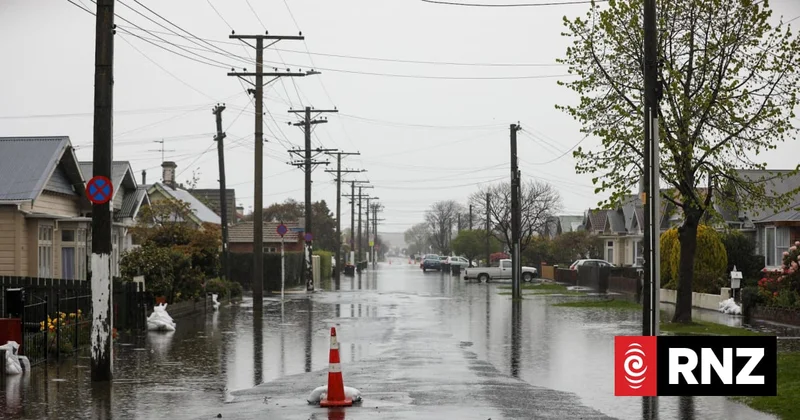
The Dunedin City Council is considering what short-term infrastructure improvements to make in flood-prone South Dunedin.
The council announced it was developing an infrastructure investment package for the area over the next 30 years to protect it from flooding and the effects of climate change.
The plan was expected be put to councillors in December.
The Otago Regional and Dunedin City councils had been considering three possible scenarios for long-term fixes under the South Dunedin Future programme - ranging from raising land and pumping water, creating wetlands and canals, and shifting out of harm's way.
A major managed retreat was not on the table, but between 1100 and 1700 properties might need to be bought to make way for specific public works, land raising or new green spaces.
The Dunedin City Council on Thursday said it would be examining a revised set of long-term futures, including an "engineering focused pipes and pumps option" which would supplement or potentially replace one of the three proposed futures.
This would be presented to both councils in September.
Dunedin Mayor Sophie Barker said the approach provided a clear pathway forward.
"South Dunedin communities have told us they want to see progress on reducing flood risk while also ensuring longer-term adaptation options are thoroughly tested," she said.
"This approach allows both to happen at the same time. Councils can continue progressing work on immediate infrastructure needs while taking the time to carefully assess longer-term options and understand their costs, benefits and implications."
The 30-year infrastructure investment package would build on stormwater work already underway, the Dunedin City Council said.
"This work would involve additional modelling, design and constructability assessments to further develop the list of 10-15 flood protection projects already identified through South Dunedin Future. It would also complement current DCC three waters infrastructure work, which includes the ongoing roll out of the three stormwater projects in the $29.2 million package approved by DCC Council in January 2025," the council said.
"Importantly, the package would be developed so it remains compatible with a range of possible longer-term adaptation approaches."
Otago Regional Council chair Hilary Calvert said councillors needed more information about the options available to reduce flood risk in South Dunedin, the benefits and costs involved, and the trade-offs associated with different approaches.
"This next phase of work will provide that information, enabling councillors to make informed decisions about both near-term infrastructure investment and longer-term adaptation planning," she said.