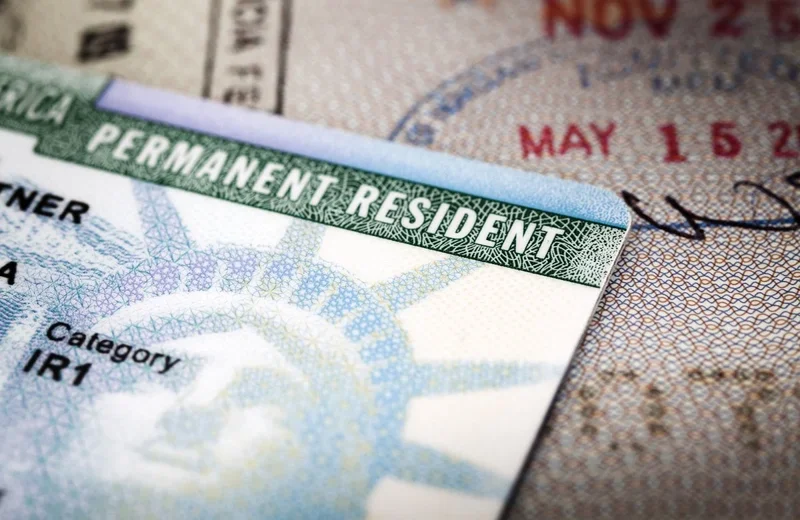
Trump Gold Card Offers Fast-Track U.S. Residency for a Price
U.S. Immigration Policy
The Gold Card Program offers ultra-high-net-worth individuals a fast track to U.S. lawful permanent residence through a non-refundable $1 million gift to the government, but it carries significant policy risks that Latin American investors must weigh carefully.
What the Gold Card Program Actually Is
The Gold Card Program is an immigration pathway created by Executive Order 14351 in September 2025, not a new visa category. It offers expedited access to U.S. lawful permanent residence for foreign nationals who make a large, non-refundable financial gift to the U.S. government.
The programme operates within existing employment-based immigrant visa categories, specifically EB-1A for extraordinary ability and EB-2 with a national interest waiver. It does not change the underlying statute but layers a donation-based model onto frameworks already in U.S. immigration law.
Applications are processed through a dedicated portal at TrumpCard.gov. The programme directs the Secretary of Commerce, together with the Departments of State and Homeland Security, to treat the financial gift as evidence of eligibility under the relevant EB-1 and EB-2 provisions.
The Real Cost of the Gold Card
For individual applicants, the cost is a $1 million non-refundable gift to the U.S. government plus a $15,000 Department of Homeland Security processing fee. Each dependent family member separately owes the same amounts, meaning a family of four would pay over $4 million in gifts alone.
Corporate sponsors face a $2 million non-refundable gift per sponsored employee, plus the $15,000 processing fee for each employee and dependent. Companies also pay a 1% annual maintenance fee, roughly $20,000 per sponsored slot, and a 5% transfer fee if they reassign the slot to a different foreign national.
A higher-tier Trump Platinum Card requires a $5 million contribution. It offers up to 270 days per year in the U.S. with preferential tax treatment on foreign-source income, though it has been announced but not yet fully released.
Who Qualifies for the Gold Card Program
The programme is not open to anyone who can pay. Applicants must independently qualify under EB-1A extraordinary ability or EB-2 exceptional ability and national interest waiver standards, meaning they must demonstrate significant achievements in business, sciences, arts, or other fields.
Applicants must also prove the lawful source and path of their funds, pass DHS background checks for public safety and national security concerns, and be otherwise admissible to the United States. There is no country-of-origin restriction, so Latin American nationals can apply on equal footing.
The donation alone will not carry a weak case. Immigration practitioners stress that candidates must already have a strong EB-1A or EB-2 NIW profile, making this a tool for established business leaders and recognised talents rather than a simple purchase of residency.
How the Gold Card Compares to the EB-5 Investor Visa
The Gold Card differs fundamentally from the EB-5 investor visa, which is enshrined in statute and requires a job-creating investment in a U.S. enterprise. The Gold Card requires a non-refundable gift with no job-creation obligation and no possibility of capital return.
EB-5 investments typically range from $800,000 to $1.05 million and carry investment risk but offer statutory protections and potential capital recovery. The Gold Card trades higher, non-refundable cost and no job-creation burden for speed and administrative favour, but with greater policy and legal risk.
Many immigration practitioners describe the Gold Card as a fast-track EB-5 alternative suited to a very narrow group of ultra-high-net-worth individuals who prioritise speed and can absorb the total loss of their donation if the programme changes.
What Latin American Investors Must Watch
The most significant risk is the absence of statutory grandfathering. Because the Gold Card is purely an executive programme, not enacted by Congress, a future administration or court ruling could suspend or invalidate it, leaving participants without guaranteed protection despite having paid.
The gift and government filing fees are non-refundable, though some legal service fees may be refundable depending on the engagement. If a case is denied or the programme is halted mid-process, applicants cannot reclaim their funds, a risk that leading immigration firms say makes the programme suitable only for those who fully understand the exposure.
For Latin American families and business owners considering the programme, independent advice from both a U.S. immigration attorney experienced with EB-1 and EB-2 NIW cases and a cross-border tax advisor is strongly recommended. The Platinum Card’s asserted foreign-income tax exemptions raise particularly complex questions under existing IRS rules.
Frequently Asked Questions
Does the Gold Card Program guarantee a U.S. green card?
No. The programme offers expedited processing and treats the financial gift as positive evidence, but applicants must still independently qualify under EB-1A or EB-2 NIW standards.
They must also pass background checks, prove lawful source of funds, and have an immigrant visa number available. Approval is not automatic.
Can my family get Gold Cards with my application?
Yes, but each dependent family member must separately pay the $15,000 DHS processing fee and, according to most official and practitioner sources, the $1 million gift. A family of four should expect total gifts of over $4 million plus $60,000 in processing fees.
Confirm dependent costs with an immigration attorney before applying.
What happens to my money if the Gold Card Program is cancelled?
The gifts and fees are non-refundable, and the programme has no statutory grandfathering protection. If a future administration rescinds the executive order or a court strikes it down, participants could lose both their money and their immigration pathway.
This is the single largest risk identified by immigration practitioners.