Nasa is launching a powerful telescope - with the help of Elon Musk - that could solve some of the universe’s biggest mysteries.
Text-generation telescope, the Nancy Grace Roman Space Telescope, will be able to capture images of space at least 100 times larger than the existing Hubble telescope. It will enable researchers to study thousands of planets beyond the solar system and learn how closely they resemble Earth.
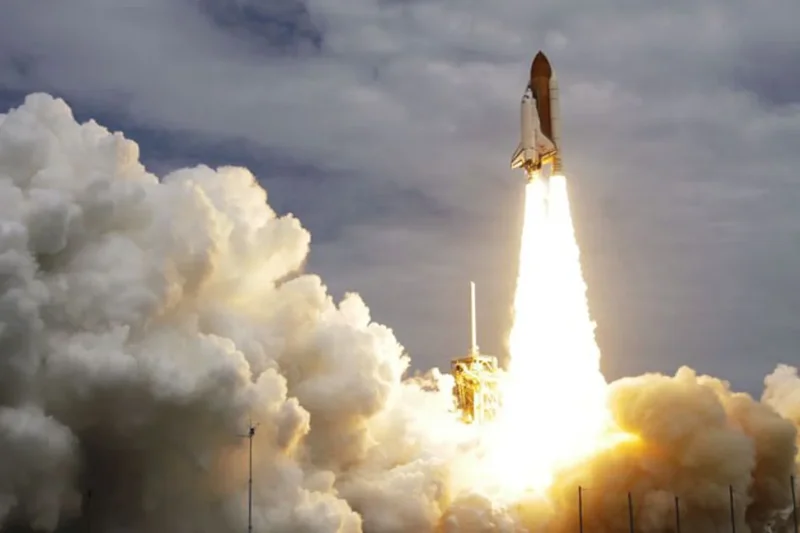
The coach-sized observatory is due to lift-off aboard an Elon Musk SpaceX rocket on August 30 from Kennedy Space Centre in Florida.
Following separation, it will head to an orbit some million miles from Earth providing a sweeping, unimpeded bird’s eye view for astronomy.
Over the first five years of observations, it will be able to carry out surveys that would take Hubble hundreds or even thousands of years.
The telescope, named after Nasa’s first chief astronomer, will also allow for a statistical census of planetary systems in the galaxy, and help untangle the riddle of dark energy and why it is causing the universe to expand faster over time.
The observatory will downlink approximately 1.4 terabytes of data per day to ground stations in New Mexico, Australia, and Japan.
Julie McEnery, Roman telescope senior project scientist, said: “Roman is poised to conduct revolutionary surveys that will impact every area of astronomy.
“We will perform an extraordinary census of planets around other stars and may confirm current hints that our standard model of the universe is incorrect, and set us on the path to figuring out what’s right.
“And we can do this because Roman’s primary instrument combines exquisite performance and sensitivity with the ability to quickly and efficiently survey large regions of the sky.”
She added: “Roman’s vast reach will allow us to find the weird, the rare, and the unusual.”
Jackie Townsend, Roman telescope project manager, said: “I’m truly excited about the way that it’s going to change our understanding of the universe.”