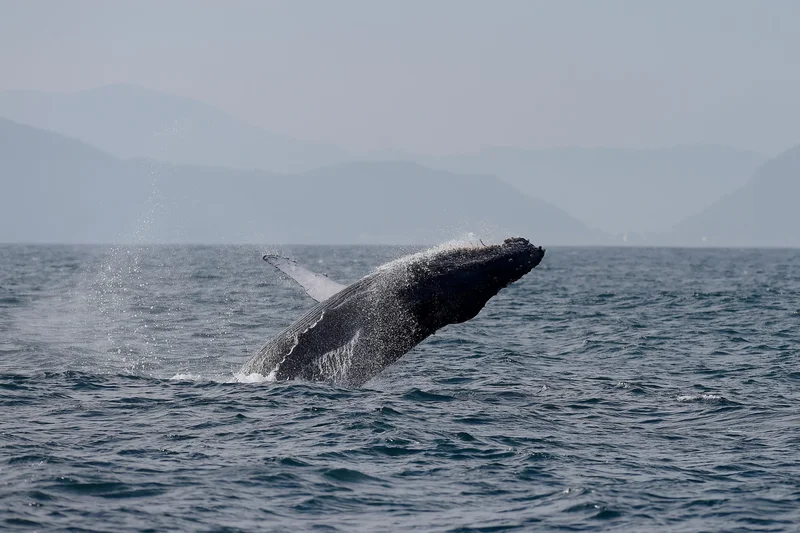
Humpback Whales Return to Costa Rica as Quepos Season Begins
LIFE: Costa Rica
Humpback whales return to Costa Rica’s central Pacific coast this month, as Quepos and Manuel Antonio enter the prime July-to-October season that draws thousands of international visitors and underpins a vital segment of the region’s eco-tourism economy.
A Tale of Two Migrations
Costa Rica occupies a rare position as a destination for humpback whales from both the Northern and Southern Hemispheres. This dual migration creates an unusually long whale-watching season that stretches across roughly ten months of the year.
Northern-hemisphere humpbacks that feed off California and Alaska arrive between late December and March, according to Costa Rican whale-watching operators. The southern population, travelling from Antarctic feeding grounds, reaches Costa Rican waters from mid-July through early November, with the highest concentration of sightings reported in August and September.
Quepos Prepares for Peak Season
Marina Pez Vela in Quepos serves as the primary departure point for whale-watching excursions along the central Pacific coast. Local operators are now readying boats and crews for the August–September peak, when near-daily sightings become the norm.
Tours typically combine whale and dolphin watching with coastal cruising. Many packages also include snorkelling stops, making the excursions attractive to families and mixed-interest groups rather than solely dedicated wildlife enthusiasts.
The Economic Read-Through for Coastal Communities
Whale watching is a significant revenue driver for Quepos and the broader Puntarenas province. Hotels, restaurants, tour operators, and transport services all see a measurable uptick in bookings when the southern humpbacks arrive.
The dual-season structure smooths out what would otherwise be a sharper boom-and-bust cycle. With northern whales drawing visitors in the dry season and southern whales filling the green season, businesses can plan staffing and investment with greater confidence across the calendar year.
Beyond Quepos: The Whale Coast Context
While Quepos is a recognised hub, the highest whale densities are consistently reported further south. The Osa Peninsula, Golfo Dulce, and the Costa Ballena region near Uvita are core calving and breeding areas.
Marino Ballena National Park protects the coastal and marine strip around Uvita.
Quepos benefits from its accessibility to San José and the international airport, offering a practical base for visitors who want reliable whale sightings without the longer journey to the deep south. This proximity advantage supports higher occupancy rates and broader visitor demographics.
What Investors and Expats Should Watch
The whale-watching economy in Costa Rica remains under-monetised relative to comparable destinations in the Caribbean and South Pacific. Marina Pez Vela has capacity for expansion, and the surrounding hospitality sector is still developing premium offerings for high-spending wildlife tourists.
For expats and second-home buyers, the dual whale season adds a year-round draw that supports rental yields. Properties marketed with ocean views and proximity to the marina command a premium during both the December–March and July–October windows, reducing the traditional green-season vacancy risk.
Frequently Asked Questions
When is the best month to see humpback whales in Quepos?
August and September offer the highest probability of sightings, driven by the arrival of southern-hemisphere humpbacks from Antarctic waters. Near-daily encounters are reported during this window, though the broader season runs from mid-July through October.
Are there whales in Costa Rica outside the July-to-October season?
Yes. Northern-hemisphere humpbacks from California and Alaska visit between late December and March, with January and February as peak months.
The only low-probability gap runs from April through June, when humpbacks are largely absent.
What other marine life can visitors expect on a Quepos tour?
Bottlenose, spinner, and spotted dolphins are commonly seen year-round in the waters off Quepos and Manuel Antonio. Tours often combine whale watching with dolphin sightings and coastal cruising, and many operators include snorkelling stops as part of the standard package.