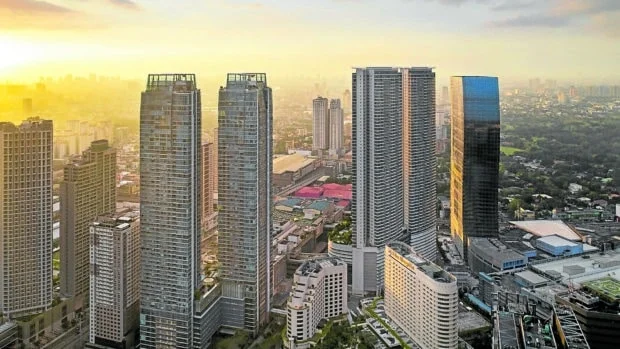
Mideast crisis clouds Metro Manila office rebound—Colliers
MANILA, Philippines — Colliers Philippines expects Metro Manila’s office market to end the year weaker than initially projected as the Middle East conflict delays companies’ expansion plans.
During its second-quarter property briefing, Kevin Jara, Colliers director and head of office services-tenant representation, said the firm cut its full-year office demand and vacancy forecasts after leasing activity softened in the April-to-June period.
READ: Growth in Philippine office space demand accelerating
Article continues after this advertisement
“So now we’re at 300,000 square meters (sq m) net. That’s down from 400,000 which we originally envisioned for the year,” Jara said.
Colliers lowered its net take-up forecast to 300,000 sq m from 400,000 sq m and now expects a 19.3-percent vacancy rate this year. Net take-up reached just 90,000 sq m in the first half, with vacancy at 19 percent.
“The Middle East crisis slows down demand in both Metro Manila and provinces,” Colliers said, citing geopolitical tensions.
Office transactions fell 24 percent quarter on quarter to 145,000 sq m in the second quarter as occupiers delayed leasing decisions, trimmed capital spending and renewed leases instead of taking new space.
Consequently, some leasing decisions have been deferred to the second half of 2026 or even 2027.
Article continues after this advertisement
Despite the slowdown, tenants largely retained their office space. Vacated space rose just 4 percent year on year and fell 5 percent quarter on quarter, keeping vacancy broadly stable.
Business expansion remained the main driver of demand. Traditional occupiers leased 203,000 sq m, followed by third-party outsourcing firms with 108,000 sq m and global capability centers with 25,000 sq m, mostly for relocations.
Article continues after this advertisement
Flexible workspace providers, banks, financial institutions, IT and software firms, and government agencies led demand among traditional occupiers.
Makati CBD posted the highest leasing volume at 65,000 sq m, followed by Fort Bonifacio with 63,000 sq m and Mandaluyong with 47,000 sq m, boosted by pre-leasing.
Colliers also said Administrative Order No. 45 could unlock more Philippine Economic Zone Authority-accredited office space and expand location options. However, Fort Bonifacio, Makati CBD and the C5 Corridor still offer limited site options due to tight supply.
Despite softer demand, green-certified offices accounted for 68 percent of first-half transactions. Colliers expects green buildings to comprise 43 percent of Metro Manila’s office stock by 2030. /pai INQ