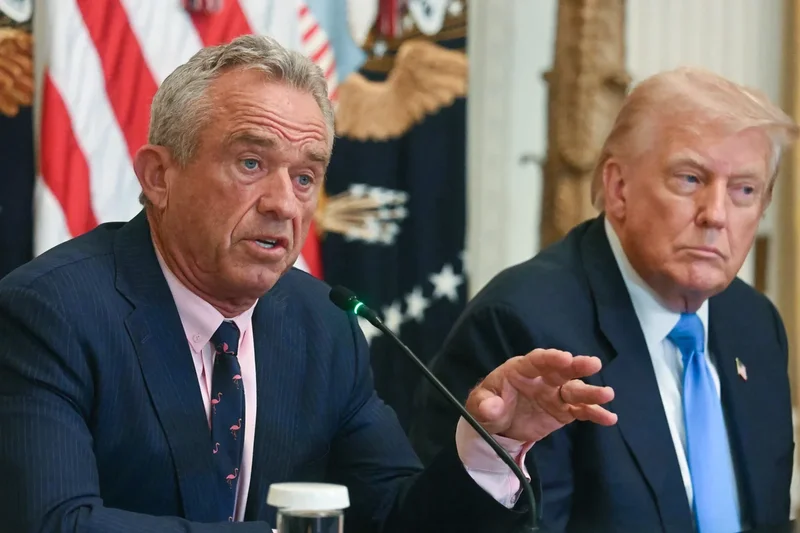
Health Secretary Robert F. Kennedy Jr. has lifted his hold on $600 million in U.S. funding for a global vaccine alliance after the organization agreed to phase out vaccines containing a mercury-based preservative that Kennedy has long criticized.
The Trump administration announced Wednesday it would immediately release the congressionally approved funding for Gavi, the Geneva-based vaccine alliance that helps low-income countries immunize children against diseases including measles and diphtheria.
The money had been withheld after Kennedy raised concerns about thimerosal, a mercury-based preservative used in some vaccines. Numerous studies have found no evidence that thimerosal causes autism or other neurodevelopmental disorders.
The State Department said the funding was released after Gavi committed to "work towards transitioning mercury-containing vaccines and expanding access to newer, mercury-free alternatives."
Kennedy, a longtime vaccine skeptic, had threatened last year to end all U.S. funding for Gavi, accusing the organization of ignoring vaccine safety concerns. He did not provide evidence to support those claims.
Gavi Chief Executive Sania Nishtar had previously said the alliance was already moving away from vaccines containing thimerosal.
Secretary of State Marco Rubio signaled in June that the United States should re-engage with Gavi, saying the alliance's work protecting children in some of the world's poorest countries aligned with U.S. global health priorities.
The United States has historically provided about 13% of Gavi's funding, or roughly $300 million annually. The organization has cut spending in recent months as it grappled with the funding uncertainty and reduced contributions from other wealthy nations.
The State Department said the United States expects to resume its seat on Gavi's board, adding that future funding will depend on the organization's performance, accountability and implementation of the agreed reforms.