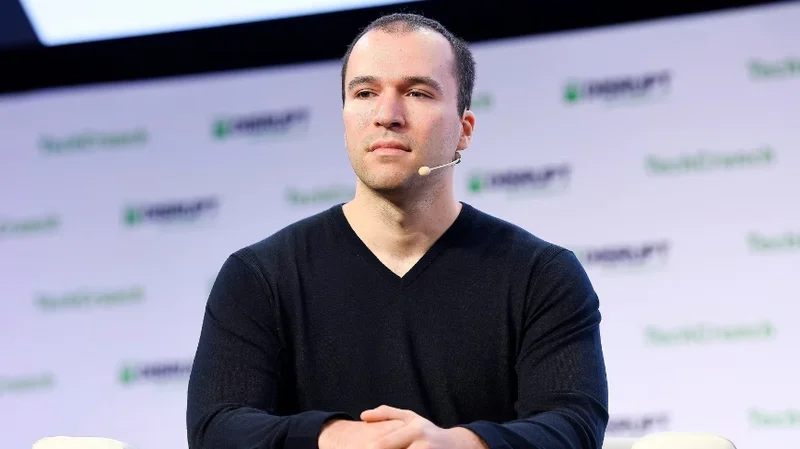
The president says voice will replace typing and the hardware is coming ‘soon,’ while brushing off Apple’s lawsuit: “we have no interest in other companies’ trade secrets.”
OpenAI is not building one gadget but several, its president Greg Brockman has confirmed, describing “a family of devices” in an interview that put the company’s long-rumoured hardware ambitions on the record.
Speaking to the journalist Joanna Stern, Brockman said the products are coming “soon,” without offering a date.The confirmation ends little suspense but adds some shape.
OpenAI has spent a year assembling a hardware effort around Jony Ive, the former Apple design chief whose screen-free speaker has already leaked, and Brockman’s “family” language suggests the speaker is only the first of a range.
OpenAI bought its way into the effort. It acquired Ive’s hardware startup, io, in a multibillion-dollar deal, folding a team of former Apple engineers into a company that had never shipped a physical product, which is part of what Apple’s lawsuit is now about. The deal made OpenAI a hardware company overnight, at least on paper.
Brockman’s pitch rests on a single bet: that talking beats typing. Voice, he said, is “a far more natural way to interact with a machine,” the premise behind a device meant to be spoken to rather than tapped, and the reason OpenAI thinks it can build hardware around ChatGPT rather than an app.
He was vaguer on everything else. Asked to confirm the rumoured smart speaker, Brockman neither denied nor detailed it, folding the question back into his “family of devices” line, a practised non-answer from a company that has learned to tease without committing.
The interview’s sharper moment was about Apple. The iPhone maker is suing OpenAI, alleging former staff carried hardware trade secrets across to the AI firm, a case that has thrown a shadow over the whole device project.
“We have no interest in other companies’ trade secrets. We are plenty innovative,” he said, declining to go further on the active litigation but making clear OpenAI intends to fight rather than settle quietly.
The dispute is not costless. Apple’s suit has already complicated OpenAI’s hardware plans, a reminder that building physical products drags a software firm into unfamiliar and expensive legal terrain.
The ambition behind the devices is large. OpenAI is not only making a speaker; it is reportedly working on a phone with Qualcomm and MediaTek, aiming at hundreds of millions of shipments a year by the end of the decade, an assault on the market Apple built.
That framing explains Apple’s alarm. A “family of devices” built around voice and ChatGPT is, in the long run, a bid to replace the phone as the thing people reach for, which is precisely the market Apple cannot afford to cede.
The competition is already crowded. Meta is betting on smart glasses, Amazon has spent a decade trying to make Alexa a platform, and Google keeps folding its assistant into everything, so OpenAI is entering a race rather than opening one.
Whether OpenAI can pull it off is another matter. Hardware is unforgiving, margins are thin, and the graveyard of ambitious AI gadgets, from pins to pendants, is already crowded with products that promised to end the smartphone and instead ended themselves.
Brockman’s confidence rests on distribution. OpenAI has hundreds of millions of ChatGPT users and a partner in Ive who knows how to make objects people want, a combination few rivals can match, whatever the courts eventually decide about how the designs were made.
For now, the news is the shape of the plan. Not one device but many, built for the voice, arriving “soon,” and defended in advance against an Apple lawsuit that OpenAI is treating as a nuisance rather than a threat.
The next move belongs to the calendar. OpenAI has confirmed the what and the why; the when, and whether the first of these devices lands before the legal fight is resolved, is the part Brockman was careful not to pin down.
Get the TNW newsletter
Get the most important tech news in your inbox each week.