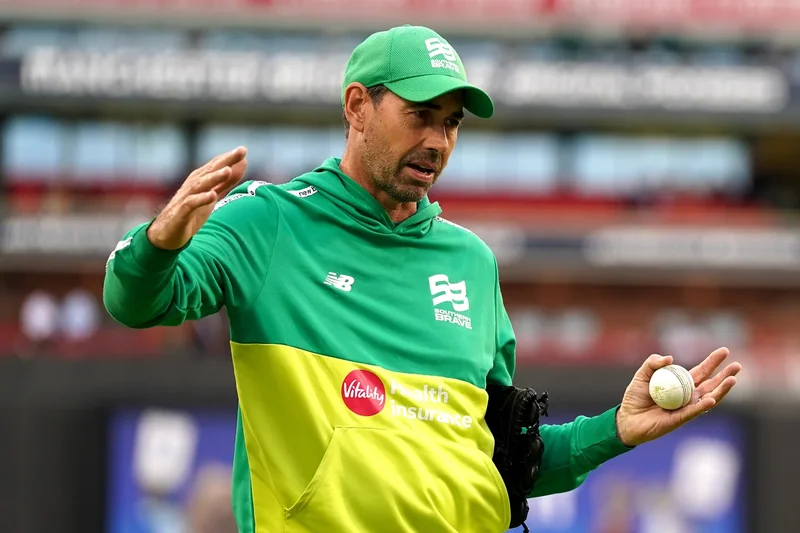
Stephen Fleming did always seem to possess a wonderful sense of timing. It was on 12 July that England made the decision to stand down Brendon McCullum as Test head coach and, in serendipitous circumstances, on 13 July that the man they would come to anoint as his successor began his search for a new job. It was nothing more than mere coincidence that the Chennai Super Kings and Fleming mutually parted ways so soon after his former teammate’s departure, but within three days he was expressing interest in the England role in a newspaper interview, and within three weeks impressing the ECB interview panel sufficiently for a hasty appointment after Andy Flower had withdrawn himself from consideration for the role.
Not that Fleming will arrive with undue hustle or hurry; Marcus Trescothick will take interim charge of the three Tests against Pakistan this summer before the 53-year-old begins a four-year deal ahead of the tour to South Africa in December. While Fleming has expressed a desire to spend time with his family, it is a curious situation that again highlights the mistake made by the ECB in not taking the opportunity for a clean break after the Ashes.
One might term this, then, a marriage of convenience – a coach in search of a new challenge taking over a team in need of new direction. On the face of it, Fleming’s credentials are modest: there is no red-ball coaching whatsoever on his CV, nor any past suggestion of a desire to turn away from a franchise T20 circuit he was perhaps the first coach to truly master. He had even turned England down in 2009, feeling it was too soon into his coaching career.
But this is not necessarily another jamming of a square peg into round, vacant hole. The truth is that requiring past experience of a role like being England Test coach would limit the pool to only past occupiers of the position – particularly with the complicating factor of one’s predecessor remaining as a colleague and, at times, competitor.
McCullum remains, of course, as white-ball coach, which could cause conflict; to slot in a man sufficiently close to his former teammate to have gone into business was surely a key factor in Fleming’s appointment. A similar ethos may be implemented differently with a younger side in need of fresh messaging.
“Stephen Fleming is one of the most highly respected figures in cricket, and we are very fortunate that someone of his calibre is willing to take on the challenge of being the England men’s Test head coach,” Rob Key, the ECB’s managing director of men’s cricket, said. “I believe he is the best person to guide a team stacked full of potential and turn that talent into a world-class outfit that cannot only achieve success but sustain it.”
Past stints in the County Championship, particularly at Nottinghamshire, will be cited, too, though it is tough to find an individual of Fleming’s generation who did not enrich the English game with their visiting presence. Instead, one should look to his work at CSK – in the fractured, fractioned and faction-filled world of modern cricket, a 17-year stint laden with trophies is to be commended. It will, too, have provided some insight into the scrutiny he will now come under; the symbiotic relationship forged with MS Dhoni, a laid-back but highly intuitive leader, is one that Key will hope the oft-understated Fleming can strike with Joe Root.
Even within the statement announcing his appointment were hints that Root’s return as captain is likely to be a temporary arrangement, though, with Fleming pointedly making reference to his excitement to work with Harry Brook. The vice-captain’s time will surely come. The ECB must, however, reflect on the paucity of choices that have forced them to go back to a 35-year-old left worn-down and worn-out by the captaincy his first time around; Root really should have been left in the ranks. But with Brook carrying a significant burden already, a reinstallation was the better of two bad options.
Fleming hopes that he can provide a more pleasurable experience for his right-hand man. “I know what it feels like to have the weight of leadership and international cricket take their toll, and when that happened to me, my love for the game was rekindled by going to Notts and winning the County Championship,” the head coach said with reference to Root. “English cricket gave that to me and it is a privilege to have this chance to give something back.”
There are other issues, mind, to be solved. Where McCullum’s task to revitalise and rejuvenate was clear on his arrival, Fleming’s assignment is tougher. England are unsettled in the top three, with Jacob Bethell a doubt for the start of the Pakistan series and Emilio Gay yet to cement his spot, and inevitably unbalanced by Ben Stokes’ retirement. There is no like-for-like replacement as a seam bowling all-rounder, which has ramifications elsewhere; it may be hard to pick a specialist spinner, for example, or build a bowling attack around an array of seamers that can sometimes feel at its best in bursts. It has felt like a team inexorably on the slide.
Fleming may thus see a blank canvas; others, a jumbled puzzle of pieces that may not fully fit. By the time he commences his role, he will have a matter of nine months to prepare for an Ashes series that – McCullum will attest – will form a large part of his overall appraisal. England’s new head coach took on Australia 14 times during his Test career and did not once taste victory – turn their trajectory around before next summer and he will have proven a very shrewd appointment indeed.