The internet delivered on its promise of endless choice. But abundance has created a new challenge: standing out.
For decades, retail success often meant appealing to the middle. Retailers didn't need to be the cheapest. They didn't need to be the most distinctive. Success came from offering consumers a reasonable balance of price, assortment and service. That formula is becoming harder to sustain.
Retail is entering an age of extremes. On one side are the world's largest retailers, leveraging scale, supply chain strength and digital capabilities to extend their advantage. Euromonitor International data shows the top 10 retailers now account for 19% of global retail sales, up from 11% in 2016.
The other side consists of direct-to-consumer brands, growing through something fundamentally different: ownership of the customer relationship. By controlling consumer data, messaging and the shopper experience, DTC brands are creating deeper connections and more personalized engagement. Euromonitor projects this model will account for 10% of global e-commerce sales by 2030.
The pressure is mounting for retailers between those extremes.
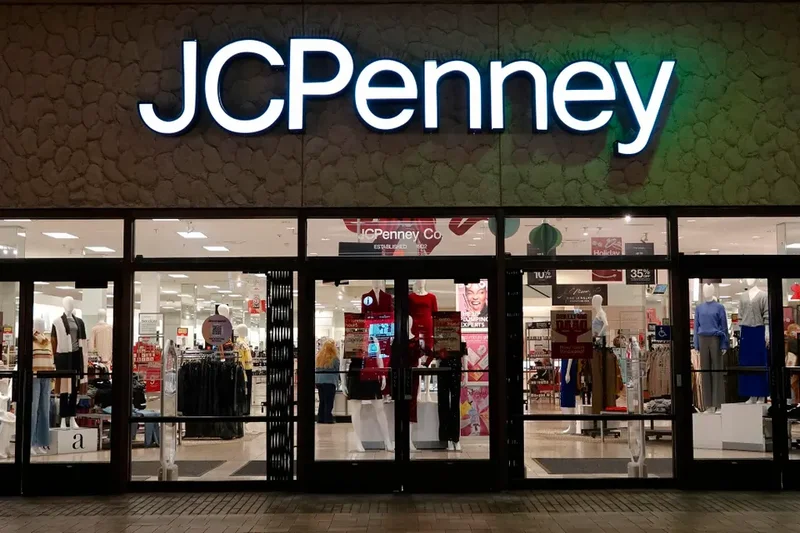
Department stores, apparel specialists and other mid-market players often lack the scale advantages of retail giants, while also struggling to match the direct consumer relationships cultivated by DTC brands. As shoppers gravitate toward either efficiency or personalization, the middle is becoming harder to defend. Euromonitor forecasts flat five-year growth for department stores and apparel specialists, highlighting the challenge facing many mid-tier retailers. This shift is not simply a story of consolidation. It reflects a deeper change in how consumers discover, evaluate and buy products.
The Economics of Extremes
E-commerce has accelerated both ends of the spectrum simultaneously.
Large retailers benefit from scale. They can spread investments in logistics, technology, data and fulfillment across massive customer bases. Their size enables lower costs, broader assortments and faster delivery.
At the same time, digital channels have lowered barriers for emerging brands. A DTC brand no longer needs national shelf space to reach its target audience. It can build awareness through social platforms, acquire customers through digital channels and cultivate loyalty through personalized engagement.
The shift is especially visible in high-frequency, high-engagement categories where consumers value personalization and buy repeatedly. In pet food, Euromonitor International data shows that The Farmer’s Dog became the top online pet food brand in the US in 2025, with sales surpassing $2 billion and overtaking market leaders such as Hill’s and Purina Pro Plan.
In many ways, the internet created two powerful competitive advantages. Retailers could become bigger than ever before, or they could become closer to consumers than ever before. The middle lost its relevance.
As such, both retailers and brands are adopting a dual channel strategy. Walmart remains synonymous with value, yet it continues to target higher income consumers through more premium store aesthetics and assortment. At the same time, consumer brands are investing heavily in first-party relationships, subscriptions, communities and owned channels to deepen customer engagement. Both sides are strengthening their connection with shoppers, albeit in very different ways.
The result is a retail landscape increasingly defined by scale on one end and direct relationships on the other.
Why AI Could Accelerate the Divide
Now AI is reshaping retail and will likely alter the basis of retail competition from access to visibility.
For years, brands competed for shelf space. Then, they competed for search rankings and social media visibility. Today, consumers are increasingly turning to generative AI platforms for recommendations, product comparisons, review summaries and purchase guidance.
Nearly a quarter of internet-connected consumers already use GenAI as a source of shopping information, according to a Euromonitor consumer survey. Usage increased eight percentage points in just one year, allowing GenAI to surpass social media influencers as a source of shopping inspiration. A separate Euromonitor consumer survey suggests the appeal is practical. Consumers say they use GenAI to make shopping decisions easier, whether through clearer explanations, more relevant product recommendations or summarized consumer reviews.
As shopping becomes increasingly AI-mediated, visibility will depend less on marketing messages and more on the quality of data, relevance and consumer signals. That creates advantages for both extremes – again.
Large retailers possess deep product catalogs, extensive consumer engagement and robust data ecosystems. DTC brands often have highly distinctive positioning and direct access to customer insights. Both have characteristics that can help them surface in AI-generated recommendations.
Retailers caught in the middle face a more difficult challenge. They must compete for visibility against larger players with more scale and against DTC brands with stronger brand positioning.
The New Risk for Retail’s Middle
E-commerce expanded the retail shelf and gave consumers more choice than ever before. AI may do something different: narrow the path to the choices that surface first. That matters most for retailers in the middle.
Mid-market retailers have long relied on being considered: present in the right mall, visible in search, familiar enough to remain in the shopper’s rotation. But AI-mediated discovery could make passive consideration less reliable. If a shopper asks for the best option, the cheapest option or the most personalized option, retailers with unclear positioning may be easier to skip.
That does not mean the middle disappears. But it does mean middle-market retailers will need a sharper reason to be chosen. Scale will continue to matter. Proximity will matter too. For those without either advantage, visibility may depend on clearer category authority, stronger first-party relationships and a more distinct value proposition.
The internet created abundance. AI may decide who gets surfaced from it. And that could make retail’s middle even harder to defend.