In a setback to Karnataka, the Cauvery Water Management Authority (CWMA), which met in Delhi on Thursday, upheld the Cauvery Water Regulation Committee’s (CWRC) order that Karnataka should release water to Tamil Nadu at a rate of 3,500 cusecs a day for 15 days.
The CWMA, which is the apex body that monitors the implementation of water release by the upper riparian States as per the Supreme Court’s verdict, asked Karnataka to release water to Tamil Nadu in accordance with the CWRC’s order.
The CWRC had on July 28 ordered Karnataka to commence release of water to Tamil Nadu with effect from July 29. However, Karnataka, facing drought, had filed an appeal against the CWRC’s order before the CWMA. At Thursday’s meeting, Karnataka appealed to the CWMA to keep the CWRC’s order to release water in abeyance for another fortnight and take a call on water release after reviewing the evolving hydrological situation.
But the CWMA, which looked into the issue on Thursday besides taking stock of the hydrological conditions, endorsed the CWRC’s order.
In its submission before the CWMA, Karnataka said that it was facing an acute hydrological distress, and the cumulative inflows into all the four reservoirs in the Cauvery basin were 65.65% below the 30-year average due to the super El Nino effect.
‘Dual advantage for TN’
Karnataka argued that while the southwest monsoon is the mainstay for Karnataka, the forthcoming northeast monsoon would benefit Tamil Nadu. It argued that Tamil Nadu, therefore, had the “dual advantage” of benefiting from the southwest monsoon in Karnataka in the form of water release and also from the forthcoming northeast monsoon.
Historical trend had shown that in distress years, northeast monsoon had significantly augmented Tamil Nadu’s storages, Karnataka argued, also contending that Tamil Nadu already had a substantial quantum of carryover storage from Karnataka’s earlier releases.
It expressed concern that though the CWRC had ordered it to release water at a rate of 3,500 cusecs a day, in reality, it may have to step this up to 7,000 cusecs considering the transmission losses due to dry hydrological conditions on the river bed till the Biligundlu measuring gauge, located on the inter-State border. The stipulated quantum of water has to be realised at the gauge, it pointed out.
Karnataka feared that releasing a high quantum of water during a deficit monsoon may hit its drinking water requirements, while pointing out that it needs a minimum of 40 tmcft of water for drinking.
On its part, Tamil Nadu stepped up its demand and urged the CWMA to direct Karnataka to increase the rate of daily releases beyond 3,500 cusecs while highlighting the prevailing hydrological distress in its basin and sought a release of 9.45 tmcft under the distress formula in the next 15 days at a rate of 7,000 cusecs a day.
The CWMA referred to the CWRC’s observation that inflows to four reservoirs of Karnataka has increased. It said that while Kabini reservoir is nearing full storage level, Karnataka’s reservoirs may get a minimum of 15 tmcft of water in next 15 days. The CWMA observed that it will not affect the drinking water requirements of Karnataka even after releasing 4.5 tmcft.
Karnataka CM calls all-party meeting
Karnataka Chief Minister D.K. Shivakumar has convened an all-party meeting in Bengaluru on Sunday (July 2, 2026) to deliberate on the CWMA’s decision to uphold the CWRC’s order to Karnataka to release water to Tamil Nadu, and take their advise on the next move by the State.
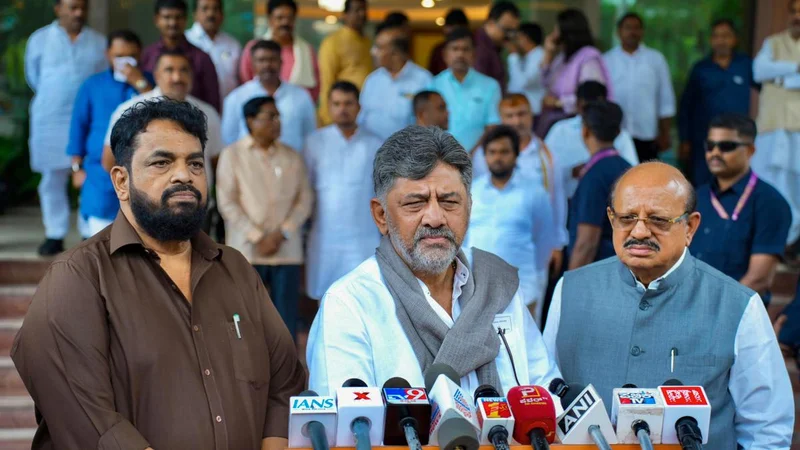
The Chief Minister, who was camping in Delhi to consult the party high command on Cabinet expansion, told presspersons that all the former Chief Ministers, besides MPs and legislators from the Cauvery basin, would also be invited to the all-party meeting to seek their advise on the issue.
Sources in the government said that the government would now discuss the issue with legal experts too to arrive at a decision on its next legal fight. Karnataka is said to be considering all the legal options before it now as already there is an unrest in its Cauvery basin since the farmers have resorted to protest against any water release.
Published - July 30, 2026 05:35 pm IST