The EV market in Mexico has exploded in the last three years, with the vast majority of cars sold there being manufactured in China—90 percent in 2025. However, Mexico is one of the world’s biggest manufacturers of cars and car parts, and policymakers want to capture a piece of the action.
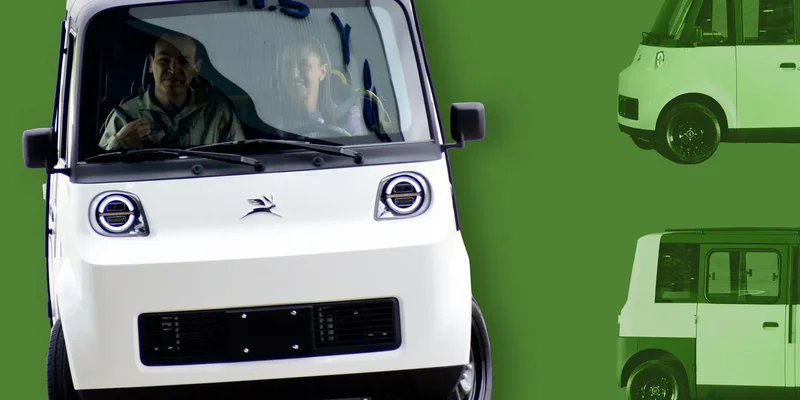
That’s why the Mexican government launched Olinia, a federally backed effort to develop a homegrown EV brand with engineers and researchers from the country’s public universities and research institutions. Its first vehicle, the Olinia 1, is designed around the needs of the average Mexican driver. Mass production of the Olinia 1 is expected to begin in early 2027 at an assembly plant slated for construction in the state of Puebla later this year.
Surging EV Demand in Mexico
Demand for EVs in Mexico has been pent up, says Gil Tal, director of the Electric Vehicle Research Center at the University of California, Davis. “The demand was there. What changed was the supply,” he says. “Chinese companies were making tons of affordable cars, but they hit a slowdown in demand in China.” Carmakers like BYD and Geely thus dropped their prices and started marketing aggressively in emerging markets like Mexico.
Olinia was spearheaded by the Mexican government’s Secretariat of Science, Humanities, Technology, and Innovation (SECIHTI). Olinia 1’s name comes from “ollin,” meaning “movement” in the indigenous Náhuatl language. The car was unveiled on 7 June when President Claudia Sheinbaum drove a prototype onto the stage during a launch event near Mexico City. Its price tag is a mere 150,000 pesos, or about US $8,500—which aims to be in line with Mexican consumers’ purchasing power. SECIHTI did not respond to requests for comment.)
The car’s specs show it’s not meant to compete directly with EVs from manufacturers such as Tesla or BYD. Olinia has a 14.7-kilowatt-hour lithium iron phosphate (LFP) battery and a 13.5-kilowatt electric motor, giving it a top speed of about 50 kilometers per hour (31 miles per hour) and a range of 125 kilometers (78 miles) per charge. Additionally, it can be charged from an ordinary household outlet.
These numbers are modest by global EV standards, but they’re also deliberate; many of Olinia’s engineering decisions were driven by cost. The car was built for the realities of Mexican cities, which face chronic congestion, limited parking, and transportation networks that often include motorcycles, minibuses, and informal transit services. The government plans to replace many taxis in urban areas with the EV.
“This is what we call a neighborhood car,” says Tal. “You can’t mix it with fast-driving cars on the freeway.” Though this makes the market for the car more limited, he adds, “it’s a good starting point for the technology. It’s more efficient, cheaper, and safer.”
LFP Battery Technology for Affordable EVs
The car’s battery chemistry also reflects these priorities. LFP batteries store less energy per unit weight than nickel-rich chemistries, but they can withstand a large number of charge-discharge cycles. Their lower cost and higher thermal stability make them practical for taxis or delivery vehicles, where durability and affordability can matter more than maximum range. Unlike nickel-manganese-cobalt batteries, LFP batteries don’t require those critical minerals, which add cost and expose manufacturers to supply-chain volatility. (Although the battery, of course, still requires lithium, another critical mineral.) The battery was intentionally kept small in order to reduce the car’s cost and weight.
Olinia is one of the signature projects of Plan México, the Sheinbaum administration’s strategy to strengthen domestic manufacturing and technological capabilities. The initiative aims to cultivate domestic expertise in batteries, power electronics, vehicle integration, and advanced manufacturing—areas that policymakers view as critical to Mexico’s long-term industrial competitiveness. The administration hopes the plan attracts $100 billion in annual foreign direct investment by 2030.
Yet designing and manufacturing an affordable EV is only half the battle. Getting consumers to buy it will require the kinds of supportive policies that helped spur EV adoption in China.
“China’s experience demonstrates that supporting policy can be instrumental,” says Daniel Sperling, director of the UC Davis Institute for Transportation Studies. For Olinia to be successful, Sperling adds, the Mexican government will “need to create incentives for consumers and the manufacturer, including for insurance, registration, taxes, and parking.” The government is planning to carve out a new regulatory category for the car that would cover vehicles topping out near 80 km/h.
Whether or not Mexico’s vision of a domestic EV industry comes to fruition, says Tal, the initiative is a worthwhile step. “In Mexico, most of the industry is international companies, and most of the decisions are being made outside the country,” he says. “Pushing for more affordable vehicles and more local production is the right direction for Mexico to go.”
Vanessa Bates Ramirez is a science and technology journalist who writes about energy and climate tech, artificial intelligence, and biotechnology. Her work has appeared in Time magazine, Scientific American, Forbes, AI Frontiers, and Singularity Hub, among other outlets.