Topline
The 55 European member associations within UEFA, the European governing body for soccer, voted unanimously to boycott FIFA after an emergency meeting on Thursday, preparing to take a drastic action if it moves forward with __plans __to sell minority stakes in its World Cup tournament—a plan proving to be controversial with several other regional organizations.
Key Facts
In a statement released on Thursday, UEFA said that no teams from its 55 member associations would not participate in any FIFA tournament “so long as these proposals remain alive,” which would include the World Cups for men and women's teams, as well as the Club World Cup.
The European confederation said it would continue to boycott “unless this proposal is abandoned in its entirety,” and it was given “binding assurances” the international body would not pursue private ownership again.
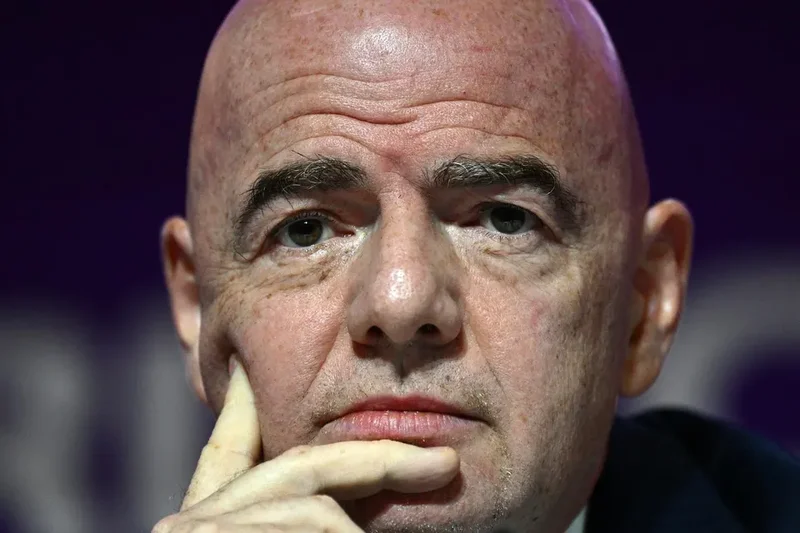
The plan to sell roughly 20% in stakes of a new commercial venture controlled by FIFA is being pushed by FIFA president Gianni Infantino, the organization’s president who has faced criticism for perceived closeness to President Donald Trump.
FIFA said it is being advised on the plan by JPMorgan, and a fund created by Josh Kushner’s Thrive Capital would serve as the lead investor (Josh Kushner’s brother Jared is married to Trump’s daughter, Ivanka).
A majority of FIFA’s 211 member associations across the world need to approve the deal by Sept. 19—so more associations in other regions will also have to defect in to officially reject the deal.
Infantino said on Wednesday that member associations that fail to approve the deal by the September deadline will lose access to an immediate $20 million and another $20 million raised over the next three years through the deal.
FIFA did not immediately respond to a request for comment from Forbes about the planned boycott.
What to Watch For
The next FIFA event will take place in September, before the deadline. Matches for the FIFA Under-20 Women’s World Cup are set to begin in Poland on Sept. 5. Multiple UEFA members are set to play in the tournament, including Spain, Portugal, Italy, France, England and host country Poland.
Could Others Oppose the Deal?
CONCACAF, the confederation representing teams in North America, Central America and the Caribbean, also expressed concern over the “lack of due process” in a statement released after the initial news of the deal broke. The organization said it was disappointed the deal was “designed and shared publicly before any discussion with the relevant governance bodies and stakeholders has taken place.” CONCACAF has given no indication it would support a similar boycott at this time, and did not immediately respond to a request for comment from Forbes. The organization is holding its own meeting at 12:30 p.m. EDT, The Athletic reported. Sheikh Salman bin Ebrahim Al-Khalifa, a Bahraini royal family member and president of the Asian Football Confederation, sent a letter to FIFA, which was obtained by multiple outlets, calling the deal “totally unacceptable” and the organization’s actions served to “undermine the very foundations of continental football.” Al-Khalifa also said he was “surprised” by the September deadline, insisting “the current timeline allows an extremely limited period for consideration of a proposal of such significance, when such decisions should never be rushed.”
READ UEFA’S STATEMENT IN FULL
UEFA and its 55 member associations stand as one. We unanimously and unequivocally reject FIFA’s proposal to transfer ownership interests in the World Cup and other FIFA competitions to private investors.
The World Cup cannot be treated as an investment product. It is one of football’s greatest sporting legacies. It has been built over generations by players, national teams and supporters across every continent. No part of it should ever be surrendered to private investors. The World Cup is not for sale.
It is both irresponsible and indefensible that a proposal of such significance for football was conceived in secret and brought to the brink of approval without any meaningful consultation with those entrusted with stewarding the game. This is not merely a profound failure of leadership, but an abdication of FIFA’s duty as the custodian of world football.
National associations around the world are now presented with an ultimatum: accept the irreversible capture of football’s greatest competitions or bear the consequences. This is not a “democratic decision”, but governance by intimidation – an act of coercion unworthy of an institution entrusted with the stewardship of the global game.
But our opposition goes far beyond process.
The moment external investors acquire ownership interests in FIFA competitions, football changes forever. Commercial return becomes a permanent obligation. Investor expectations become a daily pressure. From that moment onwards, every decision on the international calendar, every decision on competition formats and every decision shaping the future of football is no longer driven by what best serves the game, but by what best serves shareholders.
This model has no place in world football. Football’s future cannot be dictated by the expectations of those whose first duty is to maximise financial return. Nor can the interests of national associations, leagues, clubs, players and supporters become subordinate to investor returns. Football cannot mortgage its future for financial gain.
Europe’s position is clear. We will never lend this model our legitimacy. No one has the moral authority to sell what they merely hold in trust for the next generation.
As a result of today’s discussion, no UEFA national teams will participate in any FIFA competition for so long as these proposals remain alive, unless this proposal has been abandoned in its entirety and binding assurances have been given that FIFA will never again open its governance or competitions to private ownership.
Nobody should be in any doubt: UEFA and its national associations will oppose these plans with absolute determination.
There are moments when institutions are judged not by what they are prepared to accept, but by what they refuse to compromise. This is one of those moments.
Some things are simply too important to sell. The FIFA World Cup belongs to football. It always will. And so long as Europe has a voice, it will never be for sale.