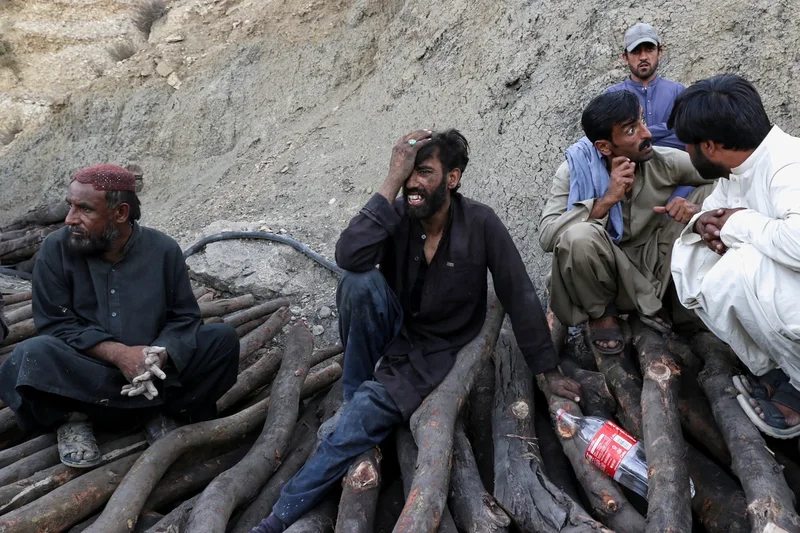
An explosion deep inside a coal mine in southwest Pakistan has claimed the lives of at least eleven miners, with 31 others still trapped underground in what officials fear are life-threatening conditions.
Rescue teams are racing against time to reach the missing workers following the blast on Thursday.
The explosion, which occurred on the outskirts of Quetta, the capital of Baluchistan province, was reportedly triggered by a buildup of methane gas, according to government mine inspector Ghani Baloch.
Emergency responders initially recovered seven bodies hours after the incident, with four more later found, bringing the confirmed death toll to eleven.
Baloch indicated that rescue operations would continue until all trapped miners were accounted for, though he expressed a grim outlook for those still missing.
"The chances of finding anyone alive diminish after methane gas explosions because oxygen levels drop to zero, and rescuers are also proceeding cautiously inside the mine," Baloch stated.
Shoaib Nosherwani, Baluchistan’s Minister for Mines and Minerals, acknowledged the extremely difficult conditions faced by rescue teams and pledged the provincial government’s full support for the ongoing response.
He extended condolences to the victims’ families and announced compensation of 500,000 Pakistani rupees (approximately $1,800) for each miner killed. Authorities have also committed to a thorough investigation into the cause of the explosion and a review of mining safety measures to prevent future tragedies.
Meanwhile, the Pakistan Central Mines Labour Federation has pointed to suspected negligence as the cause of the explosion, calling for accountability.
The union urged the government to strictly enforce safety regulations and take decisive action against companies that violate mine safety laws. Deadly accidents are a frequent occurrence in Pakistan’s coal mining industry, particularly in Baluchistan, where many mines are known to lack adequate ventilation, gas monitoring systems, and other fundamental safety provisions.
Despite the inherent risks and low wages, thousands of miners in Baluchistan, Pakistan’s largest yet least developed province, rely on the industry for their livelihoods amidst widespread unemployment and poverty.