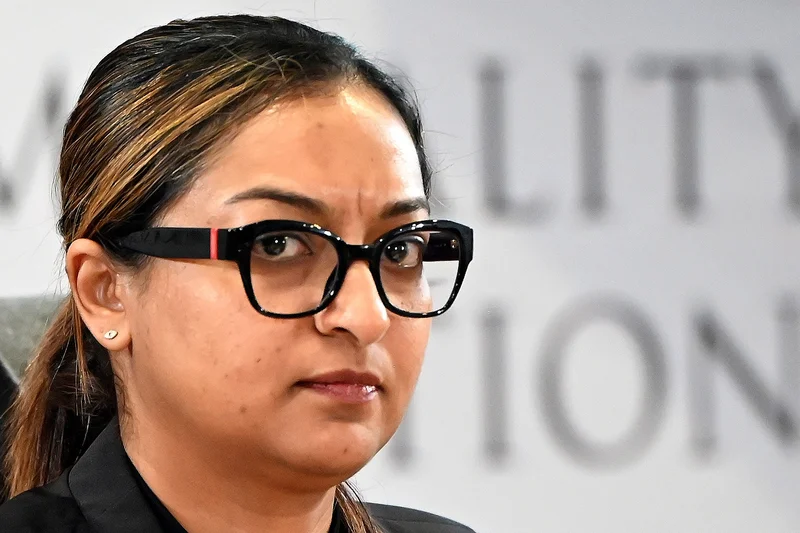
One of the most dramatic moments of the Madlanga Commission of Inquiry came on Thursday, 30 July, when the commission played a cellphone recordin__g__ of a conversation between former Investigating Directorate Against Corruption (Idac) head advocate Andrea Johnson and Idac prosecutor Drushantha Ramsamy.
The 26 July recording, which took place over the weekend after Johnson had started her testimony and before she finished on Wednesday, appeared to capture Johnson advising Ramsamy what to do if she were called to testify before the Madlanga Commission.
Ramsamy has accused Johnson and Idacâs chief investigator, Dylan Perumal, of using Idacâs investigative powers to build a case against (now suspended) National Police Commissioner General Fannie Masemola and Crime Intelligence boss Lieutenant General Dumisani Khumalo rather than simply following the evidence.
In the recording, Johnson can allegedly be heard telling Ramsamy: âIf they call you, leave the country.â
She continued: âYou know what? Whether we like it or not, weâre going to make our names look terrible. You can already see it, especially when ... remember, thereâs a judge who often makes comments like, âThis is Basic Law 101. Iâm surprised you donât know it.ââ
Johnson appeared to be referencing commission chairperson Justice Mbuyiseli Madlanga.
Ramsamy replies: âI donât even know what to say to that.â
Johnson then adds: âAnd he makes faces. They laugh with each other while youâre still answering. So unprofessional.â
She concludes: âWeâre all going to see whatâs going to happen. Itâs going to be a shitshow. But Iâm going to talk to them quickly.â
Johnson is likely to face intense scrutiny over her alleged phone comments and claims by Ramsamy that she personally spearheaded the investigation into Masemola and Khumalo â despite her shifting the blame onto subordinates during her testimony.
âFlip-Flop, Knee-Jerkâ Johnson
During her testimony on Thursday, Ramsamy painted a troubling picture of Idacâs internal workings, alleging that Johnson routinely ignored established procedures, issued contradictory instructions and led through intimidation.
She described an environment in which written operating procedures were routinely overridden by decisions emanating from Johnsonâs office, leaving investigators and prosecutors uncertain about which rules applied.
Ramsamy told the commission that Johnson had earned the nickname âFlip-Flop, Knee-Jerkâ among staff because of her constantly changing instructions.
According to Ramsamy, investigators and prosecutors would receive one set of instructions in the morning, only for Johnson to reverse or alter them later in the day after discussions with Perumal.
Following these revelations, Johnson will be called back to the commission to answer to these allegations, particularly that she had tried to focus investigations on Masemola and Khumalo.
Cases unravelled
Those allegations come against the backdrop of the dramatic unravelling of the two cases that lay at the heart of Idacâs investigations into the police and Crime Intelligence.
Masemola was formally charged with contravening the Public Finance Management Act on Tuesday, 21 April. The charges relate to the alleged irregular awarding of a contract worth R360-million to Medicare 24, a company owned by Vusimuzi âCatâ Matlala.
In June 2025, Idac spearheaded the arrest of Khumalo and several Crime Intelligence officers, claiming Brigadier Dineo Mokwele â a former BMW mechatronics engineer â was unqualified to lead the unitâs Technical Support Services and had been planted to capture the division.
However, during Johnsonâs testimony, evidence emerged proving Mokwele was indeed qualified for the post. The original complaints against Mokwele were lodged by National Coloured Congress MP Fadiel Adams.
The NPA has since withdrawn the fraud and corruption charges against Khumalo and his co-accused arising from the alleged irregular appointment, following mounting questions over the evidential basis of the prosecution.
Ramsamyâs evidence follows weeks of intense scrutiny of Johnson before the commission. The pressure on Johnson intensified further on Wednesday, 29 July, when WhatsApp messages between her and suspended Crime Intelligence deputy head Major General Feroz Khan were submitted as evidence.
The messages formed part of the commissionâs examination of Johnsonâs relationship with Khan and added another layer to the growing questions surrounding her conduct.
Earlier this week, President Cyril Ramaphosa approved Johnsonâs request to immediately vacate her post.
Khan faces various accusations and is yet to testify before the commission after he was wounded in a shooting at the end of last month.
The mystery of the pink page
A critical turning point in the inquiry will be Ramsamyâs explanation of a handwritten suspects list, which was used to secure a Section 28(13) authorisation â a legal mechanism allowing Idac to broaden its investigation beyond Fadiel Adamsâ original complaint.
During her July 22 testimony, Johnson could not explain where the suspect names originated and told the commission she would consult Ramsamy during a break to find out.
Ramsamy testified that Johnson handed her the names on 5 December 2024 on a pinkish-purple sheet of paper and instructed her to use them when preparing the Section 28(13) authorisation to expand the investigation into Crime Intelligence.
Johnson allegedly told her: âThese are the suspects. Chief [believed to be Perumal] and I discussed who is to be included.â
**âProject Diversionâ **
Ramsamy traced the origins of the Crime Intelligence investigation to a July 2023 meeting convened by Johnson after she received what she described as a Section 27 referral (it tells Idac what allegations have been made and gives investigators their initial mandate) based on allegations made by Adams.
According to Ramsamy, those at the meeting included Johnson, chief investigator Perumal, advocate Temane Binang, senior investigator Mantsha Raphesu and herself. Johnson told the team she had already consulted with Adams and his legal representative before briefing them on the allegations contained in the referral.
Ramsamy also alleged that Johnson was in charge of âProject Diversionâ, an investigation directed towards building cases against Masemola and Khumalo.
Ramsamy testified that Johnson instructed the team to treat the matter with the utmost secrecy because of the sensitivity of the allegations and the senior police officials implicated.
âNo one was to know that Idac was handling the matter owing to the sensitivity of the matter and the persons implicated,â Ramsamy told the commission.
Once the preliminary investigation had been completed, Ramsamy said she drafted an evidential report summarising the evidence contained in witness statements. A Section 28(1) request for official permission to start a formal criminal investigation was subsequently prepared and approved by Johnson after a deputy director was assigned to the matter.
But according to Ramsamy, the investigation took a decisive turn on 5 December 2024.
Ramsamy revealed she was instructed to draft a Section 28(13) application to broaden the Crime Intelligence investigation, using the names on the list. Under strict orders, she was forbidden from making copies, taking notes or sharing the documents with anyone. Once finished, she had to email the draft directly to Johnson and immediately return the contents of the bag.
According to Ramsamy, Johnson told her that âthey had decidedâ the matter would proceed under Section 28(13). Ramsamy assumed that meant the proposal had been approved by senior prosecutors within the National Prosecuting Authority.
When Ramsamy read Adamsâ affidavit, however, she said she became deeply concerned about whether the allegations justified the expansion of the investigation.
The issue resurfaced before the Madlanga Commission when a document identified as Adamsâ Section 27 affidavit was shown during another witnessâs evidence.
âMy heart dropped to my stomach because this was not the affidavit that advocate Johnson gave me on 5 December 2024,â Ramsamy testified.
She said she initially believed she had made a mistake but contacted senior investigator Raphesu, who, according to Ramsamy, confirmed that the affidavit displayed before the commission was not the version she had shown him on the morning of 6 December 2024. DM