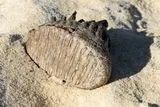
Only days after record-low water exposed decades-old shipwrecks along the Danube, the same river has given up something older, hundreds of miles downstream in Bulgaria. A resident near the Bulgarian village of Ryahovo spotted large bones along the Danube riverbank. They photographed the remains and sent the images to local officials.
According to the Bulgarian News Agency (BTA), those images led specialists from the Regional History Museum in Ruse to the site, where they identified the remains as belonging to a woolly mammoth.
Recovering Woolly Mammoth Bones Along Bulgaria’s Danube Riverbank
Crews working the site have pulled out a lower jaw, two tusks, a shoulder blade, and a handful of ribs, with more of the skeleton potentially still buried close by. Researchers emphasize the scale of the animal they may be uncovering, estimating that this adult woolly mammoth could have reached nearly 16 feet in height and weighed 7 to 8 tonnes, according to the BTA. However, according to Britannica, adult mammoths usually stood around 10 to 12 feet tall.
They place the species' origins somewhere between 500,000 and 800,000 years ago, when the region's climate was much colder, with the species eventually disappearing around 7,000 to 10,000 years ago, with isolated groups living until about 4,000 years ago.
Having sat underwater for so long, the bones have started breaking down now that they're back in the open air, which is pushing the excavation team to move with extra care to keep everything intact through transport and conservation.
Read More: Severe Drought Exposes Historic Shipwrecks Along the Danube River
Two Explanations for the Mammoth Bones Found Near Ryahovo
Exactly how this particular animal ended up here is still being worked out, and researchers raised two different possibilities. Krasimir Kirov, curator in the museum's Nature Department, has suggested that this stretch of riverbank may function as a kind of natural catch basin, a spot where the Danube's current has slowly gathered and dropped off the remains of various animals over a long stretch of time, though he noted some of the remains could also belong to animals that actually lived in the area.
Museum director Nikolay Nenov has pointed to a different pattern in this particular find. Other mammoth remains found nearby have typically shown up scattered across river sediment and had to be pulled out using dredging machinery, but here the bones sat clustered tightly together in a single spot, a detail that raises the possibility the animal died right where it was found, potentially in a swamp that may have once covered the area.
Investigators are also examining the coloring of the bones for clues, since remains that darken toward black or deep brown sometimes indicate a boggy environment at the time of death, though the team said this connection is still unproven, and color alone can't settle the question either way.
Fossilized Trees Add to Ryahovo’s Prehistoric Discoveries
Fossilized trees, some reportedly millions of years old, also turn up regularly around Ryahovo, usually as scattered fragments rather than intact trunks, and they're easy to mistake for plain rocks.
Kirov has recounted one case where a dredging crew spent time using a chunk of ancient petrified wood to prop a door open, with no idea what they were actually holding until it later ended up in the museum's collection.
Pending conservation and further study, the mammoth's bones are expected to eventually go on public display at the same museum, provided their condition allows it, joining a model of a woolly mammoth already there that gives visitors a sense of the animal's scale.
Whether this particular mammoth died on that riverbank or simply washed up there remains unanswered; the team hopes further excavation can help.
Article Sources
Our writers at Discovermagazine.com use peer-reviewed studies and high-quality sources for our articles, and our editors review for scientific accuracy and editorial standards. Review the sources used below for this article:
- This article references information from the Bulgarian News Agency (BTA): UPDATED Mammoth Remains Discovered near Ruse Village Due to Low Danube Water Level
- This article references information from Britannica: How Big Was the Woolly Mammoth?