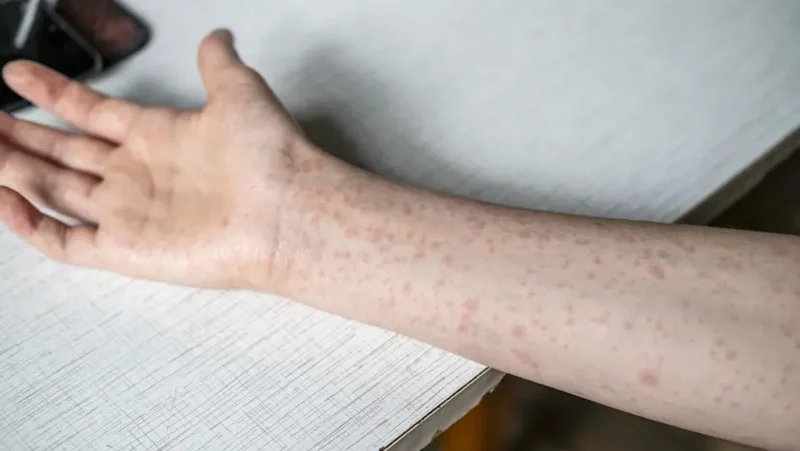
Singapore's measles cases reach six-year high, three vaccinated cases among 40 infections
Experts say Singapore's high vaccination coverage keeps the risk of a large outbreak low, even as cases climb amid a global resurgence.
SINGAPORE: Singapore has recorded 40 measles cases so far this year, the highest annual total since 2020, according to the Communicable Diseases Agency's (CDA) latest weekly infectious disease bulletin.
This year's total has surpassed the 27 infections reported for all of 2025. That tally was itself the highest since 2020, though still well below the 152 cases reported in 2019 during a period of global outbreaks.
At least three of this year's were fully vaccinated with two doses of the measles, mumps and rubella (MMR) vaccine, according to CDA figures. The rest were unvaccinated or had no record of vaccination.
Adults aged 25 to 44 continued to make up the majority of cases.
Among 12 cases recorded between Apr 4 and Jul 4, one was a tourist and 11 were Singapore residents. Nine had recently travelled overseas and were classified as imported, while two were locally acquired. Two of the 12 were fully vaccinated; the rest had no documented vaccination.
One of the previously reported vaccinated cases had an underlying medical condition, while another had none. Both have recovered, CDA said.
Health experts CNA spoke to attributed the rise to a global resurgence of measles rather than widespread local transmission.
Professor Hsu Li Yang, director of the Asia Centre for Health Security at the National University of Singapore's Saw Swee Hock School of Public Health, said the global increase in outbreaks has brought more imported infections to Singapore, with occasional secondary transmission.
"While sporadic local transmission will happen, the risk of large sustained outbreaks of measles here in Singapore is very negligible," he said, citing the country's high vaccination coverage.
Ninety-seven per cent of children are vaccinated by age seven and 99 per cent of adults have immunity against measles, the Ministry of Health (MOH) said in a parliamentary reply on Feb 24.
Both figures are above the 95 per cent herd immunity threshold needed to prevent population-wide spread and protect those unable to be vaccinated, such as infants under 12 months, MOH said.
BREAKTHROUGH INFECTIONS RARE
Breakthrough infections among vaccinated individuals remain uncommon despite the increase, CDA and experts said.
The MMR vaccine's efficacy has historically exceeded 95 per cent, and is about 97 per cent effective after two doses, with vaccinated individuals generally developing milder illness and fewer complications than the unvaccinated.
Professor Paul Tambyah, past president of the Asia Pacific Society for Clinical Microbiology and Infection, said factors such as underlying medical conditions or vaccine handling may contribute in the rare instances where vaccinated individuals become infected.
CDA said Singapore should continue to expect sporadic cases and small clusters, given its position as a major travel hub amid rising measles activity globally and regionally.
The agency introduced tighter measures in February, including mandatory isolation for measles cases, contact tracing for all cases and quarantine for some close contacts, after detecting a rise in infections.
Measures were stepped up further a month later after more infections were reported. This included barring all suspect measles cases in high-risk settings from returning to school or work until they test negative.
CDA advised older children and adults – particularly those travelling to countries experiencing outbreaks – to ensure they have received two doses of the MMR vaccine. Infants aged six to 11 months travelling to affected countries should seek medical advice about an early dose at least two weeks before departure.
Adults unsure of their vaccination status should consult their doctors, both experts said.
Prof Tambyah added that those without documentation of two doses could undergo a blood test to check immunity or receive a booster, and that caregivers of infants under one and immunocompromised individuals should be prioritised as they are particularly vulnerable to severe disease.
“We should not be alarmed by the numbers but should think of it as a reminder to get our children vaccinated if not already done and if measles vaccination is not contraindicated,” said Prof Hsu.