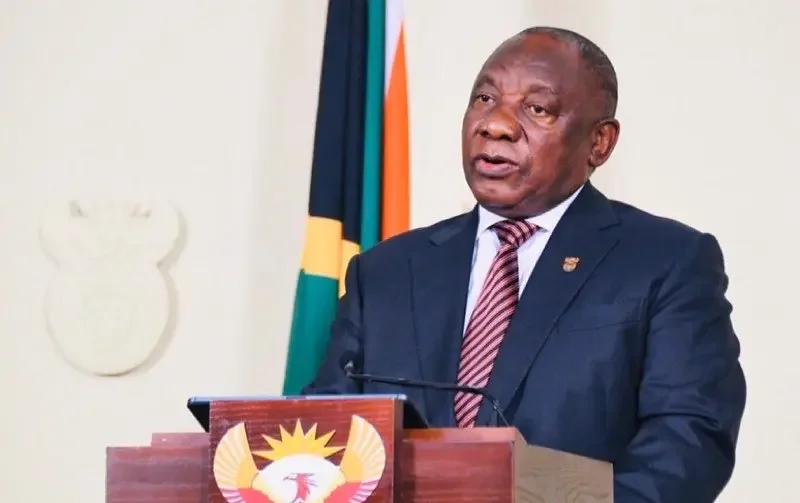
The Western Cape High Court’s decision to grant President Cyril Ramaphosa an interim interdict has ignited a polarising public debate.
Some political parties and commentators have portrayed the judgment as an obstacle to accountability, framing the issue as a choice between accountability and delay. This characterisation misunderstands the constitutional question before the court.
The question is not whether the President should ultimately account for the allegations against him. It is whether Parliament should activate one of the Constitution’s most serious accountability mechanisms while the legal validity of the report upon which that process depends remains under judicial challenge.
Properly understood, the case is not about avoiding accountability. It is about ensuring that accountability itself rests upon a lawful constitutional foundation.
Accountability, legality, due process, judicial independence, parliamentary oversight and the separation of powers are not competing constitutional values. They are mutually reinforcing. The task of constitutional adjudication is not to elevate one at the expense of another but to reconcile them in a manner that preserves the integrity of the constitutional order.
Because impeachment carries profound consequences, the procedures leading to it must satisfy the highest standards of legality, fairness and rationality.
Equally fundamental is the right of every person affected by the exercise of public power to approach an independent court to challenge its legality.
The Constitution does not require a litigant to abandon legal remedies merely because he or she occupies high office. The President enjoys no greater rights than any other citizen but equally no fewer. The right to seek judicial review and where appropriate, interim relief, forms an integral part of the constitutional architecture that safeguards the rule of law.
Judicial review is therefore not an obstacle to accountability. It is one of the principal mechanisms through which accountability itself is secured. The Constitution contemplates that courts will determine whether public power has been exercised lawfully before irreversible consequences flow from that exercise. To characterise the exercise of this right as an attempt to evade accountability is to misstate its constitutional purpose.
Closely connected to judicial review is the remedy of an interim interdict. Such relief does not determine the merits of a dispute. It exists to prevent legal processes from producing consequences that may later prove impossible or exceptionally difficult to reverse.
If Parliament were to complete an impeachment process based substantially upon the Section 89 Independent Panel Report, only for the courts later to declare that report unlawful, irrational or unconstitutional, the legitimacy of the entire parliamentary process would immediately come into question.
Constitutional law does not lightly countenance irreversible institutional consequences flowing from an unlawful process. Preventing precisely that form of irreparable prejudice is one of the central purposes of interim relief.
It is analytically flawed to equate this litigation with the unsuccessful interim interdict sought by former Public Protector Busisiwe Mkhwebane. The two matters rested on fundamentally different legal foundations. Mkhwebane’s application centred on allegations of presidential bias, pending rescission applications, complaints concerning legal funding and claims of procedural unfairness before the Section 194 committee.
By contrast, President Ramaphosa challenges the very legal foundation upon which the contemplated impeachment process would proceed: the validity of the Section 89 Independent Panel Report itself.
The distinction is constitutionally significant. A panel report is not equivalent to a court judgment. Whereas the Section 194 inquiry proceeded against the backdrop of binding judicial findings already made against Ms Mkhwebane, the legality of the Section 89 report remains unresolved. Accountability should never rest upon a constitutional foundation whose validity is still before the courts.
If confidence exists that the Section 89 report will ultimately withstand judicial scrutiny, there is little constitutional reason to object to allowing the courts first to pronounce upon its legality.
Proceeding before that challenge is resolved would expose Parliament to unnecessary constitutional risk. The issue is not whether the report will ultimately be upheld or set aside. It is whether constitutional fidelity requires legal certainty before one of the Constitution’s gravest accountability mechanisms is activated.
This distinction separates delaying accountability from ensuring lawful accountability. Constitutionalism does not require Parliament to act with maximum speed. It requires it to act lawfully. Accountability pursued through defective procedures risks weakening, rather than strengthening, confidence in democratic institutions.
Equally, legality cannot become a mechanism for frustrating accountability indefinitely. The Constitution rejects both extremes by insisting that accountability itself must occur within lawful processes.
The National Assembly cannot hold the President accountable by acting unlawfully. Calls for urgency must therefore be measured against this constitutional reality.
Political pressure, including the coming local government elections, cannot dictate the pace at which courts determine the validity of the legal foundation of an impeachment process. The duty of the courts is to ensure that every exercise of public power complies with the Constitution. The rule of law cannot yield to political time-frames or electoral calendars.
Public discourse has often reduced these questions to partisan politics. Constitutional interpretation is strongest when detached from immediate political preferences. The principles governing judicial review would remain substantially the same regardless of the identity of the office-bearer concerned.
A system committed to equality before the law cannot create one set of procedural rights for ordinary citizens and another for holders of high office. Equally, it cannot permit public office to become a shield against legitimate constitutional scrutiny.
For that reason, accountability and legality should never be viewed as competing values. They are complementary constitutional imperatives. Accountability pursued through unlawful procedures undermines institutional legitimacy, while legality invoked solely to obstruct accountability would equally weaken constitutional government.
The Constitution avoids both dangers by insisting that accountability be exercised through procedures that themselves satisfy constitutional standards.
Constitutional democracies are tested not by easy cases but by difficult ones. They are tested when political pressure encourages institutions to move swiftly while constitutional principle demands procedural restraint. Constitutionalism requires respect for due process even where the political stakes are exceptionally high.
South Africa’s constitutional order was deliberately designed to prevent the exercise of public power without legal justification. Judicial review, parliamentary oversight and independent courts are not rival concepts but mutually reinforcing components of that design. Judicial review safeguards legality. Parliament secures democratic accountability. Courts preserve constitutional supremacy. Together, they sustain the rule of law.
The current litigation, therefore, presents an opportunity for constitutional reflection rather than polarisation. Constitutional democracy is measured not merely by the speed with which institutions act but by the legality, fairness and integrity with which they act.
In constitutional democracies, process is often the principal safeguard against arbitrary power. The legitimacy of institutional decisions depends not only upon the correctness of their outcomes but also upon the integrity of the procedures through which those outcomes are reached.
Properly understood, judicial review, interim relief and parliamentary oversight are complementary mechanisms through which the Constitution ensures that accountability is both effective and lawful.
South Africa’s constitutional project has always rested on the conviction that no institution and no individual stands above the Constitution.
That proposition applies equally to Parliament, the Executive and the Judiciary. In moments of high political tension, the temptation is to treat the process as an inconvenience and legality as a secondary concern.
But the durability of constitutional democracy depends on resisting that temptation. Accountability that is not grounded in lawful foundations risks becoming arbitrary. At the same time, legality that is detached from accountability risks becoming empty.
The interim interdict does not close the door to accountability. It insists that the door be opened only on a foundation that the Constitution can sustain.
Cornelius Monama is a strategic communication specialist, public affairs commentator and writer.