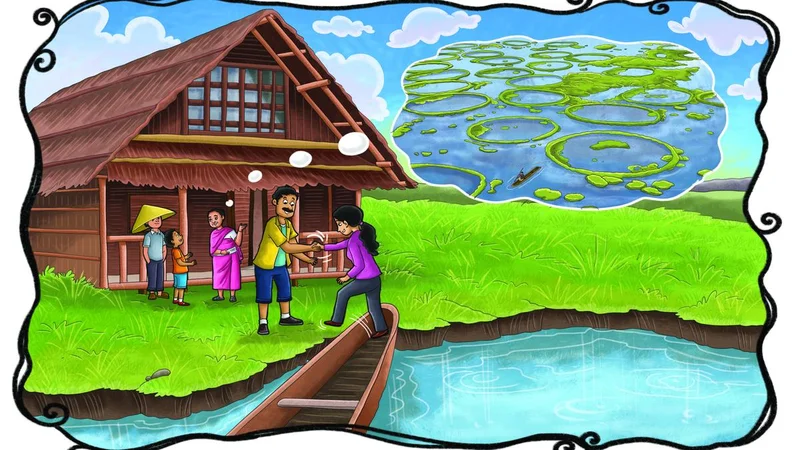
“The world’s only floating National Park! And it’s in Manipur! How cool!” said Taran excitedly, as he got into the bamboo boat.
They were staying at the Sendra Tourist Home. Situated on a hilltop, it gave a 360° view of the Loktak Lake, home to the floating Keibul Lamjao National Park. As the boat moved deftly through the water, Taran spotted large patches of green. “Is that a hut? How does everything not sink?
A face popped out of the hut, followed by a shy smile. Their boatman stopped the boat. “Why don’t you go have a look? You will understand more.”
The lady with the shy smile welcomed them to her home. “In the Meitei language, Phumdi means floating island. Phumsang — floating hut.”
Their boatman, who had a better grasp of English, explained. “It is a unique phenomenon. Vegetation, soil, decaying organic matter, and bio-gases keep the phumdi afloat. The people here are mostly fisherfolk. They sink anchors in the phumdis and build houses with bamboo. These structures last for about two years. When it gets too swampy, they make repairs.”
The lady began making a brew of red tea, or Cha Angangba. Taran had more questions. “What about those green circles of grass we passed by? Is that natural too?”
“Those are fishing enclosures called athaphums,” the boatman replied. Fishermen cut the phumdis and arrange them in rings and cast a net inside to trap fish. We let the net be for two weeks or so till the fish get fat. We feed them cooked or raw rice. Then we take the net out with the grown fish! Simple!”
Taran was looking more and more impressed.
“But the government has been telling us not to make athaphums. No proper paths for boats for tourists who come to spot birds and the Sangai deer. But the Meitei people are a fishing community,” he continued.
Just then, in the foliage ahead, they spotted a deer. It was wobbling a bit. “It looks like it is dancing,” Amma exclaimed.
“It is called the dancing deer because it tries to balance itself.”
Appa tried to take some good shots of this endangered species.
“Phumdis are becoming thinner and smaller. Soon there might be no place for the Sangai deer or for us,” said the boatman. “A dam built nearby and other environmental changes are the main culprits.”
“My son is in Imphal,” the lady said. “Office work, no fishing.”
Taran noticed the Sangai deer had snuck away. Ducks and storks were flapping their wings. Taran wondered how much longer these marvellous phumdis would exist.
He hoped that the Meitei people would be able to continue their way of living in a fast-changing world.
Published - July 31, 2026 07:59 am IST