Summer in Europe has always been warm, but what the continent is experiencing now is different. Heatwaves are becoming hotter, lasting longer, and arriving more often. Streets, hospitals, farms, and power systems are all feeling the strain.
According to the World Health Organization (WHO), the European Region is warming faster than any other WHO region. Temperatures here are rising at nearly twice the global average. The three warmest years ever recorded in the region have all occurred since 2020, while the ten warmest years have all been recorded since 2007.
The consequences extend well beyond rising temperatures. Heat stress has become the leading cause of climate-related deaths in the region, with heat-related mortality increasing by around 30% over the past two decades.
According to official EuroMOMO data backed by the European Centre for Disease Prevention and Control (ECDC) and WHO, more than 10,000 excess deaths were reported across 27 European countries during the intense heatwave that swept western Europe in late June 2026. More than 9,000 of those deaths were among people aged 65 years and older.
Scientists have also said that this particular heatwave would have been "virtually impossible" without human-caused climate change.
Why one of Italy's most famous cheeses is under threat
When people think of climate change, they often picture melting glaciers or rising sea levels. Fewer imagine that it could affect a wheel of Parmesan cheese.
Yet that is exactly what farmers in Italy's Emilia-Romagna region are witnessing.
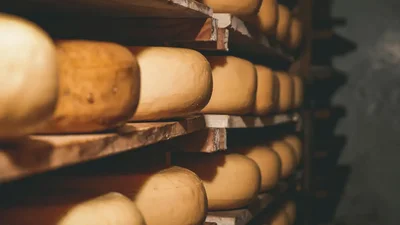
Parmigiano Reggiano, often called the "King of Cheeses," has been produced for more than 800 years. It is made using just three ingredientsmilk, salt and rennet, and strict regulations allow production only in specific provinces of northern Italy.
But producing high-quality milk has become increasingly difficult as temperatures continue to climb.
Nicola Bertinelli, President of the Parmigiano Reggiano Consortium, told Reuters, "Extreme heat impacts milk's quality and quantity."
On his family's dairy farm near Parma, barn windows that were once opened only at night during summer now remain open throughout the day to help cattle cope with the relentless heat.
Heat is affecting cows before it affects cheese
The journey of Parmesan starts with healthy cows. When the animals struggle, the cheese does too.
During heatwaves, cows eat less because digestion itself generates body heat. They also spend more time resting in an effort to stay cool. As a result, milk production drops.
The problem doesn't stop there.
Authentic Parmigiano Reggiano requires cows to be fed only grass and hay grown within the designated production area. But prolonged heat and limited rainfall make it harder for grass to grow.
"If it doesn't rain, grass doesn't grow, hay cannot be produced and it's impossible to obtain the milk needed to make the cheese," Bertinelli said.
Farmers have responded by installing fans and water-misting systems to cool their cattle, but these solutions also increase electricity bills at a time when many farms are already under financial pressure.
Climate change is becoming an economic and food security challenge
The Parmigiano Reggiano industry generates an estimated â¬4.5 billion annually and supports thousands of jobs across northern Italy. More than half of its sales now come from exports, making it one of Italy's most valuable food products.
But rising temperatures are forcing producers to rethink how they farm, manage livestock and preserve centuries-old traditions.
Paolo Ganzerli, International Sales Director at food company GranTerre, summed up the concern while speaking to Reuters, "If extreme events become longer-lasting and more intense, they will certainly have an impact on both the quantity and quality of milk, but above all they will lead to higher costs."
He added a line that captures what many producers fear, "We don't want to be the last generation to eat it."