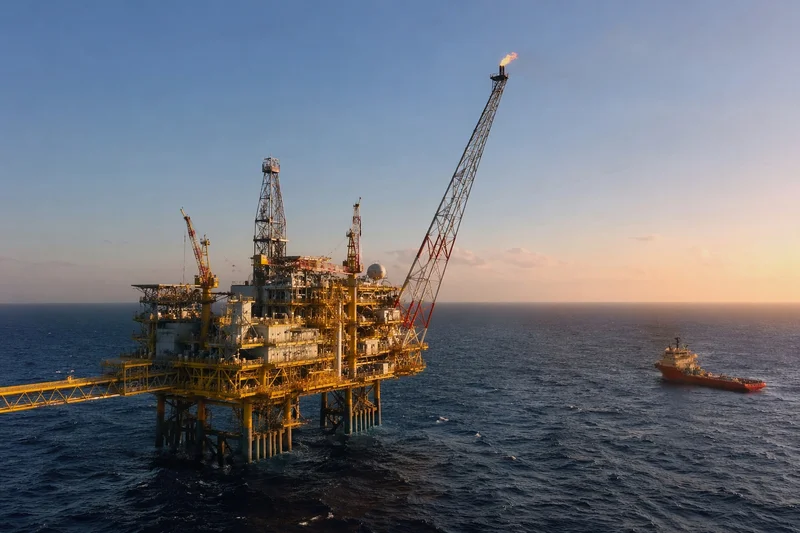
Oil Wrap: WTI Falls 1.42% While Petrobras, YPF Rally
Key Facts
- The USO fund, which tracks WTI crude, fell 1.42% to US$127.48as a slightly firmer US dollar prompted profit-taking after a strong multi-week rally.
- Petrobras shares gained 2.85% to US$19.12buoyed by expectations of robust dividends and the high-productivity, low-cost economics of Brazil’s deepwater pre-salt fields.
- Colombia’s Ecopetrol surged 3.90% to US$17.04extending a rebound driven by improved pipeline stability and reduced domestic security incidents along transport routes.
- Argentina’s YPF advanced 3.64% to US$52.15as foreign investors bet on streamlined currency rules and the continued development of the Vaca Muerta shale formation.
- Profit-taking in WTI futures was triggeredby a mix of resilient US fuel demand data and renewed global growth worries after softer European manufacturing surveys.
- Guyana’s offshore boom continues reshaping Atlantic Basin crude flowswith its light sweet exports competing directly against Brazilian and US barrels into Europe and Asia.
Today’s Focus
Latin America’s biggest listed oil producers rallied decisively on Thursday, ignoring a 1.42% drop in the USO fund—the liquid proxy for WTI crude—to US$127.48. The divergence came as a slightly firmer US dollar encouraged profit-taking on the raw commodity, while company-specific strengths from Brazil’s pre-salt to Argentina’s Vaca Muerta drove buying in Petrobras, Ecopetrol, and YPF.
Petrobras gained 2.85% to US$19.12 on expectations that its vast offshore pre-salt reservoirs will keep delivering high-productivity wells with relatively low lifting costs, sustaining a cash gusher strong enough to underpin generous dividend distributions. Colombia’s Ecopetrol climbed 3.90% to US$17.04, extending a rally linked to improving pipeline security and steady export flows, factors now overriding the short-term WTI dip.
Argentina’s YPF led the regional charge with a 3.64% jump to US$52.15 after Buenos Aires reiterated plans to streamline access to foreign currency and profit repatriation rules, a direct boost to the shale driller’s appeal for cross-border investors. In contrast, Mexico’s Pemex remained trapped in a sovereign credit narrative defined by heavy refinancing needs, while Venezuela’s vast reserves stayed sidelined by sanctions and crumbling infrastructure.
What matters today. The session confirmed that well-governed Latin American oil firms can decouple from global crude dips when guided by strong local geology and clearer regulatory signals.
01 The session in one read
The long rally in crude took a breather as WTI slipped 1.42%, tracked perfectly by the USO fund’s drop to US$127.48, yet an investor looking solely at that number would have missed the full story across Latin America. A slightly firmer US dollar sparked a wave of profit-taking on speculative long positions that had built up on earlier Middle East supply jitters and US Gulf weather threats.
Against that shaky backdrop, Brazilian, Colombian, and Argentine oil giants all posted robust gains. The session delivered a masterclass in how strong cash flow, improving domestic security, and credible policy signals can insulate a producer’s equity from a short-term wobble in the futures curve.
W
T
I
–
t
r
a
c
k
i
n
g
U
S
O
f
e
l
l
1
.
4
2
%
a
s
a
s
l
i
g
h
t
l
y
f
i
r
m
e
r
d
o
l
l
a
r
a
n
d
s
o
f
t
e
r
E
u
r
o
p
e
a
n
m
a
n
u
f
a
c
t
u
r
i
n
g
d
a
t
a
p
u
n
c
t
u
r
e
d
a
m
u
l
t
i
–
w
e
e
k
r
a
l
l
y
,
y
e
t
L
a
t
i
n
A
m
e
r
i
c
a
‘
s
t
o
p
p
r
o
d
u
c
e
r
s
t
o
c
k
s
s
u
r
g
e
d
.
T
h
e
c
l
e
a
r
e
s
t
s
i
g
n
a
l
w
a
s
t
h
a
t
f
o
r
e
i
g
n
i
n
v
e
s
t
o
r
s
a
r
e
d
i
f
f
e
r
e
n
t
i
a
t
i
n
g
s
h
a
r
p
l
y
b
e
t
w
e
e
n
p
u
r
e
c
o
m
m
o
d
i
t
y
b
e
t
a
a
n
d
c
o
m
p
a
n
i
e
s
l
i
k
e
P
e
t
r
o
b
r
a
s
,
E
c
o
p
e
t
r
o
l
,
a
n
d
Y
P
F
,
w
h
e
r
e
i
m
p
r
o
v
i
n
g
m
i
c
r
o
s
t
o
r
i
e
s
a
r
o
u
n
d
p
r
e
–
s
a
l
t
d
i
v
i
d
e
n
d
s
,
p
i
p
e
l
i
n
e
s
a
f
e
t
y
,
a
n
d
s
h
a
l
e
d
e
r
e
g
u
l
a
t
i
o
n
f
o
r
V
a
c
a
M
u
e
r
t
a
n
o
w
c
o
m
m
a
n
d
a
p
r
e
m
i
u
m
.
T
h
e
v
a
r
i
a
b
l
e
t
o
w
a
t
c
h
i
s
w
h
e
t
h
e
r
t
h
e
A
r
g
e
n
t
i
n
e
g
o
v
e
r
n
m
e
n
t
c
a
n
d
e
l
i
v
e
r
o
n
i
t
s
c
u
r
r
e
n
c
y
a
c
c
e
s
s
p
r
o
m
i
s
e
s
,
b
e
c
a
u
s
e
a
n
y
f
a
i
l
u
r
e
t
o
d
o
s
o
w
o
u
l
d
q
u
i
c
k
l
y
u
n
w
i
n
d
Y
P
F
‘
s
r
e
c
e
n
t
g
a
i
n
s
a
n
d
t
e
s
t
t
h
e
e
n
t
i
r
e
V
a
c
a
M
u
e
r
t
a
f
o
r
e
i
g
n
i
n
v
e
s
t
m
e
n
t
t
h
e
s
i
s
.
02 The board
Petrobras bounced 2.85% to US$19.12, leading the region’s charge and reinforcing its role as a liquid dividend proxy for Brazil’s unmatched pre-salt geology. Colombian peer Ecopetrol followed with a 3.90% surge to US$17.04, while Argentina’s YPF gained 3.64% to US$52.15, making it one of the strongest energy names in the Americas for the day.
| Asset | Level | Change |
|---|---|---|
| WTI crude (USO) | US$127.48 | -1.42% |
| Petrobras | US$19.12 | +2.85% |
| Ecopetrol | US$17.04 | +3.90% |
| YPF | US$52.15 | +3.64% |
Source: EODHD close, 2026-07-30. Where a commodity has no spot feed, an exchange-traded tracker or leading producer is shown as a labelled proxy.
Live Market IntelligenceThe live market board
Rio Times · Live Market Intelligence
Latin America — Cross-Market Board
| Instrument | Last | Change | YoY | Prev. | High | Low | Volume |
|---|---|---|---|---|---|---|---|
| IBOV | 177,158.86 | +1.88% | +32.22% | 173,885.34 | — | — | — |
| IPSA | 11,030.67 | +0.87% | — | 10,935.89 | 11,038 | 10,925 | 1,513,213,483 |
| IPC MEX | 67,327.01 | +1.28% | +17.24% | 66,475.94 | — | — | — |
| MERVAL | 3,304,918 | +2.22% | +43.27% | 3,233,105 | — | — | — |
| COLCAP | 2,342.44 | +1.64% | — | 9.04 | 9.05 | 9.02 | 4,133 |
| BVL PERÚ | 57,107.38 | — | — | — | — | — | — |
| USD/BRL | 5.06 | +0.03% | -9.23% | 5.06 | 5.07 | 5.06 | — |
| EUR/BRL | 5.82 | -0.91% | -8.53% | 5.88 | 5.85 | 5.82 | — |
| USD/MXN | 17.33 | -0.07% | -8.04% | 17.34 | 17.35 | 17.32 | — |
| USD/CLP | 925.97 | -0.82% | -5.65% | 933.63 | 925.97 | 925.97 | — |
| USD/COP | 3,116 | -2.65% | -25.58% | 3,201 | 3,126 | 3,105 | — |
| USD/PEN | 3.38 | -0.17% | -5.18% | 3.39 | 3.39 | 3.38 | — |
| USD/ARS | 1,489 | -0.03% | +12.76% | 1,489 | 1,489 | 1,489 | — |
| USD/UYU | 40.22 | +1.36% | +1.79% | 39.68 | 40.22 | 40.22 | — |
| USD/PYG | 5,941 | +0.85% | -19.51% | 5,890 | 5,941 | 5,941 | — |
| USD/BOB | 11.80 | +5.38% | +75.09% | 11.20 | 11.80 | 11.80 | — |
| USD/DOP | 57.95 | +0.07% | -4.53% | 57.91 | 57.95 | 57.66 | — |
| USD/CRC | 449.30 | +1.50% | -8.98% | 442.67 | 449.30 | 449.30 | — |
4 of 4names higher.
MERVALled, while
BVL PERÚlagged.
03 What moved it
The day’s macro driver was a short squeeze on the US dollar, which typically makes dollar-priced commodities more expensive for holders of other currencies and encourages funds to trim paper barrels. Weaker manufacturing surveys from Europe and softer freight activity indicators across Asian trade routes added a fresh layer of worry over global oil demand growth.
Despite these macro headwinds, inter-month spreads in the WTI and Brent futures complex narrowed only modestly. The market remains firmly in backwardation—a state where prompt barrels command a premium over those for future delivery—signalling that the physical market still feels tight, even if financial players chose to bank recent profits.
04 The Latin American read
Petrobras’ 2.85% advance to US$19.12 was anchored by the mathematics of Brazil’s pre-salt. These deepwater fields produce oil at a lifting cost so low that the company maintains competitive margins even when WTI slips, a dynamic that strengthens its promise of generous dividends and lures foreign capital seeking a liquid entry point into Latin America’s largest economy.
Ecopetrol’s 3.90% jump to US$17.04 was a direct reflection of improved facts on the ground, with fewer security disruptions stalling pipelines and a steadier cadence of crude shipments leaving Colombia’s ports. At the same time, Buenos Aires gave YPF an extra 3.64% push to US$52.15 by signalling more liberal treatment of foreign currency profits, a move that cuts straight to the core fear of any foreign portfolio manager dabbling in Argentina’s Vaca Muerta shale promise.
Elsewhere, Guyana remained a powerful over-the-horizon story as its light sweet crude increasingly displaces Brazilian and US barrels into European and Asian refining hubs, reshaping Atlantic Basin trade flows for good.
05 The names to watch
Mexico’s Pemex continues to trade less as an oil proxy and more as a barometer of sovereign credit angst, weighed down by relentless refinancing needs and an enormous tax burden that saps operational firepower. For international fixed-income investors, Pemex’s trajectory will hinge on the government’s willingness to structure further multi-billion-dollar support packages.
Venezuela, despite sitting on the world’s largest proved oil reserves, barely registers on global supply balances. US sanctions, broken infrastructure, and a chronic lack of investment keep flows choked; any credible signal of sanctions relief would instantly put Gulf and Asian refiners back on alert and alter the medium-term supply estimate for heavy crude.
06 The outlook
The path ahead splits into two tracks. For pure crude prices tracked by USO, the story is a macro tug-of-war between a tight physical market and the capricious dollar, plus growth anxiety from European and Asian manufacturers. For Latin America’s producers, the outlook ties more closely to Brasília’s fuel-pricing patience, Bogotá’s hydrocarbon exploration policy, and Buenos Aires’ ability to deliver on capital controls that have long scared away foreign custodians. Any stumble on those political fronts would puncture the rally in YPF and Petrobras far faster than a US$2 dip in WTI.
07 What to watch
- Argentine currency rules:Yields on YPF and Vaca Muerta inflows will pivot on the government’s next move to ease foreign-currency access and profit repatriation for energy operators.
- Colombian exploration policy:Ecopetrol’s long-term reserve profile hangs on Bogotá’s stance toward new hydrocarbon exploration licences amid the country’s energy transition debate.
- Petrobras dividend signals:Foreign capital holding Petrobras for its income stream will scrutinise the board’s next distribution guidance for any hint of a payout cut or policy shift in Brasília.
- Venezuela sanctions trajectory:Any formal easing of US oil sanctions would unlock heavier crude exports that Asian and Gulf Coast refiners need, jolting medium-term supply assumptions for the region.
Frequently Asked Questions
Why did oil-linked USO fall while Latin American producer stocks rose?
A slightly firmer US dollar triggered profit-taking in WTI, dragging USO down 1.42% to US$127.48, but Petrobras, Ecopetrol, and YPF rallied on strong cash generation, improving pipeline security, and clearer policy support at home.
What is driving Petrobras shares higher?
Investors are pricing in enormous cash generation from Brazil’s pre-salt fields, which have high productivity and low lifting costs, sustaining the kind of robust dividend flow that makes Petrobras an attractive liquid proxy for the country’s oil story.
Why is Vaca Muerta so important for Argentina’s YPF?
Vaca Muerta is one of the largest shale formations on the planet, and YPF is the primary listed vehicle for foreign investors to bet on its development; any progress on foreign-currency deregulation directly lifts confidence and the share price.
How does Guyana’s oil boom affect Latin American markets?
Guyana’s soaring light sweet crude exports compete directly with Brazilian and US barrels into Europe and Asia, altering Atlantic Basin trade flows and elevating the region’s overall importance in global energy supply chains.
LatAm Markets: Live Signals → — real-time movers, turnover leaders and FX across Latin America.