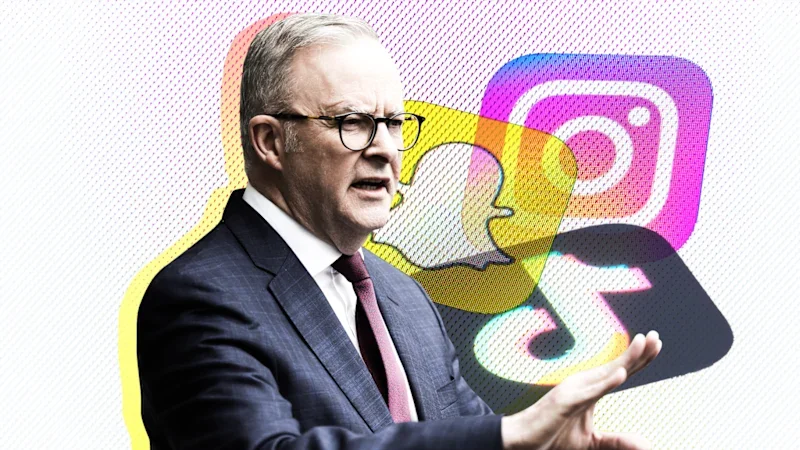
More than eight in 10 Australian teenagers were still using social media three months after the government’s landmark ban on the platforms for under-16s took effect because the tech firms failed to implement effective age checks, the country’s internet regulator has found.
In a study published on Friday, eSafety also found most children aged between 10 and 15 were using social media just as frequently in March as they had before the ban came into force on December 10 last year, while parental awareness of their habits decreased.
Children’s social media use continued even as account ownership declined to 42 per cent from 52 per cent, with “statistically significant” reductions across YouTube, Snapchat and TikTok in particular, the report said.
“Most under-16s who had social media accounts before commencement were able to either retain them or create new ones at the three-month mark, with social media platforms’ failure to implement effective age assurance measures cited as the main reason,” eSafety said in a statement.
Australia introduced the world-first ban because of concerns about the impact of social media on the mental and physical health of children and young people. Its implementation is being closely watched by many nations that have since sought to introduce their own curbs.
Before the ban, nearly 86 per cent of children surveyed reported using at least one age-restricted platform. Three months later, that figure remained above 81 per cent, the report said.
About 58 per cent of teenagers reported using social media daily or more often, barely down from roughly 60 per cent before the ban, it found.
The report showed minimal change in “sports and physical activity, arts and music, spending time with friends and family, and attendance at community events”.
Teens say ages not checked
Around half the children who retained their accounts said platforms had not checked their age, the most common reason they were able to stay on the services.
Others said their accounts listed them as aged 16 or older or that age-checking systems had incorrectly determined they were older.
The findings broadly matched snapshot data eSafety published in late March.
After the March update, eSafety announced it was investigating possible non-compliance by five platforms: Meta’s Facebook and Instagram, Snapchat, TikTok and Google’s YouTube.
The government said in June it would double the maximum penalty on tech firms that failed to uphold the ban, and strengthen eSafety’s information-gathering powers.
“While eSafety has observed some improvements by industry since its March social media minimum age update, concerns remain about the compliance of the five platforms named at that time,” the regulator said.
Meta, Snapchat, TikTok and Google did not immediately respond to requests for comment.
The report, prepared by a global advisory panel of university researchers, compared data collected from more than 4000 children and families before the ban and three months after it started.
It is the first report to be released as part of a two-year study to evaluate the outcomes of the ban.
While some children surveyed before the ban said they expected negative mental health effects, more than 65 per cent said the ban had had no impact, the data showed.
The report also noted an increase in children’s use of messaging platforms and online gaming.
The number of children using Reddit rose from 6 per cent to more than 9 per cent, with or without an account, noted the report. Reddit, which is challenging its inclusion in the ban in the High Court, was not immediately available for comment.
The ban could also be creating unintended consequences – including a decline in parental awareness of children’s use of social media – the report said.
“This dynamic may have implications for help-seeking behaviours and the identification of online harms, as reduced parental awareness could limit opportunities for support or early intervention,” it said.