- READ MORE: Warning to Britons over an invasion of Asian Hornets
- See more Daily Mail on Google - save us as a Preferred Source
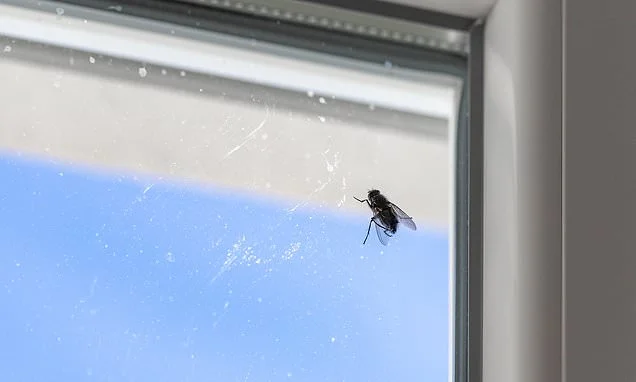
Britain could be heading for a summer fly invasion, scientists have warned – as the country’s wasps appear to have mysteriously vanished.
The absence of the familiar ‘buzz’ may seem like welcome news for anyone hoping to enjoy a picnic in peace.
But experts say the lack of wasps could have unfortunate consequences because they are among nature’s most effective pest controllers.
Seirian Sumner, a professor of Behavioural Ecology at University College London (UCL), said there have been an unusually low number of reports of wasps across the UK so far this summer.
She said the most likely explanation is the exceptionally hot and dry spring, which created difficult conditions for queens trying to establish new colonies.
Without healthy wasp colonies, populations of flies, aphids, caterpillars and other insects that the predators normally hunt could rise sharply later in the season.
‘Their absence greatly worries me,’ Professor Sumner wrote on The Conversation.
‘Love them or hate them, wasps are important in ecosystems as pest-controllers, pollinators and decomposers.’
Britain could be heading for a fly invasion this summer, as the wasps that prey on them seem to have mysteriously disappeared
Each spring, a single wasp queen emerges from hibernation and must build a nest alone before raising the first generation of workers.
If the queen dies during this vulnerable period, the entire colony is lost before it has even begun.
Spring in the UK this year was defined by unprecedented heat alongside cold, damp days and unexpectedly chilly nights.
Such weather extremes may have caused queens to abandon their nests or die, Professor Sumner explained.
‘This time last year – also a warm spring and hot summer – the media airwaves were filled with “plagues of wasps” stories,’ she said.
‘Now, even professional pest controllers tell me it’s a quiet year with very few requests to remove wasp nests.’
While many people think of wasps as aggressive picnic pests, they perform vital ecological roles that often go unnoticed, she said.
A healthy wasp colony can contain several thousand workers by August, each hunting insects to feed the growing brood.
However, fewer wasps means less predation – giving pests such as flies a chance to thrive.
Adult wasps also visit flowers to drink nectar and inadvertently help pollinate plants, although they are far less efficient pollinators than bees.
Professor Sumner stressed that it is too early to know whether wasp numbers will recover later in the season or whether this year will prove to be an unusually poor one.
She urged people who encounter wasps this summer to give them a helping hand.
‘Share your alfresco meal with a wasp,’ she suggested. ‘When it approaches, don’t flap it away.
‘It might be desperate for some protein – your picnic ham – to feed her brood. In the absence of flowers for nectar, it might be in need of something sugary – some jam – for her own nutrition.’
There are roughly 9,000 species of wasp in the UK, but only a handful regularly sting people or become a nuisance around food.
The common wasp and German wasp are the two species most often encountered in British gardens during late summer.