Like many of you, I’ve spent much of my week glued to the Herald’s ICAC blog, devouring each post about the hearing that is gripping Sydney. The revelations are coming thick and fast, and the shockwaves are being felt well beyond the commission’s nondescript offices in Sydney’s CBD. As far, in fact, as the opposition leader’s office in Canberra.
The hearings are expected to last for another seven weeks, so strap yourselves in.
This week, we’ve heard from two members of a group known as the NSW Reformers; young, deeply Catholic men from the hard right faction of the Liberal Party, who worked for Catholic Schools NSW and who are accused of funnelling undeclared donations from illegal donors via payments from the school organisation to a lobbying company.
If you took the word of one of those young men, one-time trainee priest Robert Assaf, the inquiry is uncovering little more than the antics of “a bunch of 20-year-old people trying to figure things out”.
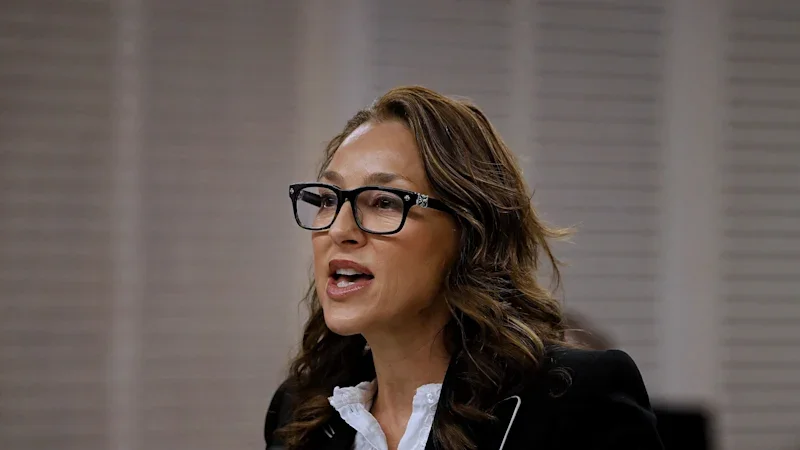
But in the commission’s view, their activity is far more serious. Under NSW law, it’s illegal to circumvent a donation ban. In the words of counsel assisting, the formidable senior counsel Peggy Dwyer – read more about her in Bevan Shields’ piece – the exploitation of donation rules can lead to dangerous consequences, such as donors seeking favours.
“Big spending participants can also drown out smaller players and new entrants, potentially undermining the democracy we take for granted in NSW,” she said. “And importantly, a system of government that we take for granted as not being able to be bought and sold, can be harmed in a way that may cause long-term damage to our faith in democracy and the willingness of citizens to involve themselves in political affairs.” (The question of how this behaviour fits God’s plan was explored in this piece by Malcolm Knox.)
The Herald has four of its most experienced reporters covering the hearing, relaying the highlights and analysing what it means. Alexandra Smith is a former political editor, Shields is a former Canberra bureau chief (and Herald editor), Jessica McSweeney is a state political reporter and expert blogger, and Kate McClymont – well, she needs no introduction.
Kate has been covering ICAC hearings since the late 1990s – her reporting has even led to a few of them – and she hasn’t lost any of her enthusiasm. “While the amounts of money are not nearly as astonishing as the Eddie Obeid inquiry, in which Obeid got $30 million and was about to get $30 million more before ICAC stepped in – that was personal enrichment on a nuclear level,” Kate says, “this is a more widespread inquiry into a whole group of people basically accused of undermining the democratic process. What makes it even more shocking was it was in the name of religion.”
Kate says that commission hearings have changed since the days when they were full of scribbling journalists and interested members of the public; this time, the hearing room is dominated by lawyers. There are six rows of them, with five desks in each row, appearing for the individuals and organisations named or mentioned in the inquiry.
The media is watching from an adjacent room, where a whiteboard is keeping track of the various relationships. “It’s like being back at school,” Kate says.
There are critics of the ICAC who accuse it both of being too powerful and not powerful enough; it has wide-ranging powers to compel witnesses and hear secret testimony but can’t send people to jail. “People forget that it’s the commission against corruption,” Kate says. “It’s not punitive; things it uncovers are sent to other agencies for consideration. It’s to expose things; to shine a light, to make our democracy better and stronger.”
On the subject of a stronger democracy, The Sydney Morning Herald on Friday learnt it had received 20 nominations in the Kennedy Awards, which celebrate the best journalism in Australia. Our reporters’ success in awards such as these demonstrate our commitment to outstanding journalism, the kind that also shines a light.
We were nominated in the crime category (Riley Walter), in the young journalist category (Emily Kowal), in scoop of the year (Amber Schultz) and in the headline category (Michael Ruffles). Our chief rugby league writer, Chris Barrett, received two nominations. Jane Cadzow from Good Weekend was nominated for her brilliant feature on Anthony Pratt, and three of our photographers were nominated (Edwina Pickles, Sam Mooy and Steven Siewert). This is by no means an exhaustive list.
I was most proud of the whole newsroom’s nomination for its coverage of the Bondi terror attack. The coverage was led by deputy editors Nick Ralston and Liam Phelan, but involved everyone; photographers, journalists and editors, who worked around the clock. When the worst happens, our readers need the Herald to be at its best, and we take that responsibility seriously.
Yet again I thank you, our subscribers. Your support allows us to do this important work.