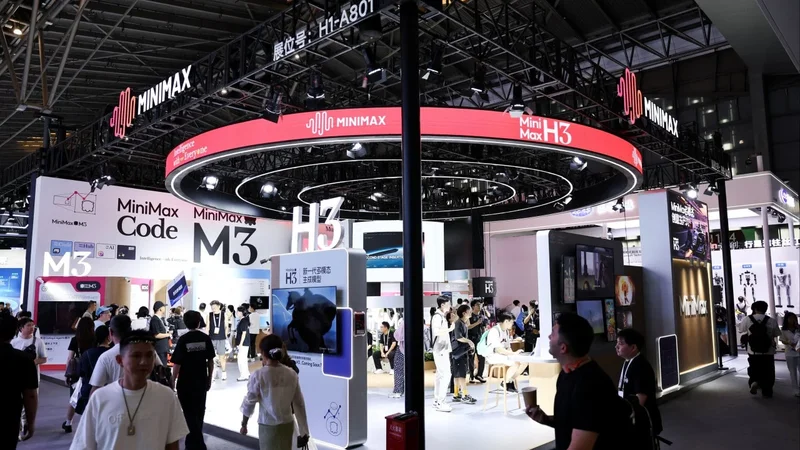
Video AI: MiniMax challenges ByteDance with low price, open weights for new H3 model
Firm aims to ‘support open-source community’ and a ‘broad range of hardware’, as H3 model bests Seedance 2.0 in some tasks
H3 was currently the world’s most powerful AI model in video editing, according to benchmark platform Artificial Analysis. However, it trailed Google’s Gemini Omni Flash in text-to-video tasks, and ranked behind both ByteDance’s Seedance 2.0 and Gemini Omni Flash in image-to-video capabilities.
Designed for commercial content creation across film, advertising, video games and product design, H3 is currently available via an application programming interface and MiniMax’s consumer-facing Hailuo AI platform.
Full model weights were slated for release “in the coming days”, MiniMax said on Friday.
While MiniMax’s previous Hailuo video models were proprietary, it decided to open up H3’s weights to “support the open-source community” and let users customise their own versions with “a broad range of AI hardware”, MiniMax said, citing hardware compatibility as a “key consideration” in H3’s design. Weights are the underlying parameters that encode an AI’s intelligence.
“Closed-source models have long dominated video generation, with slower iteration and a less open ecosystem than fields like large language models,” the company said in a blog post on Friday.
MiniMax would release H3’s weights under the MiniMax Community License, which permits free non-commercial use and commercial use for organisations with under US$20 million in annual revenue with attribution requirements, according to Artificial Analysis.