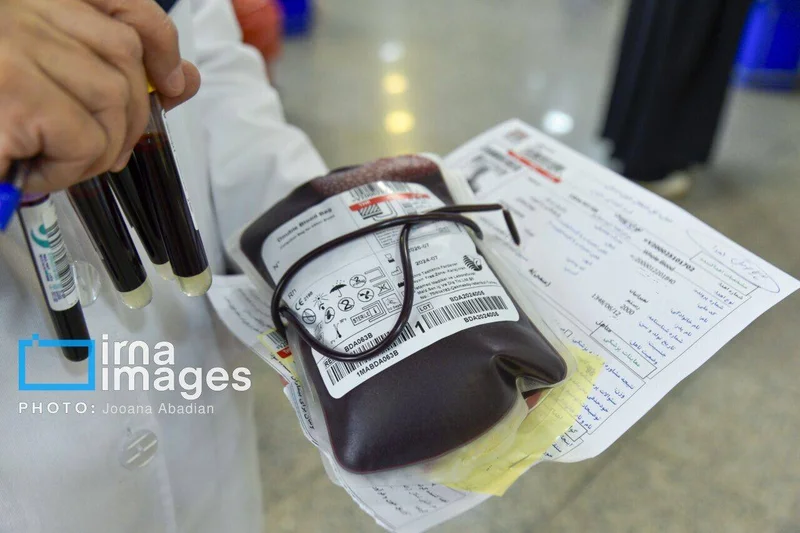
Blood donation: from altruism to saving lives
TEHRAN – National Blood Donation Day is marked annually on the 9th of Mordad, the fifth Iranian calendar month, which falls on July 31, highlighting the importance of the life-saving act of blood donation.
One in three individuals will need blood or blood products at some point in their lives, which demonstrates that blood donation is not just a benevolent, altruistic act. Still, a vital link in the chain of medical treatment, saving patients’ lives, IRNA reported.
Blood is the only living tissue for which no man-made substitute exists to date. Moreover, Blood supply can only be met through voluntary donation of healthy individuals. Hence, ongoing blood donation is essential, as the treatment of some patients, like traffic accident victims, women giving birth, those with cancers, thalassemia, hemophilia, and certain chronic diseases, mainly depends on blood.
Established in 1974, Iran Blood Transfusion Organization (IBTO) is considered a key pillar of the country’s health system, which is responsible for supplying safe and adequate blood for patients through the expansion of the blood transfusion network, the enhancement of blood safety standards, and the promotion of a culture of voluntary donation.
The National Blood Donation Day aims to remind everyone of the importance of this humanitarian and responsible act, highlighting that every blood donation is a gift of hope that helps treat many patients.
Luckily, blood donation is completely voluntary in Iran; each year, more than two million people donate blood, playing a key role in meeting the needs of medical centers across the country.
This remarkable level of public participation has placed Iran among the nations that have established their blood supply systems on the foundation of voluntary, altruistic donation.
Around 1.7 percent of the country’s population donates blood regularly, and the blood donation index is 27 per 1,000 population. According to the CEO of IBTO, Ahmad Qarah-Baghian, Iran is the first and sole country in the Eastern Mediterranean region that has been able to meet the country’s need for blood and blood products, relying entirely on voluntary and unpaid blood donations.
However, the need for blood is growing. The advances in medicine and the aging population are the two factors that increase the demand for blood and blood products, Babak Yektaparast, an official with the IBTO, said on the occasion of the national Blood Donation Day.
According to Yektaparast, the amount of blood donation needs to be increased by 10 to 15 percent in the next five years. Currently, the majority of donors are aged 35-50; it is essential to promote a culture of blood donation among the youth and women who comprise half of the country’s population.
Observed on June 14 every year, World Blood Donor Day appreciates the millions of voluntary, unpaid blood donors whose generosity saves lives every day. Their contributions are essential to health systems everywhere, supporting patients during emergencies, childbirth, surgeries, cancer treatment, and the lifelong care of many serious conditions.
Themed ‘One Drop of Humanity. Give Blood. Save Lives.’, This year’s campaign places humanity at the heart of every blood donation. It reminds everyone that each donation is more than a medical act: it is a powerful expression of solidarity, compassion, and collective responsibility.
Visiting the IBTO on the occasion of World Blood Donor Day, the World Health Organization (WHO) representative in Iran, John Jabbour, described the IBTO as a successful role model in the region.
“The Iran Blood Transfusion Organization is one of the most important and centralized blood transfusion centers in the region. The coherence and coordination of activities across the country have strengthened the organization, and this integrated structure plays a key role in ensuring the quality and safety of blood,” Jabbour said.
“The World Health Organization is ready to enhance cooperation with the Iran Blood Transfusion Organization and provide technical and specialized support to the organization to improve blood transfusion services,” he added.
Referring to blood safety indicators in the country, the official said the safety of donated blood in Iran is comparable to that of developed countries, which highlights the high quality of services and standards of the IBTO.
MT/MG