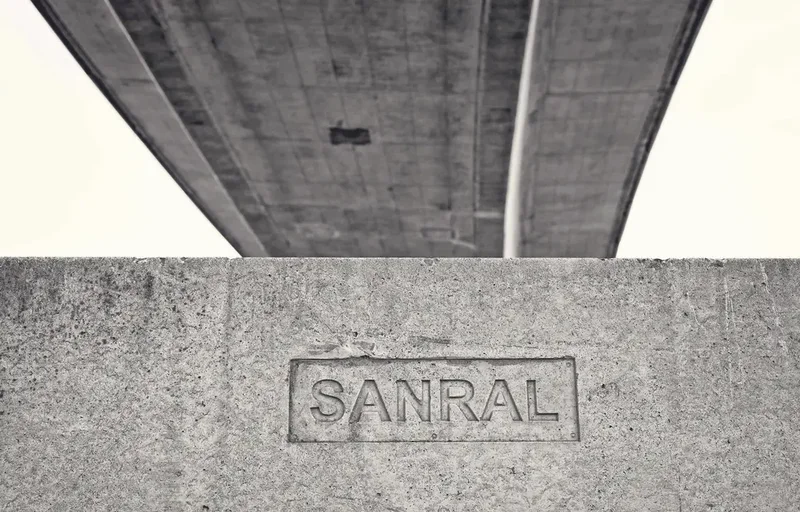
The department of forestry, fisheries and the environment (DFFE) is deciding whether to issue a compliance notice against the South African National Roads Agency (Sanral), eight months after inspectors found serious environmental non-compliance during construction of the N2 Wild Coast Toll Highway in the Eastern Cape.
The DFFE inspection followed complaints the Amadiba Crisis Committee (ACC) lodged with the department and the South African Human Rights Commission in June 2025, alleging wetland destruction, pollution of water sources and impacts on the Khanyayo community.
The ACC has long argued that the N2 should follow an inland alignment rather than the approved coastal route, saying that would better protect sensitive ecosystems, safeguard water resources and reduce impacts on communities.
The department confirmed to the Mail & Guardian that after the inspection, it had issued Sanral with a notice of intention to issue a compliance notice. Inspectors had found serious non-compliance with applicable environmental legislation relating to wetland destruction and pollution of water resources during an October 2025 inspection.
In a letter dated 11 December 2025, the department informed the ACC that its inspection had confirmed two of the three complaints constituted “serious non-compliance” with environmental legislation and authorisation conditions relating to wetland destruction and pollution of water resources. It said the matter had been referred for enforcement.
Sanral had made representations in response to its notice of intention to issue a compliance notice, which had been reviewed and verified. It said it was “finalising its decision on the way forward and appropriate enforcement action”.
“Should a compliance notice ultimately be issued, it would set out the interventions and measures that Sanral will be required to implement.”
The department declined to provide details of follow-up inspections while the enforcement process was active. It stressed that its enforcement action related only to the specific activities and areas where inspectors identified non-compliance rather than the N2 project as a whole.
“At this stage, the department has not required construction to cease. The enforcement
process will determine the appropriate remedial measures, if any, to address the identified non-compliances.”
While the department’s enforcement process stems from its own inspection, the community has continued to document what it says are ongoing environmental impacts.
The technical teams of the Khanyayo Crisis Committee (KCC) and the ACC commissioned an independent environmental compliance assessment of the N2 Wild Coast Toll Highway construction works.
Prepared by wetland ecologist Steven Ellery of Ground Truth and dated 6 July 2026, the report identified repeated and significant compliance concerns relating to the management and protection of aquatic ecosystems.
The assessment documented extensive sedimentation of watercourses, unnecessary disturbance of wetlands and riparian areas, and possible unauthorised access road crossings through watercourses.
The report concluded that the findings pointed to “broader and potentially systemic shortcomings” in environmental management, construction footprint control, erosion prevention and the implementation of measures to protect aquatic ecosystems.
The assessment recommended further investigation and timely remedial action to prevent further degradation and ensure compliance with environmental obligations.
Although the DFFE said it had not formally received the report as part of its enforcement process, the ACC said its findings were presented to departmental officials during a virtual meeting on 7 July.
Vuyokazi Norolela, a member of the KCC, said residents were not opposed to the development but believed the project was failing to protect communities and the environment.
“We are happy about development but the way it is being done is not adhering to the environmental impact assessment,” she said.
Wetlands store and filter water, reduce flooding, recharge groundwater and support biodiversity, making them a critical source of fresh water for many rural communities.
Norolela said wetlands were the community’s primary source of fresh water and warned that damaging them threatened residents and their livestock.
“The wetlands are the only source of fresh water for the community members to survive. If someone is going to damage the wetlands, there should be a plan in place to ensure that the community members do not suffer in terms of accessing clean water,” she said.
She also questioned whether affected communities had been properly consulted and said residents felt they were sometimes portrayed as opposing development when they raised concerns.
“This is not about politics. It’s about the welfare of the community,” she said.
Sanral confirmed it had received the DFFE’s notice of intention to issue a compliance notice on 20 February and had submitted representations on 5 March, asking the department to reconsider issuing a compliance notice until certain aspects of the notice had been clarified and investigations by the DFFE and other authorities had been completed.
The agency said it remained committed to responsible environmental management and was cooperating with the department while awaiting its decision.
Sanral said it had not received either the DFFE correspondence referred to by the M&G or the independent Ground Truth compliance assessment and was therefore unable to comment directly on those findings.
Sanral rejected claims that the project’s environmental management measures were inadequate, saying the N2 Wild Coast Toll Highway had undergone a comprehensive environmental impact assessment that included specialist wetland studies, peer review and consideration of alternative route options before receiving environmental approval.
The agency said the project was being implemented under an extensive environmental management programme and biodiversity offset programme, supported by specialist environmental managers, environmental control officers, independent auditors and regular compliance monitoring.
It said the structures ensured environmental compliance was monitored and corrective action taken where necessary.
Sanral said affected communities had several channels through which to raise concerns, including project liaison structures and environmental oversight bodies. It added that complaints had led to compliance inspections by the authorities.
“Given the above, the argument that the project's environmental management measures are not being effectively implemented has no basis,” the agency said.
Nonhle Mbuthuma, the co-founder and spokesperson of the ACC, said the situation on the ground had not improved.
“The destruction of wetlands has continued and we continue to send the evidence to the DFFE together with the people of Khanyayo — photos, videos — demanding compliance,” she said. “There is nothing that’s changed on the ground.”
Mbuthuma said the continued environmental damage reinforced the ACC’s long-standing call for the N2 to be moved from the environmentally sensitive coastal corridor to an inland route.
She argued that the impacts on wetlands and water sources showed Sanral was unable to adequately comply with the project’s environmental authorisation and warned of long-term consequences for biodiversity and water security.
“The Wild Coast is known for the beauty of its biodiversity. If the road continues along the coast, the whole coastline will be destroyed, along with the wetlands,” she said.
“The more the wetlands are destroyed, the more the water sources are destroyed. You are creating a permanent water crisis and destroying critical biodiversity. That is why we keep saying the best solution is to move the road a little further inland, not along the coast.”
Mbuthuma said that issuing a compliance notice would create an opportunity for a mid-term review of the project.
“After the expert report we presented on 7 July, there is no reason for the DFFE to wait with a compliance notice.”