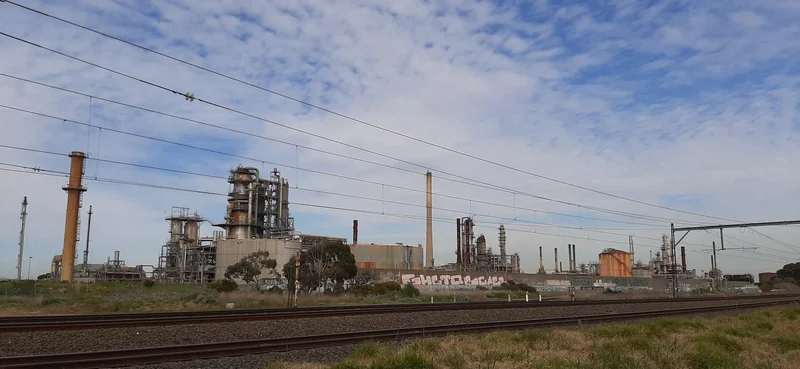
Trinidad Refinery Restart Gains US Backing at Pointe-a-Pierre
Energy · Trinidad and Tobago
Trinidad refinery restart efforts have gained diplomatic backing from the United States, which has offered to help the Caribbean nation find a partner for the shuttered Pointe-a-Pierre facility, Prime Minister Kamla Persad-Bissessar confirmed this week.
Diplomatic Push in Port of Spain
Prime Minister Kamla Persad-Bissessar has placed the resurrection of the state-owned refinery at the center of her energy diplomacy. She confirmed that restarting the plant was a primary agenda item during bilateral talks with visiting US Secretary of State Marco Rubio.
The high-level meeting yielded a concrete commitment from Washington. Secretary Rubio agreed to facilitate a direct connection between the Trinidad and Tobago government and the United States Department of Energy.
This intervention is designed to help the twin-island nation identify and vet what Persad-Bissessar termed ‘the best partner’ to operate the facility. The refinery, located at Pointe-a-Pierre in southern Trinidad, has been idle since 2018.
The Path to a Trinidad Refinery Restart
The US diplomatic channel is not the only avenue being pursued by Port of Spain. The government is simultaneously engaged in substantive discussions with Indian Oil, a major state-owned energy company from India.
Furthermore, a regional dimension has emerged. Trinidad and Tobago and neighboring Guyana, a booming oil producer, have explored a joint effort to reopen the facility.
Energy Minister Roodal Moonilal provided a firm timeline for the initiative. He stated that the government expects a clear roadmap for the restart to be finalized and presented by the end of 2026.
For international investors, the search for a partner represents a potential entry point into Caribbean downstream assets. The government is seeking an entity with both the technical expertise to run an aging plant and the financial capacity to fund a complex restart.
The Pointe-a-Pierre Legacy
The Pointe-a-Pierre refinery is a historic asset in the Western Hemisphere’s energy landscape. Before its closure in 2018 by the previous administration, it was the largest refinery in the Caribbean, with a nameplate capacity that once exceeded 160,000 barrels per day.
Its shutdown transformed Trinidad and Tobago from a regional fuel exporter into an importer of refined products. The closure created a strategic gap in the Caribbean’s fuel supply chain, increasing dependence on imports from the US Gulf Coast.
Restarting the Trinidad refinery is therefore not merely a local economic issue. It carries significant implications for regional energy security, a factor that likely underpins Washington’s willingness to assist.
Cash and Crude: The Analyst View
Despite the diplomatic momentum, energy analysts caution that formidable obstacles remain. The viability of the restart hinges entirely on two critical factors: cash and crude supply.
Securing the capital expenditure required to refurbish a plant that has been mothballed for nearly a decade is a multi-hundred-million-dollar challenge. Any operating partner will need to commit significant financial resources.
The second hurdle is securing a reliable and economically viable feedstock. Analysts have pointed to the potential necessity of sourcing crude oil from Venezuela, which sits just miles away from Trinidad’s southern coast.
While a US license would be required to handle Venezuelan oil due to sanctions, Washington’s direct involvement in the partner search suggests a potential alignment of diplomatic and energy interests. This could create a framework for a sanctions-compliant supply deal.
Regional Energy Security Implications
The refinery’s fate is intertwined with the broader energy architecture of the Caribbean Community (CARICOM). A functional Pointe-a-Pierre plant would restore Trinidad’s role as a critical fuel supplier to neighboring islands that lack refining capacity.
The collaboration with Guyana adds a new layer to this regional dynamic. Guyana, home to massive offshore discoveries by ExxonMobil, is primarily a crude exporter with no refining capacity of its own.
A joint venture could see Guyanese crude processed in Trinidad, creating a natural synergy between the region’s newest oil producer and its most established energy hub. This would reduce the region’s overall reliance on imported fuel.
Roadmap to 2027
With the end-of-year deadline for a roadmap approaching, the coming months will be critical for technical evaluations. The US Department of Energy’s role is expected to focus on technical due diligence and identifying firms with the specific expertise required for a refinery of this vintage.
For the international business community, the signal from Trinidad is clear. The government is leveraging its diplomatic ties to de-risk the project and attract a credible international operator.
The success of the initiative will ultimately be measured by whether the roadmap translates into a binding agreement. If successful, the Trinidad refinery restart could become a case study in how diplomacy can catalyze the rehabilitation of stranded energy assets.
Frequently Asked Questions
Why did the Pointe-a-Pierre refinery close?
The state-owned refinery was shuttered in 2018 by the previous administration due to mounting financial losses and operational inefficiencies, transforming Trinidad from a fuel exporter into an importer.
What role is the United States playing in the restart?
The US has offered to connect the Trinidad and Tobago government with the US Department of Energy to help identify a technically and financially capable partner to operate the facility.
When is a decision expected on the Trinidad refinery restart?
Energy Minister Roodal Moonilal expects a clear roadmap for the restart to be completed by the end of 2026, with the government currently evaluating multiple potential partners.