Topline
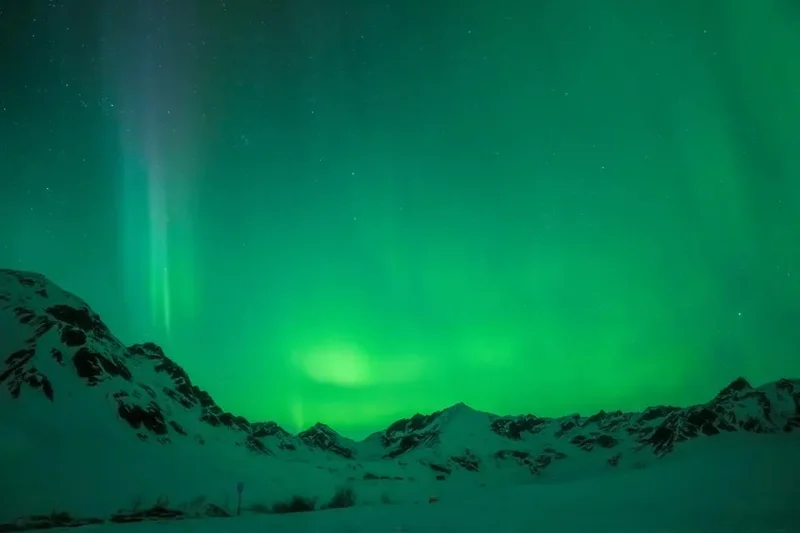
The aurora borealis may make an appearance in up to nine states Friday night, according to the National Oceanic and Atmospheric Administration, which forecast mild auroral activity for a handful of northern U.S. states.
Key Facts
A Kp index of four has been issued for Friday night, meaning the aurora can be “quite pleasing” to look at for people in the right places.
Geomagnetic storms, which can strengthen northern lights showings, have not been forecast for Friday.
Those hoping to get another look at the northern lights could potentially wait until Saturday, as NOAA has forecast slightly stronger auroral activity and a Kp index of five.
Where Will The Northern Lights Be Visible?
Areas included in Friday night’s forecast include northeastern Washington, the northern tip of Idaho, northeastern Montana, North Dakota, the northernmost stretches of South Dakota, northern Minnesota, the northern tip of Wisconsin and the Upper Peninsula of Michigan. Alaska will have the best chance of seeing the northern lights.
What’s The Best Way To See The Northern Lights?
Between 10 p.m. and 2 a.m. usually provides the best viewing of the northern lights, as do high vantage points and places with little to no light pollution.
What’s The Best Way To Photograph The Northern Lights?
Smartphone users should avoid using flash and use night mode on their devices if possible. If applicable, photos can be taken with low apertures, wide-angle lenses and tripods.
Key Background
The northern lights are created by charged particles from the sun entering Earth's magnetic field and upper atmosphere. Solar flares from the sun happened consistently in 2024, when the sun reached the peak of its 11-year solar cycle, marking a 500-year high in auroral activity. However, the more time that passes from the peak, northern lights showings are expected to decrease.
Further Reading
Aurora Dashboard (NOAA)