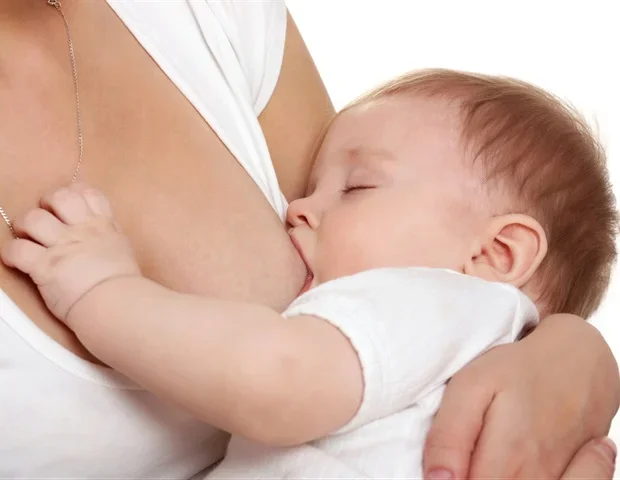
Ahead of World Breastfeeding Week (1-7 August), the Pan American Health Organization (PAHO) is calling on countries across the Americas to strengthen protections for families against the growing digital marketing of breast-milk substitutes and other products that may undermine breastfeeding.
While breastfeeding remains one of the most effective interventions for protecting the health and development of infants and young children, the environment in which families make feeding decisions has changed dramatically. Personalized advertising on social media, influencers, algorithms, and artificial intelligence are creating new challenges to ensuring that parents and caregivers receive objective, evidence-based information.
Breastfeeding provides optimal nutrition for infants, strengthens their immune systems, reduces the risk of illness, and supports healthy growth and development. It also offers significant health benefits for mothers.
In Latin America and the Caribbean, only 43% of infants are exclusively breastfed during their first six months of life, well below the global target of 60% by 2030. According to PAHO, this gap is driven by multiple factors, including an increasingly sophisticated digital environment that can influence infant feeding decisions.
PAHO warns that many of these marketing strategies operate largely out of public view. Companies are increasingly using digital tools to target pregnant women, new mothers, and other caregivers through social media promotions, influencer endorsements, and advertising embedded across digital platforms.
Breastfeeding is far more than an individual choice. It is one of the most effective ways to give children the best possible start in life. In the digital age, protecting breastfeeding also means protecting families from commercial practices that may influence their decisions."
Vanessa Garcia Larsen, Chief of PAHO's Risk Factors Unit
Data presented during a recent PAHO regional seminar show that only 45% of countries in Latin America and the Caribbean have adopted measures related to the International Code of Marketing of Breast-milk Substitutes. Only two countries, Brazil and Argentina, have achieved substantial alignment with the Code, while several Caribbean countries still lack specific legislation. In addition, regional monitoring identified potential violations across social media platforms, websites, and other digital channels, where most of the advertising reviewed was found.
"Marketing and promotion of commercial milk formula products have evolved, and the digital environment remains a regulatory gap that has yet to be adequately addressed," said Mónica Mazariegos, a researcher at the Institute of Nutrition of Central America and Panama (INCAP). "Digital strategies allow companies to reach mothers, fathers, and caregivers frequently and with highly personalized advertising."
Mazariegos noted that more than 80% of advertising for these products occurs through digital channels. Studies conducted in Central America have found that exposure to such marketing is associated with a higher likelihood of purchasing and using these products, as well as an almost 50% reduction in continued breastfeeding beyond 12 months.
The International Code of Marketing of Breast-milk Substitutes was adopted by the World Health Assembly in 1981 to protect breastfeeding and ensure that infant feeding decisions are not influenced by inappropriate commercial practices. More recently, the World Health Assembly adopted a resolution expanding the scope of the Code to better address digital marketing practices, including social media, content creators, influencers, and other online platforms.
Experts participating in the seminar agreed that responding to these challenges will require updating legislation to cover digital marketing, strengthening monitoring and enforcement mechanisms, using new technologies to detect violations, and enhancing regional cooperation to address advertising that easily crosses national borders. They also highlighted the need to protect personal data and increase transparency around targeted advertising practices.
PAHO also emphasizes that protection from the marketing of breast-milk substitutes must be complemented by breastfeeding support services, family counselling, and policies that enable women to breastfeed for the recommended duration. These measures are among the most effective interventions to promote, protect, and support breastfeeding.
"The goal is to ensure that families have access to objective, evidence-based information that is free from undue commercial influence," Garcia Larsen added. "Achieving this requires updated regulatory frameworks, effective monitoring systems, and greater transparency in the digital environment."
World Breastfeeding Week 2026 will be observed from 1 to 7 August under the theme "Breastfeeding for a Sustainable Start in Life: Strengthen What Works." As part of the week's activities, PAHO will host a virtual seminar on 7 August to share experiences and strategies for strengthening breastfeeding policies and support programs across the Region.