The non-repeating nature of this process can make it feel lively. And there’s a sense in which it can make the new systems more human-centered. When you synthesize a new image with an A.I. tool, you may get a bunch of similar options and then have to choose from them; if you’re a student who uses an L.L.M. to cheat on an essay assignment, you might read options generated by the model and select one. A little human choice is demanded by a technology that is non-repeating.
Many of the uses of A.I. that I like rest on advantages we gain when computers get less rigid. Digital stuff as we have known it has a brittle quality that forces people to conform to it, rather than assess it. We’ve all endured the agony of watching some poor soul at a doctor’s office struggle to do the expected thing on a front-desk screen. The face contorts; humanity is undermined. The need to conform to digital designs has created an ambient expectation of human subservience. A positive spin on A.I. is that it might spell the end of this torture, if we use it well. We can now imagine a Web site that reformulates itself on the fly for someone who is color-blind, say, or a site that tailors itself to someone’s particular cognitive abilities and styles. A humanist like me wants people to have more control, rather than be overly influenced or guided by technology. Flexibility may give us back some agency.
Still, despite these possible upsides, it’s more than reasonable to worry that the new technology will push us around in ways we don’t like or understand. Recently, some friends of mine circulated a petition asking for a pause on the most ambitious A.I. development. The idea was that we’d work on policy during the pause. The petition was signed by some in our community but not others. I found the notion too hazy—what level of progress would mean that the pause could end? Every week, I receive new but always vague mission statements from organizations seeking to initiate processes to set A.I. policy.
These efforts are well intentioned, but they seem hopeless to me. For years, I worked on the E.U.’s privacy policies, and I came to realize that we don’t know what privacy is. It’s a term we use every day, and it can make sense in context, but we can’t nail it down well enough to generalize. The closest we have come to a definition of privacy is probably “the right to be left alone,” but that seems quaint in an age when we are constantly dependent on digital services. In the context of A.I., “the right to not be manipulated by computation” seems almost correct, but doesn’t quite say everything we’d like it to.
A.I.-policy conversations are dominated by terms like “alignment” (is what an A.I. “wants” aligned with what humans want?), “safety” (can we foresee guardrails that will foil a bad A.I.?), and “fairness” (can we forestall all the ways a program might treat certain people with disfavor?). The community has certainly accomplished much good by pursuing these ideas, but that hasn’t quelled our fears. We end up motivating people to try to circumvent the vague protections we set up. Even though the protections do help, the whole thing becomes a game—like trying to outwit a sneaky genie. The result is that the A.I.-research community communicates the warning that their creations might still kill all of humanity soon, while proposing ever more urgent, but turgid, deliberative processes.
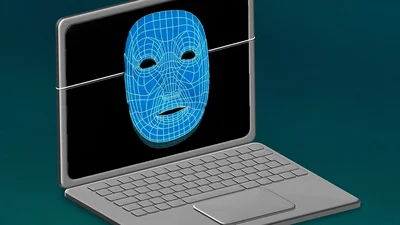
Recently, I tried an informal experiment, calling colleagues and asking them if there’s anything specific on which we can all seem to agree. I’ve found that there is a foundation of agreement. We all seem to agree that deepfakes—false but real-seeming images, videos, and so on—should be labelled as such by the programs that create them. Communications coming from artificial people, and automated interactions that are designed to manipulate the thinking or actions of a human being, should be labelled as well. We also agree that these labels should come with actions that can be taken. People should be able to understand what they’re seeing, and should have reasonable choices in return.