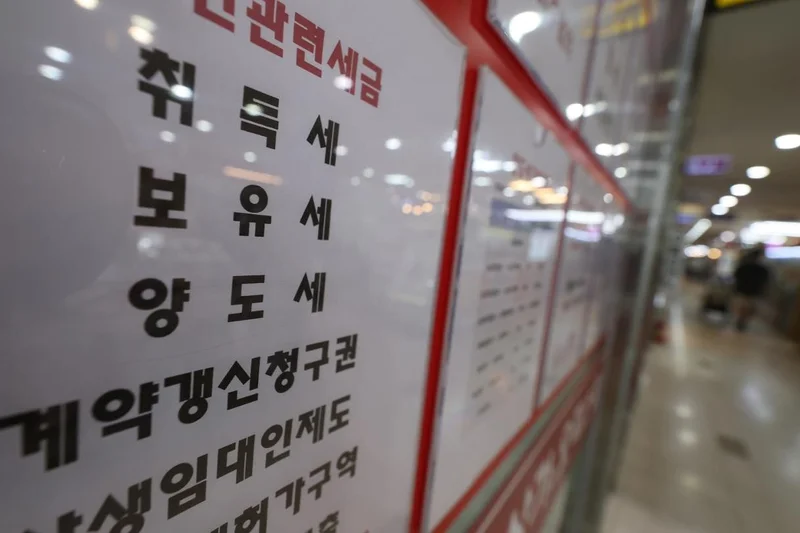
One in four people among both the general public and young adults view real estate and housing instability as the most serious problem facing the Korean economy and society today. More than six out of 10 young people predicted that Korea’s economic and social conditions would worsen over the next 20 years compared with the present.
The Ministry of Planning and Budget released the results of a survey containing these findings during a Future Strategy Advisory Council meeting chaired by Minister Park Hong-geun in central Seoul July 29. The ministry conducted a web-based survey from June 23 for one week, targeting 1,000 members of the general public aged 19 or older and 500 young adults aged 19 to 34.
According to the results, 25.7 percent of the general public identified real estate and housing insecurity as the country’s most serious economic and social problem. Among young respondents, 27.8 percent also cited housing as the biggest problem.
The two groups differed, however, on what caused them the most anxiety. Among the general public, the largest share, 24 percent, cited the burden of housing and living costs, while 36.4 percent of young respondents pointed to job and business instability.
When asked about Korea’s prospects 20 years from now, pessimism outweighed optimism in both groups. Among the general public, 43.4 percent believed the country would be worse off. The figure rose to 61.6 percent among young Koreans.
Only 28.9 percent of the general public and 12.6 percent of young respondents believed the country would be in a better state 20 years from now.
On the question of the greatest source of uncertainty likely to shape Korea over the next 20 years, both groups chose changes in the country’s demographic structure. The response was selected by 47.8 percent of the general public and 43.8 percent of young respondents.
Differing priorities were shown when the two groups were asked to identify which goal the government should prioritize in its medium- to long-term national development strategy.
The most common response among the general public was “ensuring stable lives and improving people’s well-being,” cited by 27.2 percent. Meanwhile, 31.6 percent of young Koreans chose “promoting economic growth and strengthening industrial competitiveness.”
“Future strategy should not be determined unilaterally by the government. It becomes meaningful only when it incorporates a range of perspectives from the public and experts,” Park said. “Based on the expectations and concerns of the general public, particularly young people and other members of the next generation, we will carefully chart the direction Korea should take over the next 20 years.”
This article from the Hankook Ilbo, the sister publication of The Korea Times, is translated by a generative AI system and edited by The Korea Times.