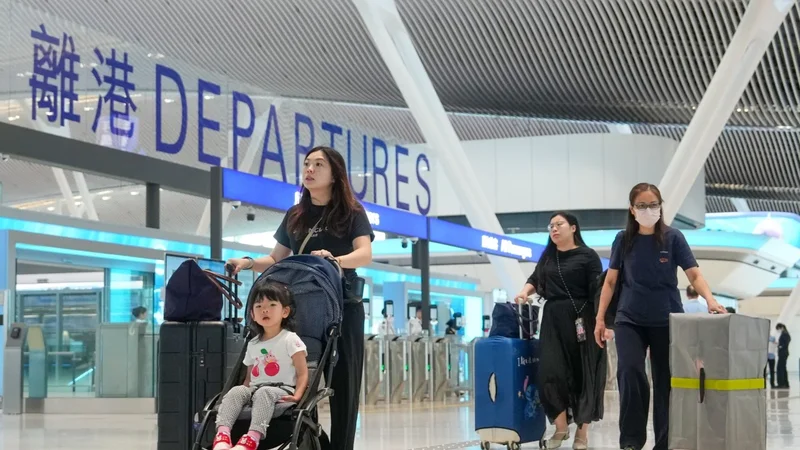
Targeted viral surveillance of transit passengers at just two major aviation hubs, Hong Kong and the United Arab Emirates, could speed global detection of new variants by about three days, a university study has found.
Professor Leo Poon Lit-man, chair of public health virology at the University of Hong Kong (HKU), said on Wednesday that the approach would help authorities stay ahead of emerging threats.
“Strengthening local surveillance in all regions remains the foundation of global health security. Our proposed strategy does not require redistributing resources from other regions,” he told a radio programme.
“Instead, it leverages surveillance at just two busy international aviation hubs to capitalise on existing capacity. This approach can establish an early warning system that benefits everyone, accelerating detection of emerging viruses without compromising surveillance elsewhere.”
The findings were published in the journal Nature Communications in March.
The study, conducted by researchers from the School of Public Health at HKU’s LKS Faculty of Medicine, found that strategically targeting genomic surveillance of international travellers at two major aviation hubs could speed up detection of emerging viral variants by several days, even with limited global resources.