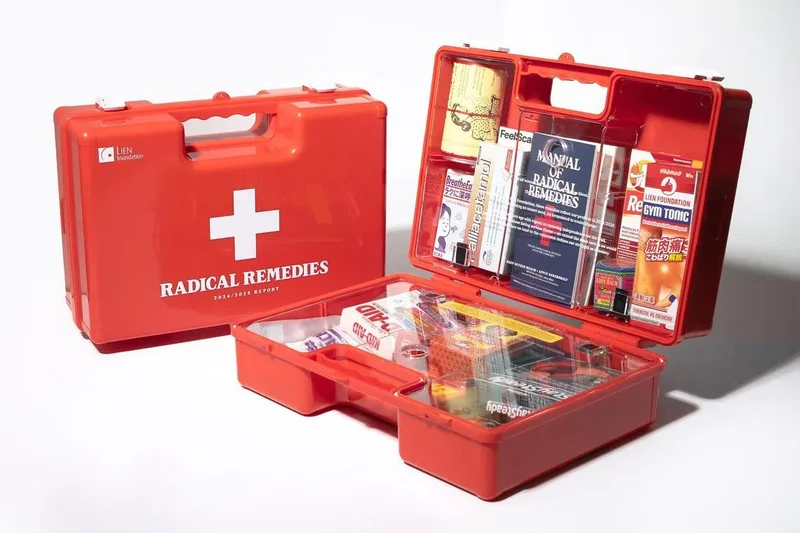
Lien Foundation’s latest biennial report is a first-aid box
AI generated
SINGAPORE – Lien Foundation, the Singapore-based philanthropic house, has been coming up with unconventional annual reports since it released its 2008-2009 “RIP report” that carried the message “We are going to die”, to promote open conversations about death.
In 2018-2019, there was the Georgraphy report that explored the changing landscapes and social topography of Singapore. These reports are the foundation’s way of communicating complex matters in a creative and powerful manner.
Lien Foundation has done it again.
Its latest 2024-2025 report is literally a first-aid box of “radical remedies”.
Designed by independent creative agency Kinetic Singapore, the concept organises 46 of the foundation’s projects into 14 first-aid items and one bonus remedy, all reimagined to highlight its work in the past two years.
“More than a metaphor, the kit has become a functional keepsake that bridges professional familiarity with engaging storytelling for its recipients, 45 per cent of whom are clinicians in hospitals and the community,” said Lien Foundation chief executive Lee Poh Wah.
Here is a breakdown of how some of these remedies work:
1. 10 caplets of paracetamol: Palliative care programmes
Indication: Confusion, shock, fear, anger upon hearing that death is imminent, guilt about leaving people behind, anxiety about death.
Active Ingredients: A Kinder ICU, which aims to improve the intensive care unit experience for patients and families; Renalssance, which integrates palliative care services into the treatment of patients with advanced chronic kidney disease; among others.
Dosage: New initiatives to be launched later in 2026 will centre on the provision of generalist palliative care support to patients.
Side Effects: Sense of relief, alleviated pain, feelings of serenity, reduced fear of death; families growing closer through the shared grief and care support.
2. 10 pain-relieving patches: Rehabilitation care
Indication: Reduced strength, loss of mobility and a strong urge to stay isolated at home following a stroke or neurological condition.
Active Ingredients: Rehabilitation efforts, which include adaptive gym equipment for stroke survivors to rebuild their strength and confidence, and community-based Parkinson’s disease rehabilitation and support.
Dosage: Use on affected limbs to rebuild strength and hope.
Side Effects: Improved energy levels that make simple daily tasks easier; an urge to reconnect with the outside world.
3. A bottle of topical pain reliever: Gym Tonic
Indication: Minor aches and pains; stiffness in muscles and joints; acute gym-phobia among seniors.
Active Ingredients: Gym Tonic, a senior-friendly gym programme introduced in 2015 in nursing homes and senior care centres. It has since expanded to gyms in active ageing centres and community clubs.
Dosage: Available at 30 locations islandwide, with two more opening later in 2026.
Side Effects: Building muscles you never knew you had; feeling invigorated; a broad grin whenever you think of beating your grandchildren at arm wrestling.
4. Small bottle of cola: Bonus remedy
Indication: A feeling of being down in the dumps, or a sense that the body is being attacked by unseen forces.
Active Ingredients: Boiled cola with ginger and lemon – not a scientific cure but an “elixir” that has been passed down for generations, reminding us that care can be simple.
Dosage: A cup, served right after brewing, at the very start of a sniffle or minor throat tickle.
Side Effects: An undeniable comfort that soothes the soul; nostalgia overload.
5. Jar of “Lion balm”: The Silver Pride Lion Troupe
Indication: Loss of strength and feeling isolated, particularly because of mobility issues.
Active Ingredients: Lion dance training for seniors, including wheelchair users. The pilot troupe debuted in early 2024; the training is now housed under social enterprise Inheritage.
Dosage: Use before picking up the lion head.
Side Effects: A belief that healthy ageing can always be adapted to fit individuals.
6. A bottle of nasal spray: Community palliative care
Indication: Blockages in the nasal cavity and in the delivery of palliative care in the community.
Active Ingredients: Primary palliative care; integrated palliative care for persons with intellectual disabilities.
Dosage: A few sprays into the community.
Side Effects: Clearing of pathways to palliative care.
7. Five sachets of effervescent powder: Difficult conversations
Indication: Heartburn, acid indigestion, and bloating from avoiding hard topics.
Active Ingredients: These include conversations on suicide as well as on caregivers and foreign workers.
Dosage: Mix and consume to relieve discomfort.
Side Effects: Having honest conversations that you thought you were capable of only when drunk.
8. Ankle sleeve: Palliative care capabilities
Indication: Weak grounding in end-of-life care skills.
Active Ingredients: The Lien Centre for Palliative Care improves patient care through quality generalist palliative care training and research, while the Lien Collaborative for Palliative Care seeds such care capabilities across Asia. The foundation has also trained professionals in palliative care in Beijing, among other efforts.
Dosage: Apply locally or in the region.
Side Effects: Strengthening of healthcare systems; more individuals developing a strong resolve to support patients and their families through very hard times.
9. A small bottle of loquat syrup: Conversation starters
Indication: Sore throats, dry cough, at a loss of words because of having to discuss uncomfortable topics.
Active Ingredients: Conferences, forums and roundtables.
Dosage: Take one tablespoon whenever a topic requires discussion.
Side Effects: Honest, healing dialogues.