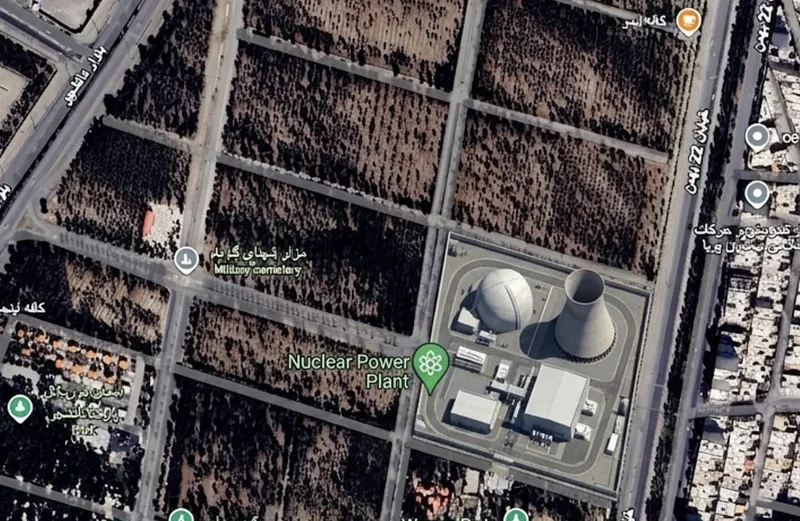
Google has put the brakes on an AI image-generation feature it had introduced in Google Earth just a day earlier, after users shared images that appeared to violate the company’s policies.
The feature, powered by Google’s Nano Banana 2 AI model, allowed users to generate photorealistic images grounded in Google Earth’s satellite, aerial and 3D imagery by simply typing a text prompt for any location on the globe.
The tool quickly came under criticism for its potential for misinformation that could have catastrophic consequences, as anyone could create fake scenarios on top of real imagery of monuments and landmarks.
Henk van Ess, an AI and misinformation expert based in Amsterdam, was scathing in his criticism of the company in a post on his Digital Digging website.
“Tonight I typed just one sentence into Google Earth and put refugees near the Mexican border,” he wrote. “Then I planted a nuclear plant in Iran. Then I put a fatal crash on a street in Amsterdam. Google’s own satellite imagery underneath all three. What on earth is Google doing?”
Less than 48 hours after announcing the feature, Google hit the pause button.
“We’ve seen geospatial professionals using this feature for a range of useful purposes, however we’ve also seen people sharing screenshots of generated imagery that appear to violate our policies,” the company said in a post on X, adding that it was pausing the capability while it works on “stronger guardrails”.
Google did not specify what types of images violated its policies. It said the images did not appear in the main Google Earth experience and were watermarked as AI-generated.
While tech giants have rushed to integrate AI tools across their products, they have had to adjust, restrict or temporarily disable features in response to user violations, misinformation and policy concerns.
Meta earlier this month discontinued Muse Image, an AI feature that allowed users to generate images using public Instagram accounts, after drawing widespread criticism over privacy concerns, including from a Hollywood union.
“Google spent twenty years building the reference the world checks against,” Mr van Ess wrote of Google Earth. “Today it added a button that makes things up.”