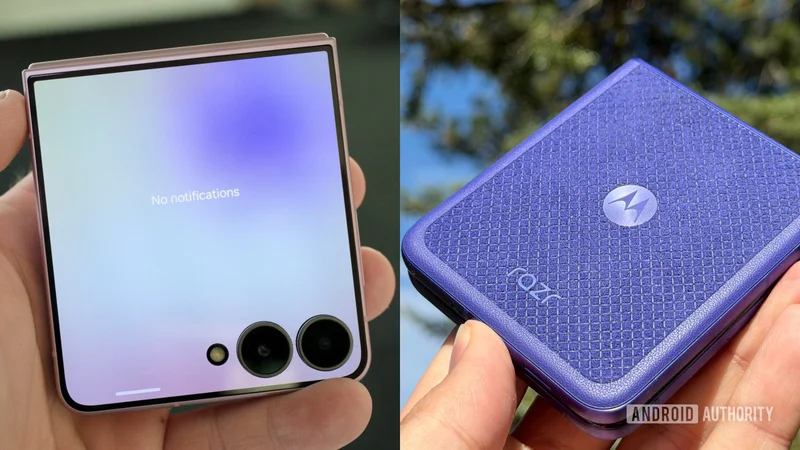
I've used the Galaxy Z Flip 8 and Motorola Razr Ultra 2026. Only one deserves your money
Aug 1, 2026 — 7:00 AM ET
Samsung’s latest (and possibly last) clamshell foldable is available for purchase, and it’s received mixed early reviews. I’ll admit I’ve had a contentious relationship with the Z Flip series over the years, especially once Motorola revamped its Razr lineup in 2023. The competition hasn’t been close since, as Motorola consistently provided the better user experience and value.
But Samsung hasn’t given up, and the Galaxy Z Flip 8 is undoubtedly its best flip-phone yet. It may not be a drastic departure from the outgoing Z Flip 7, but Samsung’s made some notable improvements. But with the Razr Ultra (2026) being excellent again this year, how well does it stack up?
I’ve had hands-on time with both, and there is only one I want in my pocket.
Razr Ultra 2026 vs. Galaxy Z Flip 8: Which phone are you most interested in buying?
What I like about the Samsung Galaxy Z Flip 8
At first glance, the Galaxy Z Flip 8 seems almost identical to its predecessor, but it would be unfair to say Samsung didn’t make any changes. It’s a lighter and thinner phone this year, measuring just 6.1mm when unfolded and weighing only 180g (not having a glass back this year has saved weight). That’s not a huge difference from the Galaxy Z Flip 7, but clamshell foldables are about style and portability, so it matters. You will absolutely notice that the Z Flip 8 is thinner in the hand, especially compared to the Z Flip 7.
Samsung also beefed up the Z Flip 8 under the hood, equipping it with a Snapdragon 8 Elite Gen 5 chipset — the same powerplant as its other high-end devices. I never complained about the Exynos 2500’s performance in my Z Flip 7, but the Z Flip 8 is undoubtedly the more powerful phone.
I may have my differences with Samsung over what makes an excellent foldable, but there’s no arguing with the company’s build quality. The Galaxy Z Flip 8 is a solid phone, with a sturdy build and durable hinge. Samsung’s new Flex Titanium technology certainly plays a role, and if you’re still wary of foldables because they seem fragile, the Z Flip 8 should go a long way toward easing your fears.
Samsung did a wonderful job upgrading the cover screen on the Galaxy Z Flip 7, finally giving us the 4.1-inch panel we deserved. That’s carried over to this year’s model. While I disagree with the company’s use of the space, there’s no doubting it’s a gorgeous outer display.
If you’re considering a Galaxy Z Flip 8 over a Motorola Razr Ultra, the software has to be your primary reason. Samsung is once again promising seven years of software support and Android upgrades. It easily bests Motorola in both length and quality. I have a pretty clear idea of what Samsung’s software updates will look like, while I have no idea what Motorola will provide. Things can always change, but based on prior experience, I have more confidence that Samsung can deliver quality One UI updates for years to come — even on aging hardware.
One UI 9 is smooth on the Z Flip 8, and Samsung’s added various AI widgets and cards to make the cover screen experience more useful. I may give the overall user experience nod to Motorola for reasons I’ll explain in a moment, but the software is a clear victory for Samsung again this year.
It’s hard to imagine Samsung winning a price war, especially after a $100 increase on the Z Flip 8 this year, but that’s the reality of 2026. Yes, the Z Flip 8 is pricey at $1,200, but it seems tame in comparison to the $1,500 Motorola charges for the 2026 Razr Ultra.
There’s a sizeable asterisk next to any conversation about pricing. Samsung offers aggressive trade-in deals, significantly lowering the Z Flip 8’s price. Similarly, Moto isn’t shy about sales throughout the year, and the Razr Ultra gets some excellent carrier discounts and deals. Shop around, and you should be able to get both for around the same price if you’re patient.
What I like about the Motorola Razr Ultra (2026)
Whenever I’m not reviewing another phone for work, my SIM finds its way back into my Razr Ultra. Samsung has done solid work improving the cover screen experience on its clamshell foldable, but nothing beats the ease of use of the Razr. I don’t have to download Good Lock or Multistar, and I’m up and running with all the apps I want on the outer display in seconds.
I get that’s not a huge deal for enthusiasts. We understand how to navigate our phones. However, clamshell phones appeal to casual users, and I’ve encountered numerous Z Flip 7 owners who had no idea their cover screen could run more apps.
Samsung kept the battery size the same this year on the Z Flip 8, but added a little silicon-carbon to the anode. Still, 4,300mAh comes up short against the 5,000mAh silicon-carbon cell in the Razr Ultra. Silicon-carbon battery tech is crucial to the future of foldables, as it allows higher-capacity cells to fit into a thin chassis — and Moto is there in force with the Razr Ultra.
Motorola’s phone also features much faster, 68W wired charging, easily lapping the downright sad 25W wired charging speeds of the Z Flip 8.
The cover screen experience is one major reason I favor the Razr Ultra, but the other is design. It’s a gorgeous device. I love that Motorola isn’t afraid to experiment with different build materials and colors. It’s a phone with character, and clamshell foldables are partly about style, whether you like it or not. Motorola’s done a wonderful job of turning itself into a lifestyle brand, and the sleek, fun Razr is a large part of that.
Motorola took some heat for including the same Snapdragon 8 Elite chipset this year, especially since it also raised prices. I don’t care. Clamshell foldables are about the cover screen, battery life, and cameras, and the Snapdragon 8 Elite doesn’t get in my way. If you’re editing 4K video on your Razr Ultra, you’ve strayed somewhere in your life decisions. I appreciate that Samsung felt the need to give us the latest and greatest SoC, but it feels like overkill in this form factor.
It’s also worth noting that while the Razr Ultra is more expensive, it comes with 16GB of RAM and 512GB of storage, a material amount more than the Galaxy Z Flip 8 for its base price.
Samsung left its camera sensors unchanged on the Z Flip 8, which was a mistake against the dual 50MP shooters on the Razr Ultra. Both primary sensors feature similar specs, but the Razr Ultra pulls ahead on the ultrawide, with its more detailed 50MP lens and wider aperture. You’ll notice less drop-off in photo quality, color accuracy, and low-light performance on the Razr Ultra. Camera hardware isn’t everything, and Samsung has plenty of computational prowess, but Moto has done a much better job with its cameras over the last couple of years, and the Razr Ultra is the latest example.
Which should you buy?
I always come back to the same theme when talking about the Galaxy Z Flip lineup and the Razr series. Motorola set out to build an excellent flip phone. Samsung’s goal was to build a fantastic Galaxy device that folds in half — and there’s a difference.
Clamshell foldables are as much about the experience as the specs, and Motorola consistently delivers more fun. The Galaxy Z Flip 8 may be new, but the result is the same: pick up the Razr Ultra on a decent sale and enjoy yourself.