A finance employee at the global design firm Arup transferred $25.6 million in a deepfake fraud after joining a video call with synthetic versions of senior executives. The faces looked real. The voices sounded real. The instructions were false.
That was not an isolated warning. Starbucks quietly retired an AI inventory system only nine months after deployment after baristas reported that it miscounted products and slowed their work. Deloitte’s Australian member firm agreed to partially refund the government for a $290,000 AI-assisted report that included nonexistent academic sources and a fabricated court quotation. Different industries. Different technologies. The same failure: people could not trust the output, the identity, or the system.
Trust is becoming a form of economic infrastructure. Companies that cannot engineer it will move slower, spend more, and lose markets. When trust is strong, capital moves, partnerships form, and companies scale. When it breaks, transactions slow, compliance and insurance costs rise, and leaders retreat from risk.
Trust is not blind faith. It is earned confidence that facts are real, identities are authentic, systems are secure, contracts will be honored, and someone will be accountable when things go wrong. In business terms, trust reduces friction. In strategic terms, it creates speed.
America’s original trust bet
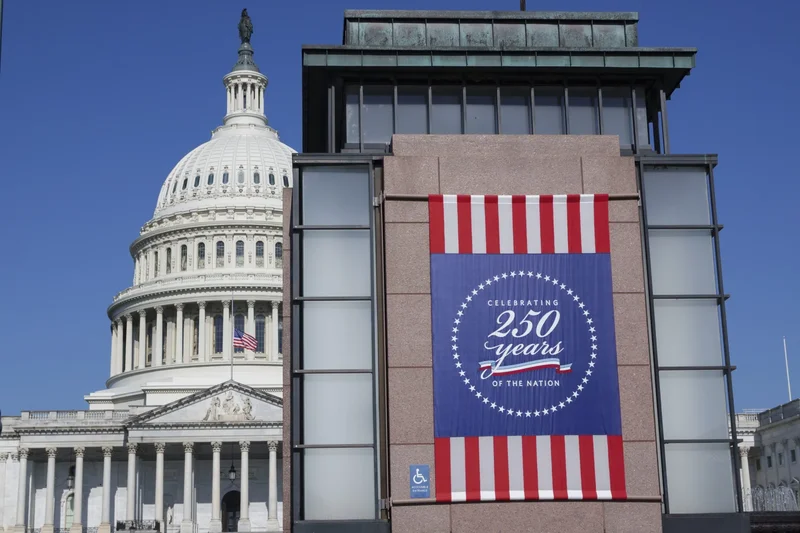
As America marks its 250th anniversary, we should remember that trust was not a side note to the founding. It was the bet. In my first three essays in this Freedom & Enterprise series, I described the Declaration of Independence as America’s first founding bet, the system it created as one that let people build free, and the freedom to fail as one of our greatest competitive advantages. Beneath all three is a more fundamental principle: America trusted free people to govern themselves, take risks, honor commitments, and build institutions strong enough to survive disagreement.
For most of history, order was imposed from above because rulers did not trust ordinary people with power. The Declaration reversed that logic. Its signers pledged their lives, fortunes, and sacred honor not only to reject a king, but to trust citizens they would never meet and generations they would never see. That trust became an economic advantage: entrepreneurs could start without royal permission, investors could back ideas because property rights and contracts mattered, and talent could rise by merit. The system was imperfect, but its capacity to correct itself and rebuild confidence became one of America’s greatest strengths.
AI is the new stress test
Today, artificial intelligence is testing America’s capacity for trust in real time. AI can accelerate science, manufacturing, medicine, logistics, and productivity. It can also create convincing falsehoods, clone an executive’s voice, make opaque decisions, and automate errors at extraordinary speed. The answer is not to stop AI, but to build trust into it: reliable data, traceable provenance, strong identity controls, independent testing, human accountability, clear rules, and meaningful recourse when systems fail. Innovation without trust stalls at the pilot stage. Innovation with trust becomes infrastructure.
America’s strategic competition with China in AI is not simply a race between individual models. It is a competition between entire innovation systems: talent, research, capital, secure infrastructure, resilient supply chains, allied adoption, and commercially superior products. The ecosystem that earns the greatest confidence will attract the most builders, buyers, partners, and investment.
Trust deficits also fragment markets. An IMF analysis estimated that severe geoeconomic fragmentation could reduce global output by as much as 7 percent. That is not an argument for isolation. It is an argument for clarity. That is why I previously argued in Fortune that every board should have a China contingency plan. Every company should know what it depends on, who controls it, whether its data and technology can be trusted, and what happens if access disappears overnight.
Trust must be designed
I learned this in business before I saw it in diplomacy. At Ariba, we moved procurement from paper and closed systems onto a global digital network. At DocuSign, we asked people to replace the handwritten signature with a digital agreement. Neither transformation could scale on technology alone. Identity, security, reliability, enforceability, and accountability had to be built into the product.
I saw the same principle as U.S. Under Secretary of State while working to secure global 5G networks. The central question was not only who could build them fastest or cheapest, but who could be trusted to carry sensitive data across commerce, finance, health care, energy, transportation, and defense. That became the foundation of the Clean Network, which grew to 60 nations representing nearly two-thirds of global GDP and more than 200 telecommunications companies.
The same principle guides the Global Trusted Tech Network at the Krach Institute for Tech Diplomacy. For CEOs and boards, trust must be a management discipline, not a communications campaign. Every leadership team should be able to answer four questions: Can we verify who is giving instructions? Can we trace the origin of our data and AI outputs? Do we know our critical technology and supply-chain dependencies? Is accountability clear when a system fails? If not, the company does not merely have a reputation problem. It has an operating risk.
America’s next 250 years
America has rebuilt trust before, imperfectly and through struggle. The genius of the American system is not unbroken trust. It is the capacity to repair it through transparency, accountability, competition, the rule of law, a free press, and self-government.
That is part of the work of Freedom 250: not only to commemorate the founding, but to renew the principles that made the American experiment possible. The Founders trusted future generations with the country they risked everything to create. Now that responsibility is ours.
Freedom is sustained when facts can be verified, identities can be authenticated, contracts are honored, leaders earn confidence, institutions serve the public, and citizens keep faith with one another.
In the age of AI, trust is not the alternative to innovation. It is the condition that allows innovation to scale. America’s future will not be secured by replacing trust with control, but by earning it again. Two hundred fifty years ago, America bet everything on trust. We must make that bet pay off again.
Freedom only works when trust does.
The opinions expressed in Fortune.com commentary pieces are solely the views of their authors and do not necessarily reflect the opinions and beliefs of Fortune.