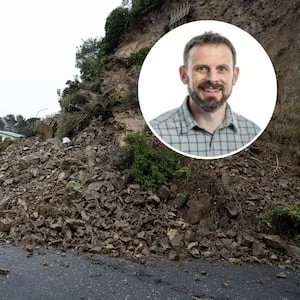
“You can replace a building but it’s hard to replace a person.”
Brooklyn man C.J. Koshar's room caved in after a landslide caused by severe rain crashed through. Photo / NZME
Leith said there were three reasons more slips could occur in the capital.
Firstly, the rainfall in Wellington was very “intense” and could trigger more localised landslips like those that occurred on Sunday night.
Secondly, hill slopes around the city are currently wet because of rainfall, so any further downpours could trigger things to fall that were previously holding on.
Thirdly, creeping landslides could be damaging infrastructure, like retaining walls or stormwater pipes, that are channelling the flow of water. That damage could accumulate over time, which might lead to more water entering hill slopes and causing landslides.
The devastated South Karori Rd property of missing Wellington man Philip Sutton, after flash flooding tore through the area. Photo / NZME
Leith said bigger landslides often start with very small slips.
“When we are at home, we might see doors or windows can get stuck, or parts of the house can start to creak.
“There might be cracks opening up in the gardens or in the lawns, you might see just a little bit of debris start to come down.”
If you see any debris coming down from a slope, Leith said you should remember there might be something bigger pushing it.
Water, springs or mudflows coming out of a hill can also mean it is saturated.
The best course of action is to move away from the area and find an engineer to come and look at it.
Slip stabilisation construction work at 350 The Terrace, Wellington in January 2025. Photo / NZME
Slips have not been uncommon in Wellingtons, with work ongoing work to stabilise sliding hillsides.
More than 1000 slips fell in Wellington City during the winter of 2022, many of which still have not been stabilised.
Some of the largest landslides from that period would cost at least $1 million each to fix.
The Herald reported that contractors became burnt-out that year trying to clear landslide debris as quickly as possible.
In 2016, the Kaikōura earthquake caused slips and flooding that forced the closure of Wellington highways.
A slip that occurred at Wilton Park in 2022.
To give a property the best chance to cope with heavy rain, Leith’s advice is to take action while things are dry.
That could include clearing gutters and drainage paths, fixing leaky drainpipes and checking that retaining walls are well-maintained and drained.
It is also helpful to keep an eye on your home over time and make a note of any changes, like new cracks, shifting soil or debris movement.
Leith said renters should keep their landlords up-to-date with any changes at their property and let them know if they feel unsafe.
For more information on slips, Leith recommended checking the landslide section of the Civil Defence website and the social media accounts of local councils.
Janhavi Gosavi is a Wellington-based journalist for the New Zealand Herald who covers news in the capital.