The gaming industry is in crisis. Layoffs at Xbox have led to still more layoffs from the studios Microsoft ditched. Bungie significantly reduced its staff right after releasing its final update for Destiny 2 and Epic Games cut 1,000 employees in March due to a downturn in Fortnite engagement. The tabletop industry has its own set of problems. Pathfinder publisher Paizo had to restructure after its book distributor Diamond Comics declared bankruptcy and CMON had layoffs, citing rising tariffs as it struggled to fulfill crowdfunding campaigns. The cancellation of projects like Plaid Hat’s The Monolith and the Altered expansion Roots of Corruption even after they achieved their crowdfunding goals further demonstrated the industry’s financing problems. Yet despite all the bad news, the creators of Gloomhaven and XCOM see collaborations across video games and tabletop games as the way forward.
“The crossover between video game players and board game players is big, and people are looking for popular IPs,” XCOM creator Julian Gollop told Polygon in a virtual interview.
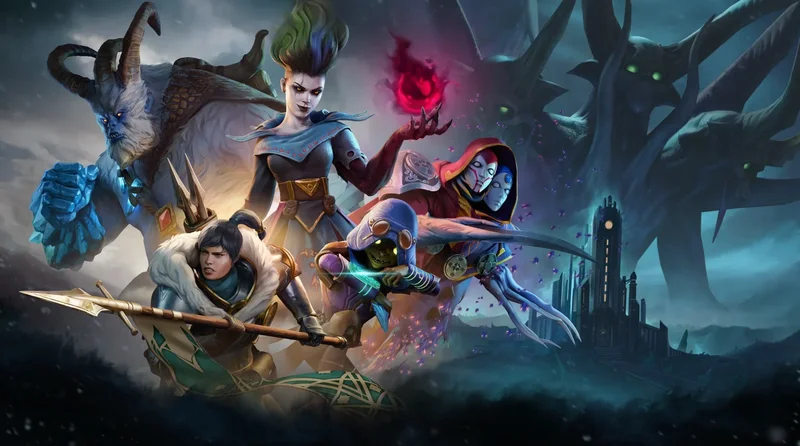
Flaming Fowl Studios released a digital version of Isaac Childres’ celebrated dungeon crawling board game Gloomhaven in 2019, and Frosthaven is getting the same treatment from Snapshot Games, the studio Gollop founded in 2013. The Frosthaven tactical role-playing game is currently in early access and will have its full launch on Oct. 15.
“The royalties we're receiving from both Gloomhaven Digital and Frosthaven Digital is certainly welcome in this time when we have to face those extra tariffs,” Childres said. “That's been nice and sort of keeping us steady and confident in our position to move forward with our other products.”
Meanwhile, board games provide video game studios with an established audience, clear rules, and art, making them a relatively safe investment.
“It gives us a little bit of stability and predictability compared to starting a fresh project or fresh IP that would take a lot more creative work,” Hristo Petkov, game director of the Frosthaven adaptation, told Polygon. “Of course, everybody wants to do creative projects, but the game industry is not that stable at the moment, so any stability you can get is welcome.”
The adaptations can sometimes go in the other direction. Modiphius is developing a tactical miniatures game based on XCOM, Archon Studios is making a miniatures game for StarCraft, and Czech Games is publishing an epic board game based on Warhorse Studio’s Kingdom Come: Deliverance. Renegade Game Studios is releasing a tabletop role-playing game in September set in the world of Archetype Entertainment’s Mass Effect-like RPG Exodus, which is expected to launch in 2027.
“IPs that are a little bit older like StarCraft and XCOM have a lot of nostalgia factor,” Petkov said. “People in their 30s or 40s have money and the time for a more laid-back experience with family and friends to reminisce about the time they played this game 20 years ago. It’s a good marketing opportunity.”
Gollop sees a focus on nostalgia as one of the many reasons that the video game industry is in crisis.
“People tend to be playing old games they used to play a long time ago, and they don’t want to give them up for new games,” he said. “Now companies are competing with this huge back catalog of games that people want to continue playing. It’s tricky.”
Childres’ company Cephalofair Games has been focusing on smaller projects since new tariffs disrupted the delivery of Gloomhaven: Second Edition. An expansion for the solo Gloomhaven game Buttons & Bugs will release in September, while Mercenaries Wanted, a new drafting game set in the same world, launches in December. Both are currently being previewed at Gen Con in Indianapolis.
“There is a question with the current economy and tariffs if another game the size of Frosthaven is even viable,” Childres said. “It’s a matter of diversity having all these different lines available for people to play how they want. If they want these smaller campaigns, they can do that. If they want giant epic things, we have those available as well.”
The stability that licensing its games has given Cephalofair is also allowing the company to avoid the pitfalls of crowdfunding, where game manufacturers have been using new campaigns to fund ones they haven’t delivered on yet.
“It’s a pretty precarious position to be in financially, and luckily that’s not the case for us,” Childres said. “We are considering whether we need to crowdfund anything in the future because we have such a strong audience right now that we are able to just put out games normally.”
Not every collaboration comes with that level of security, though they do offer a way to share some of the burden of making a new game. A board game adaptation of Cult of the Lamb has already raised $1.8M on Kickstarter. Starfinder: Afterlight, an adaptation of Paizo’s tabletop role-playing game, is coming to early access this year after raising $828K on Kickstarter. At a time when gaming success stories are hard to come by, these partnerships offer a bit of hope for the industry.