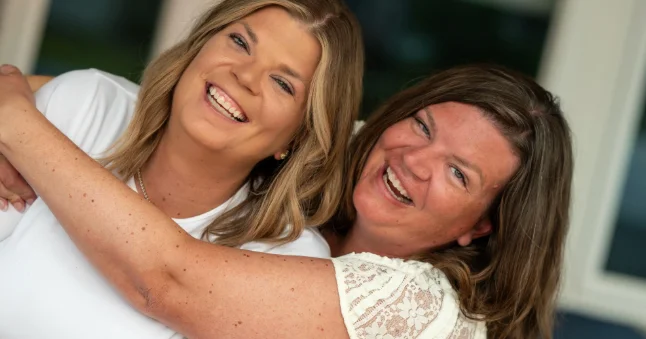
Megan Kaverman knew something was wrong with her. At 18, she had started to experience some weight gain and shortness of breath, but her family doctor "never figured out what was going on." Soon, the symptoms became so commonplace that she barely noticed them.
Then, at 25, she began dealing with sudden, severe fatigue. Breathing became a struggle. She didn't understand what was happening, or why.
For years, she struggled to find answers. Her primary care physician highlighted her weight gain, but couldn't explain its cause. One doctor suggested she eat less pizza. Her was dismissed as nerves. Multiple trips to the emergency room ended with no clarity. Doctors reassured her it likely wasn't anything major.
"They just kind of pushed it aside, like, '(You're) too young to have a heart problem,'" Kaverman recalled.
But she could barely function. One day in 2016, Kaverman, then 27, went back to the emergency room. Tests showed she was in the early stages of . Kaverman said she wasn't leaving without a diagnosis. She ended up in the ICU, where an intensive diagnosis process identified the source of her troubles: a rare heart disease called heritable pulmonary arterial hypertension.
The news was upsetting, but Kaverman was determined to stay optimistic. She started calling the day of her diagnosis her "rebirth." She sought treatment at the Cleveland Clinic, which she said made it possible for her to return to daily life.
Two years later, Kaverman started seeing the signs of untreated pulmonary hypertension again — this time in her sister, Katie Gusching, who had just welcomed her first child.
Gusching, then 32, noticed she while doing household chores or climbing the stairs at work. Then her . One day, her vision briefly went white. Doctors couldn't find a blood clot but noticed her high blood pressure. Kaverman suggested asking them about pulmonary hypertension.
Gusching underwent the same tests Kaverman had, and received the same results. Gusching believes Kaverman's encouragement saved her life.
"If she hadn't gone through hell and back to figure out what she had, who knows if I'd be here," Gusching said.
"There's a lot more hope"
Heritable pulmonary arterial hypertension is a genetic disorder where mutations in some genes cause the small arteries in the lungs to narrow, according to the Mayo Clinic. That raises blood pressure and forces the heart to work harder to pump blood. That extra effort can eventually cause the right side of the heart to fail.
The heritable version of pulmonary arterial hypertension accounts for less than 4% of cases, with fewer than one in 1 million people being diagnosed with the disease, according to the medical database Orphanet. About 70% of patients are diagnosed when they are already in heart failure.
The condition has no cure, but can be managed with medication and treatment. Gusching said she spent some time "grieving" after the diagnosis. She could only think of what she could no longer do, like hiking or swimming. Figuring out insurance policies and medications was exhausting. Throughout it all, she relied on Kaverman for guidance and support.
"It's good to have someone so close to you going through the same thing," Kaverman said. "It helps ease the pain a little bit if you have each other for support. Katie's the older one, but I have had this disease longer, so I have one up on her."
Both sisters receive treatment at the Cleveland Clinic, under the care of pulmonologists Dr. Kristen Highland and Dr. Adriano Tonelli. Through the clinic, the sisters have participated in aimed at developing new care options, an area of research that Highland called "really exciting."
"I started working in pulmonary hypertension before there were any treatments, which has been a long time," said Highland. "Now we have a lot of treatments. There's a lot more hope, and patients are responding to those treatments."
"This brings us closer together"
In addition to their enrollment in , Kaverman and Gusching are working to be advocates for pulmonary hypertension. Kaverman said she recommends any friends or acquaintances with unresolved ask their doctor about the possibility of the disease.
"When I was sick in the hospital, I was talking to my husband, and I said 'I want to get better, so I can help advocate for the people that can't,'" Kaverman said. "I just try to do as much as I can to bring awareness to this disease, because if I save one person's life by bringing awareness, I've done my job."
Both women's pulmonary hypertension is currently under control, Highland said. Gusching said that she is finally starting to get back to beloved activities, including hiking over 3 miles last year. It was the kind of trek she thought her diagnosis would make impossible. Kaverman said a new medication has given her a second life and made it possible for her to begin running 5Ks. The races no longer leave her out of breath, she said.
The sisters plan to travel to the Dominican Republic for Gusching's birthday.
"It's really nice to be able to do things that I wouldn't have done before," Kaverman, now 36, said.
The road has been difficult, Gusching, now 39, said. But among the bumps, there have been some silver linings. The sisters try to schedule their appointments at the Cleveland Clinic together, so they can carpool and catch up.
"We have things to share, whenever we go to the clinic. If we don't go together, we'll call (each) other and explain our results and everything," Kaverman said. "Katie and I have always shared a lot, and I just feel like this brings us closer together."