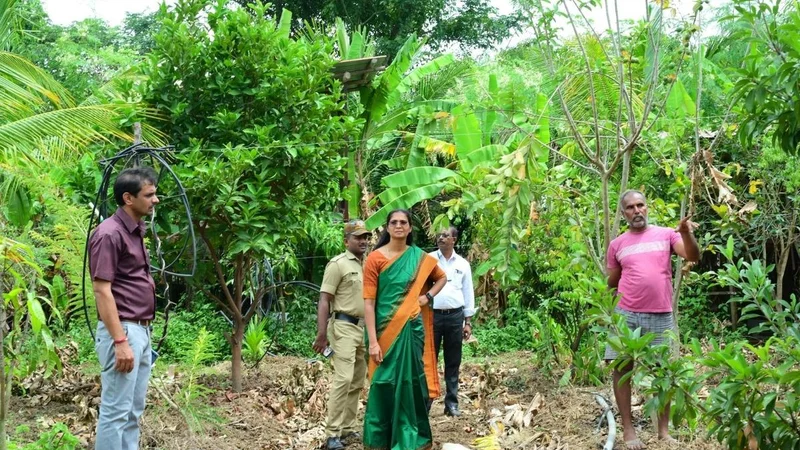
A Mandya farmer who has successfully practised natural and integrated farming for the past decade, earning a steady income through crop diversification, value addition and direct marketing, has been hailed as a model for climate-resilient agriculture by Mandya Zilla Panchayat Chief Executive Officer K.R. Nandini.
During a visit to the farm of Kempegowda at Channappanadoddi village in Kottathi hobli of Mandya taluk, Ms. Nandini said his farming model demonstrated how farmers could achieve sustainable incomes despite increasing climate uncertainties. She urged farmers to adopt climate-resilient farming practices to safeguard crops against climate change, erratic rainfall and drought.
Kempegowda has transformed his 2.5-acre holding through natural and integrated farming, cultivating paddy, sugarcane, leafy vegetables, vegetables and a variety of fruit crops. He markets his produce through his “”Khushi Organics”” outlet and at the organic farmers’ market held every Wednesday and Sunday in front of the office of the Joint Director of Horticulture in Mandya city, ensuring a steady source of income.
Ms. Nandini said improving soil health should be a priority and urged farmers to shift from monocropping to integrated, natural or organic farming systems. She also stressed the need for post-harvest processing and value addition to create multiple income streams and improve farm sustainability.
Referring to the prevailing drought conditions in the district, she advised farmers to cultivate short-duration and low water-intensive crops, adopt drip or sprinkler irrigation, and use farm ponds for water conservation. Growing multiple crops instead of a single crop, she said, would minimise losses caused by climate variability.
Smart farm practice
For the past five years, Kempegowda has been cultivating sugarcane under natural farming with 12-foot row spacing. He harvests only 40-50 kg of sugarcane daily and prepares fresh sugarcane juice for sale at his outlet in Mandya. According to officials, one tonne of sugarcane yields around 700 litres of juice, generating revenue of up to ₹50,000. He also produces and markets jaggery from the sugarcane grown on his farm.
The wide spacing between sugarcane rows is utilised for intercropping with fenugreek, spinach, dill, coriander, amaranthus, stem amaranth and okra in staggered batches. Ms. Nandini appreciated the farmer’s model of earning sustainable income.
Published - August 01, 2026 06:45 pm IST