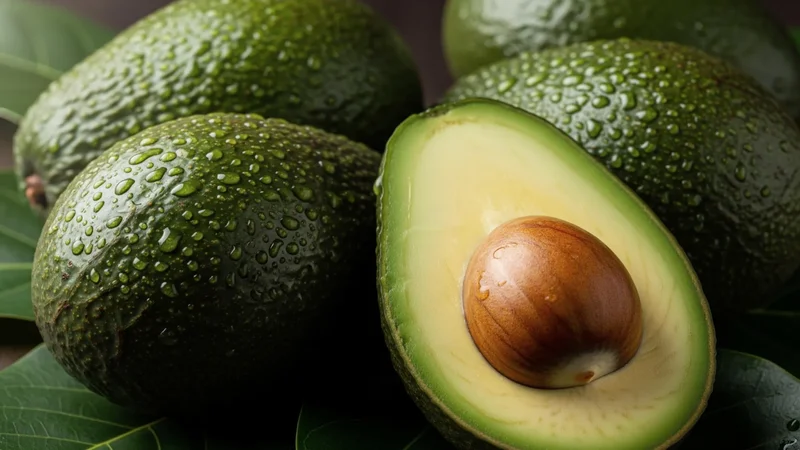
Eating one avocado a day may lower heart disease risk
One avocado a day may quietly lower heart disease risk by reducing artery damaging LDL particles in the blood.
- Date:
- August 1, 2026
- Source:
- Penn State
- Summary:
- A daily avocado may help lower heart disease risk in adults with obesity by reducing the number of LDL particles circulating in the blood. After six months, participants who ate an avocado each day experienced a decline associated with an estimated 4% reduction in cardiovascular risk.
- Share:
Eating one avocado each day may modestly reduce heart disease risk in adults with obesity, according to new research led by scientists in the Penn State Department of Nutritional Sciences. The findings were published in the Journal of Clinical Lipidology.
The researchers found that daily avocado consumption was linked to a lower concentration of low-density lipoprotein (LDL) particles in the blood. These particles carry cholesterol throughout the body. The size of the reduction was associated with an estimated 4% decrease in heart disease risk.
"If people want to improve the quality of their diet, making one small change might be a more feasible strategy than attempting to change their entire diet," said Janhavi Damani, postdoctoral scholar at Penn State and first author of the study. "For people with obesity, including avocados in their daily diet might be a good starting place."
LDL Particle Count Can Reveal Hidden Heart Risk
LDL particles are not the same measurement as LDL cholesterol, often called "bad cholesterol." Both are associated with cardiovascular disease, but particle concentration can reveal risk that a standard cholesterol test may not show. The researchers noted that this risk is often greater in people with abdominal obesity.
LDL cholesterol cannot travel through the bloodstream on its own. It must be carried by protein particles. A person with more LDL carrying particles may face a greater risk of heart disease, even when their total amount of LDL cholesterol is the same as someone with fewer particles.
"Imagine two people with the same high levels of LDL cholesterol," Damani said. "Person A carries their cholesterol in fewer, larger LDL particles, and Person B carries their cholesterol in more, smaller LDL particles. Person B's heart disease risk would be higher because their overall particle count is higher even though a test of their LDL cholesterol would look identical."
Smaller LDL particles can more easily enter artery walls and contribute to plaque buildup, Damani explained. Plaque narrows blood vessels and makes them less flexible, increasing the strain on the cardiovascular system.
When the heart must work harder because of exercise, heat, stress or another cause, stiffened blood vessels may be less able to accommodate the increased blood flow. Blood pressure can then rise more sharply, potentially contributing to a cardiac event such as a heart attack.
Testing One Avocado a Day
For the new analysis, the team examined data from 786 participants enrolled in the Habitual Diet and Avocado Trial. The six-month study included adults ages 25 and older.
Men qualified for the study if their waist circumference was greater than 40 inches, while women were eligible if their waist circumference exceeded 35 inches.
Half of the participants were asked to continue their usual diets and physical activity. The remaining participants also maintained their normal routines but received one avocado to eat every day.
Earlier results from the Habitual Diet and Avocado Trial showed that adding a daily avocado did not reduce body weight or waist circumference in people with obesity. However, it appeared to lower LDL cholesterol levels.
Daily Avocados Lowered LDL Particle Levels
For the current study, researchers compared blood samples collected at the beginning and end of the six-month trial.
Among participants assigned to eat one avocado per day, LDL particle concentrations fell by 49 nanomoles per liter. According to the researchers, that change corresponds to an estimated 4% reduction in heart disease risk.
"Four percent is a modest reduction compared with the 14-29% lower heart disease risk associated with improving the overall diet," Damani said. "However, it is a step in the right direction."
The improvement in LDL particle levels was consistent across participants. Sex, race, ethnicity, age and body mass index did not significantly affect the likelihood of experiencing the benefit.
The findings suggest that adults with obesity from a wide range of backgrounds could potentially benefit from including avocados in their diets. However, the researchers advised people to speak with a registered dietitian nutritionist or physician for personalized guidance before making dietary changes.
A Benefit Seen in Real World Diets
Previous Penn State research also found that avocado consumption could lower LDL cholesterol and LDL particle levels. In that earlier experiment, however, researchers closely controlled everything the participants ate.
"Penn State researchers demonstrated several years ago that avocado consumption could reduce LDL cholesterol and levels of LDL particles," said Kristina Petersen, associate professor of nutritional sciences and senior author of this study. "But in that study, the researchers controlled participants' entire diets throughout the experiment. This study demonstrated benefits in the real world, where people's diets are much less predictable. In the course of people's normal lives, avocado consumption still contributes to a healthier diet."
The latest findings indicate that a single, manageable change may improve one measure of cardiovascular health even when the rest of a person's diet remains largely unchanged. The benefit was modest and did not lead to weight loss, but the researchers said it could still represent progress toward better heart health.
Penny Kris Etherton, retired Evan Pugh University Professor of Nutritional Sciences at Penn State, also contributed to the research.
Other co-authors include Nirupa Matthan of the Jean Mayer USDA Human Nutrition Research Center on Aging at Tufts University; Zhaoping Li of the David Geffen School of Medicine at University of California, Los Angeles; Joan Sabaté of the School of Public Health at Loma Linda University; and David Reboussin of the Wake Forest University School of Medicine.
The Avocado Nutrition Center supported this research.
Journal Reference:
- Janhavi J. Damani, Penny M. Kris-Etherton, Nirupa R. Matthan, Zhaoping Li, Joan Sabaté, David M. Reboussin, Kristina S. Petersen. Effect of incorporating 1 avocado per day on lipoprotein particle concentrations compared to habitual intake in adults with abdominal obesity: An ancillary study of the Habitual Diet and Avocado Trial, a randomized controlled trial.Journal of Clinical Lipidology, 2026; DOI: 10.1016/j.jacl.2026.06.005
Cite This Page:
ScienceDaily. Retrieved August 1, 2026 from www.sciencedaily.com