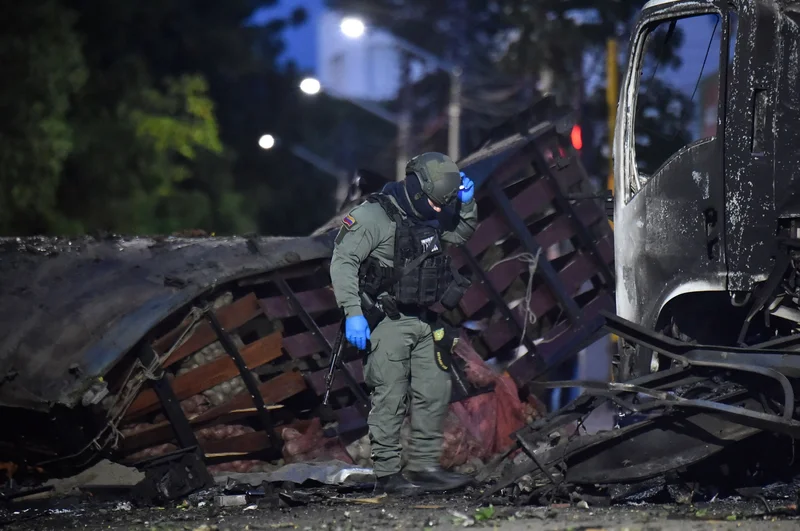
A truck packed with explosives detonated outside a police station in the Colombian border city of Cucuta on Saturday, injuring at least 11 people and heightening security concerns just six days before President-elect Abelardo de la Espriella is set to take office.
Authorities said eight police officers and three civilians were wounded in the blast, which ripped through the area near the Venezuela border, leaving the truck engulfed in flames and damaging nearby buildings. Soldiers, police officers and residents rushed to the scene as emergency crews responded.
"At this time, we have eight police officers and three civilians who have been injured," George Quintero, security secretary for the Norte de Santander department, told reporters. "This was an atrocious, violent act, and what happened is regrettable."
De la Espriella swiftly condemned the attack, describing it as terrorism and vowing it would not derail his incoming administration.
"I condemn in the strongest terms the cowardly terrorist attack carried out in Cucuta against our National Police," the president-elect wrote on X. "Terrorism will not intimidate Colombia or break Colombians' determination to live in peace and security."
The bombing comes amid heightened tensions ahead of De la Espriella's inauguration on Aug. 7 in Cali, marking a break from the longstanding tradition of holding presidential swearing-in ceremonies at Colombia's Congress building in Bogota.
The conservative leader requested the ceremony be moved to Cali, a city in southwestern Colombia that has been heavily affected by violence linked to guerrilla groups and drug trafficking organizations.
Authorities are preparing one of the largest security operations ever mounted for a presidential inauguration, with about 11,000 soldiers and police officers deployed across land, sea and air to protect the event.
De la Espriella, a millionaire lawyer backed by the administration of U.S. President Donald Trump, will succeed Gustavo Petro, Colombia's first leftist president. He has pledged an aggressive security strategy aimed at dismantling guerrilla groups and drug trafficking organizations responsible for Colombia's worst surge in violence in a decade.
The president-elect has also promised closer military cooperation with the United States and Israel as part of his effort to combat organized crime. Colombia remains the world's largest producer of cocaine.
His administration is expected to abandon the peace negotiations pursued by Petro with several armed groups, a move that has drawn threats from guerrilla organizations.
De la Espriella had originally sought to take the oath of office at a military base in the conflict-ridden Cauca department, but Petro declined to approve the proposal.
Saturday's bombing adds to growing concerns over political violence in Colombia. The 2026 election campaign was marked by bombings, explosive-laden drones and repeated attacks on security forces as fighting intensified across several regions.
Last year, conservative presidential candidate and Sen. Miguel Uribe Turbay was shot during a campaign event in Bogota and later died from his injuries. De la Espriella has also repeatedly claimed that intelligence reports point to assassination plots targeting him.