Iran, Italy to cooperate on restoring ancient gateway near Persepolis for site museum
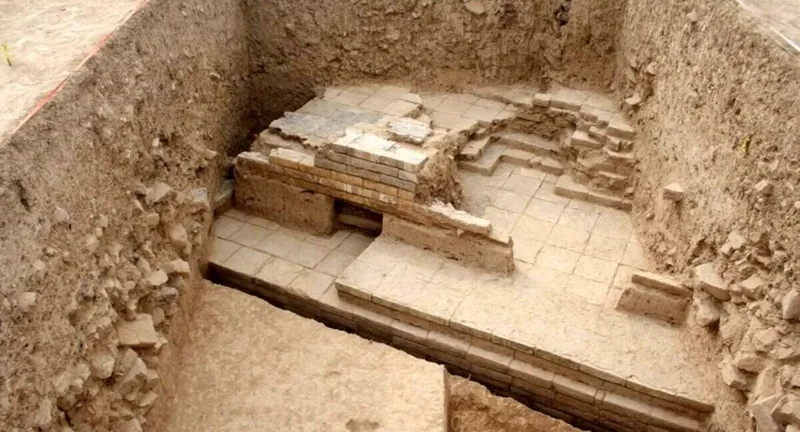
TEHRAN - Cultural heritage authorities are moving ahead with plans to convert the ancient Tall-e Ajori archaeological site near Persepolis into a site museum, following the completion of archaeological excavations and the launch of a restoration project in cooperation with Italian experts.
Tall-e Ajori, located about three kilometers from the UNESCO-listed Persepolis in Iran's southern Fars province, is widely regarded by archaeologists as the ceremonial gateway to the ancient city of Parseh (Persepolis), predating the construction of the famed palace complex.
Alireza Askari Chaverdi, an archaeologist at Shiraz University and former head of the Persepolis World Heritage Site, said archaeological excavations at Tall-e Ajori had been completed and restoration plans had been sent to Italian specialists for final review.
Once the restoration designs are finalized, work will begin on protective structural coverings and visitor infrastructure, including tourism pathways, he said.
The project will be implemented in three phases, covering structural calculations, design and construction. Iranian technical experts, including the Fars provincial engineering organization, will also participate in the project to accelerate the site's conversion into a museum open to visitors.
The Fars provincial office of the Ministry of Cultural Heritage, Tourism and Handicrafts also announced plans to collaborate with the provincial engineering organization on the site's development.
Farzad Zare’, head of public relations at the provincial office, said the cooperation would draw on local engineering expertise in structural design, tourism planning and lighting for the archaeological site.
He said the project aims to strengthen sustainable tourism infrastructure while improving the protection and presentation of one of Iran's most significant archaeological discoveries.
Tall-e Ajori, also known as the Cyrus Gate or the Gate of Parseh, has yielded the remains of a monumental gateway measuring roughly 30 by 40 meters and originally standing about 12 meters high.
Archaeologists say the structure was commissioned by Cyrus the Great and completed during the reign of his son Cambyses. Built before the construction of Persepolis itself, the gateway is believed to have served as the principal entrance to the Achaemenid royal city.
The structure, which measures at least 33 by 33 meters according to archaeological findings, was constructed with thousands of glazed bricks and displays artistic and architectural influences from ancient Babylon, highlighting cultural exchanges between the Achaemenid Empire and Mesopotamia.
Persepolis, founded by Darius the Great around 518 BC as the ceremonial capital of the Achaemenid Empire, is one of the world's most important archaeological sites. The monumental complex, located about 60 km northeast of Shiraz, was inscribed on UNESCO's World Heritage List in 1979. It was destroyed by fire following Alexander the Great's conquest of the Persian Empire in 330 BC.
AM