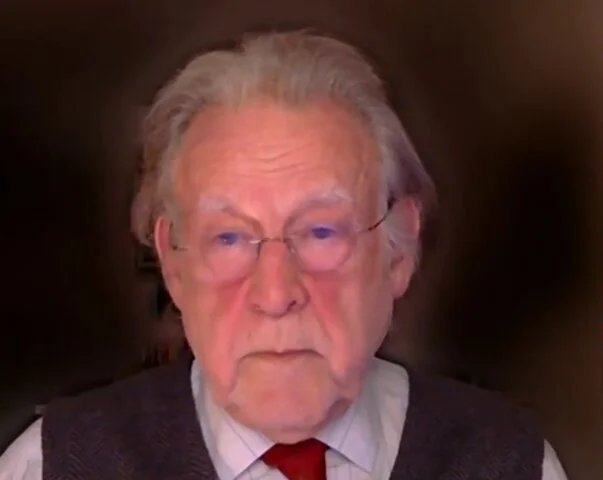
Iran's strikes undermined Israel's long-standing military superiority: John Helmer
Veteran journalist argues Tehran's ability to penetrate Israeli air defenses has strategic significance despite efforts to downplay its impact
TEHRAN – As Washington navigates renewed strikes on southern Iran alongside high-level visits to President Trump from both Israeli Prime Minister Benjamin Netanyahu and Ukrainian President Volodymyr Zelensky, questions are mounting over the domestic political calculations driving U.S. policy in the Middle East and beyond.
In this context, Tehran Times spoke with John Helmer, a veteran journalist and geopolitical analyst based in Moscow, to examine the motivations behind Trump's handling of Netanyahu, the financial and electoral pressures shaping Washington's approach to the war, and the broader implications of Ukraine's strike on an Iranian vessel in the Caspian Sea.
Below is the full text of the interview:
Netanyahu's Washington visit followed the renewed U.S. strikes on southern Iran. How do you read it — and what does Trump dismissing his concerns over Iran's Pickaxe Mountain site say about U.S.-Israel relations now?
Let's try to understand Trump's behavior and motivations from three perspectives.
First, there is his ego and what I would call his psychological, perhaps even psychopathological, state. He is an extremely vain man, and his decisions are shaped by two other factors: money—both for himself and for election campaigning—and votes.
On the issue of the Pickaxe Mountain site, Trump's response was, roughly speaking, "I don't need Bibi to tell me that." In other words, he was saying, "I don't like to be upstaged by anybody." That was fundamentally an ego-driven message.
There is, however, a limit to how far Trump can publicly present himself as the boss and Israel as subordinate. The scale of Jewish political funding—Miriam Adelson's $105 million contribution is one example—and broader financial support for Republican campaigns place strict limits on how openly he can differ with Netanyahu or any Israeli leader.
The third factor is electoral politics. The Republicans are trying to retain control of the Senate and prevent the Democrats from winning both chambers of Congress.
Within Trump's MAGA base, there is a noticeable anti-Netanyahu sentiment, even though support for Israel remains strong. Democrats, meanwhile, remain broadly pro-Israel, while Israel itself is also entering an election campaign ahead of its October parliamentary vote. Everything Netanyahu and his rivals are doing has to be viewed in that context.
Netanyahu is considerably less popular among Republican and MAGA voters than Israel itself. Trump therefore needs to create some distance from Netanyahu personally while maintaining financial backing and protecting Republican votes before the November election.
From that perspective, Netanyahu's visit to Washington was an effort to secure Trump's endorsement for both the Likud Party and his own reelection campaign.
At present, however, Netanyahu is running neck and neck with former IDF Chief of Staff Gadi Eisenkot, while former Prime Minister Naftali Bennett trails behind. Current Israeli polls project roughly 22 or 23 seats for both Eisenkot's party and Likud, with coalition negotiations ultimately determining the outcome.
In essence, Trump publicly put Netanyahu in his place, but not so severely that a meeting became impossible. According to Axios, an Israeli publication in Washington, Netanyahu had wanted to visit Washington a week earlier but was turned down.
Instead, he received a meeting only after Volodymyr Zelensky's visit, squeezed into Trump's schedule between that meeting and the funeral of Lindsey Graham. In effect, Netanyahu received a consolation prize.
That arrangement suited Trump's ego, preserved his political and financial interests, and appealed to Republican voters.
Fundamentally, however, Netanyahu came away with very little. He received neither Trump's personal endorsement for reelection nor an opportunity for a joint press appearance.
Instead, Trump offered only a brief acknowledgment on social media. Interestingly, there were more photographs of the Oval Office meeting in the Israeli press than in the American media.
The official photograph also reveals the meeting's priorities. On Trump's side were General Dan Caine of the Joint Chiefs of Staff, Defense Secretary Pete Hegseth, Treasury Secretary Scott Bessent, Secretary of State Marco Rubio, and Chief of Staff Susan Wiles, while Vice President J.D. Vance was absent.
The composition of the meeting suggests that its focus was also on military affairs and financial support for Israel.
You think the meeting was primarily about Israel's domestic political concerns and Netanyahu's election prospects, rather than pressing Trump on Iran?
Broadly speaking, yes—you have identified the priorities correctly. But, of course, the two issues are connected.
All politicians, particularly during wartime, must pay close attention to domestic political considerations. That appears to have been Netanyahu's main priority.
However, this should be viewed in a broader context.
For Trump, the war against Iran, much like the war against Russia in Europe, is about strengthening the U.S. protectorate over the Middle East by destroying the main sources of resistance—primarily Iran, but also Hezbollah in Lebanon, Hamas in Palestine, and the Houthis in Yemen.
To reinforce that protectorate, Trump has adopted the same approach he has pursued in Europe: supporting the war while expecting America's allies to pay for it by purchasing U.S. weapons. His objective is to make regional conflicts financially beneficial to the United States.
He appears to envision the same model for the Middle East.
So far, the war has cost the United States roughly $38 billion in military expenditures. From Trump's perspective, the preferred outcome is neither full-scale war nor genuine peace, but a permanent confrontation with Iran sustained through limited military operations. Maintaining such a strategy requires a costly deployment of U.S. military forces across the region.
Trump has argued that the Persian Gulf monarchies—not the United States—should finance that military presence. To preserve relations with Saudi Arabia, the United Arab Emirates, and other Persian Gulf states, he is sometimes compelled to take positions that may offend Israel.
At the same time, Israel has become America's largest financial liability in the Middle East. Unlike the Ukraine war, which Trump portrays as a legacy of the Biden administration, he cannot shift responsibility for Israel in the same way.
That helps explain why Treasury Secretary Scott Bessent attended the meeting. Israel's growing financial dependence on both the United States and the Jewish diaspora is an extremely sensitive issue, and reliable information about it is difficult to obtain.
That is the broader context.
Within it, Trump is still searching for a way to preserve and strengthen American influence in the Middle East, weaken Iran, and continue protecting Israel while increasingly expecting Israel's security to come at Israel's own financial expense. Achieving that balance is extraordinarily difficult.
With Trump facing domestic pressure over the war's economic cost and Netanyahu under political strain at home, could these pressures reshape their approach to the conflict — limiting further escalation or pushing a pause until after both countries' elections?
Many military experts—and some pseudo-military experts—in the U.S. media, along with analysts at major Washington think tanks, have been examining how seriously U.S. military stockpiles have been depleted by the war against Iran.
The issue is not only the $38 billion cost. U.S. munitions stocks have also been significantly depleted, including missile systems, air-defense systems, air-to-ground missiles, and other weapons supplied to Israel or used directly by the United States during the conflict.
For this reason many analysts argue that the United States can no longer sustain more than one major war at a time. It must expand domestic weapons production, requiring additional funding beyond what Congress has already appropriated.
Because that funding must be approved by Congress, it has become an important political—and especially electoral—issue.
All of these costs and risks suggest that the Trump administration is more likely to seek a pause in the conflict rather than an end to it, possibly along the lines of the June 17 Memorandum of Understanding, even though the United States has already violated it and, in my view, never intended to honour it.
The short answer is that, because the United States failed to defeat Iran, its only remaining option is to maintain a state of permanent war. No realistic peace agreement can be reached with Iran on terms acceptable to Washington, as the collapse of the Memorandum of Understanding and Israeli opposition to it demonstrate.
Trump therefore has to make permanent war as inexpensive and politically acceptable as possible.
That is an extremely difficult challenge—and that is where Iran holds the advantage.
Oman is trying to ease tensions while continuing talks with Iran over shipping in the Strait of Hormuz. After months of conflict, do you think the Strait has become a genuine bargaining tool, or does it play only a symbolic role?
It is definitely not symbolic.
It is a little awkward for me because I have spent many years as a Russia-based correspondent, so returning to Arab politics means revisiting subjects I covered long ago.
Traditionally, many Arab politicians have regarded Oman as little more than a messenger or intermediary. However, in my view, Muammar Qaddafi, who was killed in the 2011 U.S.-led intervention, understood the region better than almost any Arab leader after Gamal Abdel Nasser.
Qaddafi held a very positive view of Sultan Qaboos and believed that under him Oman could play a role far beyond mediation. He saw it as capable of helping build an alliance of the smaller Persian Gulf monarchies to counterbalance Saudi Arabia.
I do not know whether we are seeing a similar dynamic today, as I am not privy to the details of Oman's current negotiations.
However, within the past 24 to 48 hours, Iranian Foreign Minister Abbas Araghchi made it clear on X that no partnership or condominium arrangement with Oman over the Strait of Hormuz would be acceptable to Iran.
If Iran views Oman somewhat as Qaddafi once did—as a useful smaller regional partner in dealing with larger powers such as Saudi Arabia and the United Arab Emirates—then Iran should manage any disagreements with Oman carefully and avoid unnecessary confrontation.
Iran's priority must be preserving the Strait of Hormuz as its most valuable long-term strategic asset in confronting the U.S.-led alliance.
Together with the Bab el-Mandeb Strait, where the Houthis have demonstrated the ability to disrupt shipping, the Strait of Hormuz has an immediate impact on Saudi oil exports, Qatar's gas trade, and the energy exports of the smaller Persian Gulf states.
So it is far more than a bargaining tool. It is a major strategic asset.
It gives Iran the ability to wage counter-economic pressure against the United States by influencing the issue to which American presidents are most sensitive during election periods: oil prices and inflation.
Iran also possesses another strategic asset. When confronting a U.S. president, two factors matter most: inflation and body bags—that is, military casualties.
If Iran can raise U.S. casualties during an election period while simultaneously contributing to higher energy prices through the Strait of Hormuz, that combination can be politically devastating for an incumbent president. It was precisely that combination that destroyed Lyndon B. Johnson's reelection prospects in 1968 during the Vietnam War.
So the short answer is that the Strait of Hormuz is a strategic asset, and Oman is more than simply a messenger in the way that asset is managed against Iran's principal adversaries—the United States, and secondarily Saudi Arabia and the Persian Gulf states.
What message do you think Iran was trying to send through its retaliatory attacks in the region? Do you believe those actions could actually change the regional balance of power?
On the one hand, the war has already undermined Israel's long-standing sense of military superiority. The belief in overwhelming military dominance has been central not only to Israel but also, in varying degrees, to the worldwide Jewish community and the United States.
Iran's ability to penetrate Israeli air defenses and demonstrate a high degree of precision in its strikes represents a significant achievement. Although much of this has been downplayed by Israel and the United States, its strategic significance cannot be concealed.
The question, however, is whether that achievement can be translated into a lasting shift in the regional balance of power.
The United States appears committed to what I call a permanent war, while Israel believes that with Trump’s support it can sustain a permanent state of conflict as it continues expanding its regional influence.
We are now discussing the possible partition of Lebanon and the weakening or destruction of Hezbollah through some combination of Turkish involvement and U.S.-backed Syrian forces under President Ahmed al-Sharaa. Such an outcome would be as significant as the partition of Syria two years ago.
Israel's regional expansion therefore continues—in Palestine, Lebanon, and Syria.
For that reason, we cannot yet conclude that Iran's military achievements have fundamentally changed the regional balance of power.
We must also consider the future roles of China, Pakistan, and India.
Without doing more than it already has, Iran has inflicted what I regard as a significant strategic setback on India. Despite facing security challenges from Pakistan, China, and long-standing U.S. pressure, Prime Minister Narendra Modi aligned India with Israel, the United States, and particularly the United Arab Emirates during the conflict.
In my view, Iran has undermined that strategy by neutralizing efforts by India and the UAE to build a stronger Indian security role in the Persian Gulf. Modi must now deal with the consequences of what I consider a strategic miscalculation by both himself and Foreign Minister Subrahmanyam Jaishankar.
Pakistan, meanwhile, has secured tactical gains in its relationship with Saudi Arabia. In return for Saudi financial support, including assistance with its debt, Islamabad has provided manpower, weapons, and other military support, modestly strengthening Saudi Arabia's defenses.
That, too, must be factored into the regional balance.
Turkey also deserves attention. It has expanded its influence along Syria's Mediterranean coast and toward the Lebanese border, gaining a stronger position through Syria's partition than it previously enjoyed.
To the extent that the war has weakened Israel, it has also given Turkey greater strategic freedom of movement.
Others are far more qualified than I am to assess Turkey's role in detail. As a Russia-based analyst, I can only offer a broad outline.
So, to summarize, Iran's strategic gains have not yet translated into a regional balance that provides it with lasting security.
The concept of mutual and reciprocal regional security for Iran has long been part of a Russian strategic proposal advanced by Foreign Minister Sergei Lavrov in August 2019. Today, however, we are no closer to achieving that objective than we were before the war.
While attention has centered on Hormuz and the Persian Gulf, Ukraine also struck an Iranian vessel in the Caspian Sea. How do you read that attack — and its timing, coming as Zelensky was in Washington meeting Trump?
It is a very important event—the Ukrainian drone attack on the Ana, the Iranian-flagged cargo vessel.
Let me first explain what happened before placing it in the broader context.
The Ana had anchored during a storm in the Caspian Sea, about five nautical miles from Astrakhan, while en route from Astrakhan to Bandar Anzali.
The vessel was almost certainly carrying civilian cargo. President Volodymyr Zelensky and Ukrainian officials claimed it was transporting military supplies, but that distinction is relatively minor. Any cargo helping bypass the U.S. blockade of southern Iran and the Strait of Hormuz provides Iran with defence assistance, and the Caspian route enables Russian-Iranian cooperation in the North-South Corridor which is under US pressure in Azerbaijan, Armenia, and Georgia.
The vessel was struck by drones. It remains unclear where they were launched or what route they took, although reported estimates suggest they flew between 800 and 1,000 kilometers, either through Russian airspace or over neighboring Caucasus states. Neither Russia nor Iran has disclosed the flight path.
Such an operation would almost certainly have required U.S. satellite support, intelligence, and real-time guidance. In my assessment, it was a U.S.-planned operation carried out by Ukraine with American intelligence and operational support.
Ukraine has attacked Russian assets in the Caspian before, but this incident was different because the target was Iranian located inside Russian territorial waters.
That distinction is important.
Iran's ambassador to Russia, Kazem Jalali, confirmed that the vessel had been anchored during a storm and stated that "Russia, as a friendly country, is expected to give a serious response to these criminal acts."
In other words, Jalali made clear that this was primarily a Russian matter requiring a Russian response, not Iranian retaliation. That point has been widely misreported in the Anglo-American media.
The following day, Foreign Minister Abbas Araghchi spoke with Russian Foreign Minister Sergei Lavrov. According to the official Russian readout, Lavrov expressed condolences but did not repeat Jalali's suggestion of a Russian military response.
Araghchi then spoke with Ukrainian Foreign Minister Andrii Sybiha. Sybiha stated that Ukraine's objective was to counter "Russian aggression," which he described as the root cause of the incident. However, Araghchi later wrote that Sybiha had assured him the attack on the Iranian vessel was unintentional and that Ukraine sought no escalation.
That is unusual for two reasons. First, Sybiha did not say this publicly. Second, it should be clear that Ukraine's escalation enjoys U.S. backing and was intended to disrupt Russian-Iranian cooperation.
The incident also came amid increasing accusations from Washington that Russia has been providing Iran with satellite intelligence and drone and missile targeting information. That issue was discussed during Secretary of State Marco Rubio's meeting with Lavrov in Manila shortly before the Caspian attack.
The attack therefore has to be understood within the broader context of expanding U.S. support for Ukrainian strikes on Russian infrastructure.
Ukraine has widened its drone campaign beyond oil and gas facilities to ports, coal exports, grain shipments, and transport networks across the Sea of Azov, the Black Sea, the Caspian, the Baltic, and even the Mediterranean.
That is the broader context.
In my view, Araghchi has chosen to play down the incident, while much of the Western media misinterpreted it. There was every intention to strike that Iranian vessel.
I do not believe there will be an Iranian retaliation. The more important question is what kind of response Russia considers necessary to defend its Caspian Sea route.
There is another important aspect that is often overlooked.
Secretary of State Marco Rubio publicly accused Russia of providing Iran with targeting intelligence that could be used against American personnel. Part of that accusation serves as political cover: if U.S. casualties increase, Washington can blame Russia as well as Iran.
From Moscow's perspective, however, the accusation is unusual because Russia has a treaty obligation to share intelligence with Iran when Iran is under attack.
The Comprehensive Strategic Partnership Agreement signed by Presidents Masoud Pezeshkian and Vladimir Putin in January 2025 states in Article 4 that the intelligence and security agencies of both countries "shall exchange information and experience and increase the level of their cooperation." The word shall makes that obligation mandatory.
That means intelligence sharing is not optional but a treaty commitment whenever Iran is confronting the United States, just as Russia is confronting it in Ukraine.
Interestingly, neither President Pezeshkian nor President Putin has publicly addressed this aspect of the treaty.
Another important provision appears in Article 3, which states that if either party is subjected to aggression, the other "shall not provide any military or other assistance to the aggressor."
In my view, that would prevent Russia from allowing Turkey to transfer Russian-made S-400 missile systems to Saudi Arabia, Qatar, or the United Arab Emirates.
Turkey appears interested in such a transfer as part of efforts to rejoin the American F-35 program, but Russia retains the authority to approve or reject any transfer. Under the treaty, Moscow would be obliged to block transfers to countries involved in aggression against Iran.
That issue has received very little public attention.
So we are dealing with a highly complex set of treaty obligations, strategic calculations, and military considerations surrounding the attack on the Ana, which killed one Iranian sailor and has become an important issue in discussions in Russia, Iran, and the United States.
Do you think President Zelensky's visit to Washington was connected to all of these developments?
Yes.
The stated purpose of President Volodymyr Zelensky's visit was to reinforce President Trump's commitment to continuing the war against Russia, particularly over the next two years through a European-financed Ukrainian war effort.
Trump first made that commitment at the G7 summit in France in June and reaffirmed it at the NATO summit in Ankara earlier this month.
Zelensky is now seeking an expansion of U.S. military support—financed by European governments—including Patriot missile systems and other weapons to intensify Ukraine's campaign against Russia's economy, infrastructure, and military capabilities ahead of Russia's parliamentary elections in September.
That was, in effect, what Zelensky celebrated during his White House meeting.
One thing also stands out: Trump kept the press out of both his meeting with Zelensky and his later meeting with Netanyahu. There were no joint press conferences or public displays.
The reason, I think, is electoral.
Trump appears to have realized that waging war while presenting himself as a peacemaker does not appeal to American voters. For months he has promoted the idea that he deserves a Nobel Peace Prize, portraying himself as someone who has brought peace to multiple conflicts. Yet those claims have produced little political benefit.
In my observation, his approval rating has continued to decline, and neither the war in Iran nor the war in Europe is a vote-winning issue in the United States.
As a result, Trump has continued working with both Netanyahu and Zelensky while keeping those engagements as low-profile as possible.
Zelensky nevertheless secured a reaffirmation of Trump's commitment, along with another development that I consider significant.
There now appears to be an understanding that Jared Kushner and Steven Witkoff will travel to Kyiv for further negotiations.
That will become an important test for President Vladimir Putin.
In my view, both men have established records of deception and warmaking in Palestine and in their dealings with Iran. The question is whether Putin could receive them in the Kremlin after their visit to Kyiv, should they request such a meeting.
So far, the Russian president has said no agreement has been made to receive them.
If Kushner and Witkoff are eventually welcomed in the Kremlin, Russian voters may question that decision. I believe it would become an important political test for Putin.
From Zelensky's perspective, creating that dilemma is itself a tactical way of putting political pressure on the Russian president.
If the current pause in the fighting breaks down, what do you think is the most likely trigger? Would it be a decision by the United States, an action by Iran or its regional allies, or an unexpected regional development?
As I said earlier, I believe the United States has to limit active warfare in order to reduce the cost of maintaining what I call a permanent war.
The Trump administration will need to keep both military casualties and oil-driven inflation under control, at least until the November elections.
It is also worth noting that while Trump frequently tells Americans he is controlling oil prices, his administration has allowed U.S. oil companies and trading intermediaries to profit from releases from the Strategic Petroleum Reserve. Instead of lowering gasoline prices for consumers, much of that oil has contributed to a 20–25 percent increase in U.S. oil exports.
In other words, Trump has used the reserve in a way that benefits corporate profits rather than American voters.
In my view, he can sustain that political message only if the conflict does not produce a significant rise in U.S. casualties.
For that reason, I expect the current pattern of permanent war to continue, but through limited military operations.
Foreign Minister Abbas Araghchi has described this as an "eye-for-an-eye" approach. Russia uses a similar concept, calling it tit-for-tat or symmetrical retaliation.
I do not believe Iran will initiate a major escalation. Rather, it will respond to actions taken against it.
At the same time, U.S. Central Command, under Admiral Brad Cooper, has a degree of operational independence. Military commanders are capable of portraying incidents as Iranian provocations in order to justify what they describe as retaliatory operations.
Even so, I believe the overall framework will remain one of limited, symmetrical retaliation rather than the kind of massive strikes Trump has previously threatened against Iran's bridges, power plants, and other critical infrastructure.
Such a large-scale escalation appears less likely, primarily because of domestic political considerations in the United States.
Ultimately, everything comes back to the two factors that, in my view, can politically destroy an incumbent American president: inflation and body bags.