Japan rolls out cooling toilets, reduced work hours to beat heat
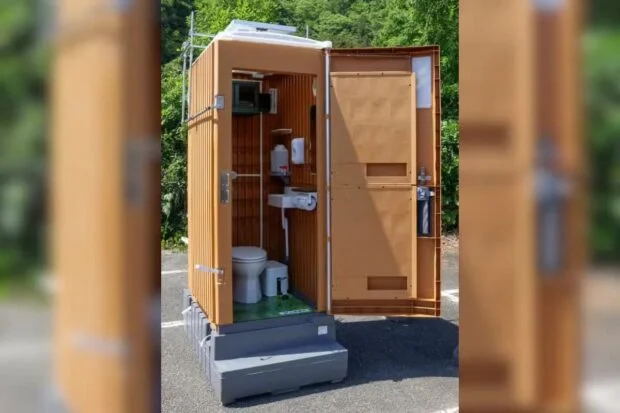
Japanese companies have rolled out measures to protect employees from the intense summer heat, including installing air-conditioned portable toilets at construction sites and shortening work hours.
Last year, the Japanese government required businesses to adopt measures to prevent heat-related illnesses as the country continues to experience increasingly severe summers. Companies that fail to comply face penalties.
Daito Trust Construction Co., a major rental house construction firm and real estate developer, had installed modular toilet units equipped with ventilation and mist cooling systems at two construction sites in Tokyo by mid-July.
READ: To strengthen tourism, Bohol eyes more Japan flights
“In consideration of the rising number of female field supervisors, we will make sure these toilets are clean and neat,” said a Daito Trust official.
With the company planning to spend around 150 million yen ($950,000) in the current fiscal year through March on measures to prevent heat-related illnesses, the units, installed with solar panels, feature antibacterial coatings.
Obayashi Corp., a major general contractor, is reducing working hours at construction sites to 7 a.m. to 1 p.m. in July and August from 8 a.m. to 5 p.m. “We decided that it is more important to reduce the risk of heat-related illnesses,” an official said.
The construction firm added it would increase working hours when temperatures are low and if the company is predicted to miss project deadlines.
Imabari Shipbuilding Co., meanwhile, is developing an inner garment that becomes cooler when a worker sweats, while food delivery service operator Demae-can Co. began distributing drink tickets to its delivery personnel in July.
In 2025, the number of people who died due to heatstroke or missed work for at least four days due to heat exhaustion totaled 1,803, the highest figure since data became available in 2005, according to the Ministry of Health, Labor and Welfare. By sector, manufacturing topped the list with 365 people, followed by construction at 292, the ministry said.
Disclaimer: The comments uploaded on this site do not necessarily represent or reflect the views of management and owner of Cebudailynews. We reserve the right to exclude comments that we deem to be inconsistent with our editorial standards.