University of the Arts Singapore marks first batch of graduates
AI generated
SINGAPORE – With the graduation of the pioneer cohort from Singapore’s first arts university on Aug 7, a new generation of multidisciplinary artists will enter the workforce.
A total of 135 students will graduate from the University of the Arts Singapore (UAS), formed by an alliance between Lasalle College of the Arts and the Nanyang Academy of Fine Arts (NAFA).
To beef up arts education in Singapore, UAS launched with 29 programmes, including degrees in areas such as art histories and curatorial practices, biophilic design and design for social futures, as well as Master of Arts degrees in arts and ecology, fine art and music therapy.
A UAS spokesperson says these programmes reflect evolving areas and wider societal interests, including in sustainability, health and well-being, and interdisciplinary arts.
The new programmes attracted strong interest. For example, the master’s in music therapy was oversubscribed well before its closing date.
Cassandra Chng, 31, studied music and audio technology when she was in polytechnic. She wanted to further her studies in music therapy but could not find such a course locally. She went on to do a degree in computer science but returned to her passion and found work as a pre-school music teacher.
She leapt at the opportunity to do a master’s degree in music therapy when UAS opened.
“Music is culturally unique. When I looked at overseas courses, I felt it would not work. If I want to practise in Singapore, I should be trained in Singapore,” says Chng. She is among the first batch of graduates from the two-year course, which includes clinical attachments.
Chng, whose graduation ceremony is in November, has found a full-time job as a music therapist at the Singapore Association for Mental Health.
“I believe that music is like an operational knife that can reach different parts of the brain where a surgical knife cannot reach,” she says of the healing power of music.
Chng’s experience is a testament to the university’s mission, says Kwok Kian Woon, vice-chancellor of UAS. He notes that an arts education goes beyond skills training and developing a pipeline of talent for the creative industries.
“It is about effecting personal and social transformation and inculcating our graduates with purpose and empathy,” the professor says.
He encourages graduates to “situate their practice within the context of their communities and to create with awareness and impact”. This is a mindset that sets them apart, he adds.
Artistic disciplines with real-world impact
The spirit of interdisciplinary inquiry is reflected in programmes that encourage students to connect artistic practice with areas such as sustainability or healthcare, while developing new ways of thinking and creating across disciplines.
For example, students who study biophilic design, or the integration of nature into the built environment, collaborated with partners, including the Urban Redevelopment Authority and National Cancer Centre Singapore (NCCS), to explore biophilic approaches to design.
A graduate from the course, Jolene Ariana, 22, was drawn to the field’s focus on the cognitive and psychological benefits of integrating nature into human spaces.
She did her final-year project with NCCS, with her team proposing a design for a patient waiting room and an adjacent garden.
Most of the waiting room chairs were initially facing the TV for patients to look at their queue numbers, but the group suggested turning the chairs to face the garden instead for therapeutic benefits. They also suggested moving the TV monitors towards the window, so patients could view both the TV display and garden, among other suggestions.
Her team was awarded the winning proposal by NCCS for best addressing the objectives, operational considerations and needs of various stakeholders.
Ariana says she gained confidence in presenting and justifying her designs through her course.
“Doing projects with clients gave me insights to how a real-life project would be like, for example, getting feedback and adjusting our proposal,” says Ariana.
Looking ahead
Since its launch, UAS has continued to expand its offerings.
In 2025, Lasalle introduced the Bachelor of Arts (Honours) music business programme, the first dedicated music business degree in Singapore.
NAFA also announced the BA of Music (Honours), jointly awarded by UAS and the Royal College of Music, London, with the first intake planned for August 2026.
The programme combines conservatoire training with Asian and intercultural musical practices.
UAS will also expand its postgraduate offerings, including NAFA’s Master of Performance and Lasalle’s Master of Arts in cultural analytics and artificial intelligence.
Here is a closer look at the journeys taken by two UAS graduates.
Turning a passion for Chinese theatre into a career
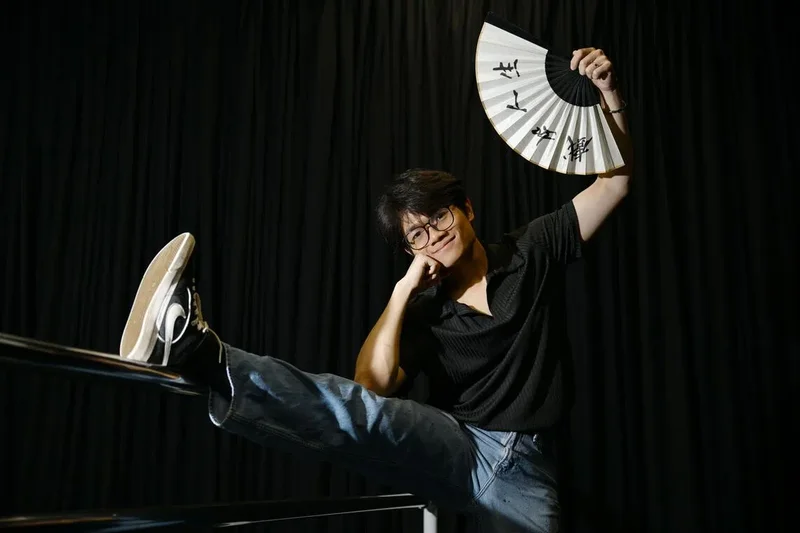
In Secondary 3, Zhuang Chuhang discovered a passion for Chinese theatre through the Chinese drama co-curricular activity at Hwa Chong Institution and wanted to pursue it rather than continue with his studies.
His parents, however, worried about the stability and financial viability of a career in the arts.
Eventually, they reached a compromise: He would complete his A-level exams before making any decisions about his future.
Although he was eligible to apply for a degree programme at a local university, he did not do so.
After his national service, he decided to do a diploma in theatre (Mandarin drama) at NAFA as he wanted to hone his craft.
“I was not ready to leave Singapore and there were not many options for learning about Chinese theatre locally then. I also wanted a stronger foundation because all I had was the drama club experience,” says Zhuang, now 28.
The older of two boys came from China to start Primary 1 when he was nine, joining his parents who were already working here. His 18-year-old brother is currently doing a diploma in chemical engineering.
When UAS announced a BA (Honours) in contemporary Chinese theatres, Zhuang, in his final year of his diploma course, saw it as the natural next step.
The course explores Chinese theatre within Singapore’s landscape, with students studying both traditional arts like taiji and Chinese opera, as well as skills like playwriting and directing.
“I wanted to understand the local theatre scene, what society wants and how Chinese theatre is evolving,” he says.
His diploma results – including multiple appearances on the dean’s list and a NAFA scholarship – culminated in him being awarded the National Arts Council-UAS Arts Scholarship for his degree.
This proved to be a turning point for his parents, a construction site manager and a coffee shop worker. Seeing their son honoured for his dedication helped shift their perspective on his career choice.
“When they attended the award ceremony, they finally realised I was doing well,” he says, recalling their supportive smiles.
Zhuang has been active in the local theatre scene. In May, he played the lead role in Toy Factory Productions’ Master White Dragon and has upcoming projects with the Singapore Hokkien Huay Kuan and Drama Box.
He has been offered a full-time position with a local theatre company and is in the midst of discussions with it.
Reflecting on his journey, Zhuang says that his degree provided more than just a specific set of skills.
“The biggest gain hasn’t just been knowledge; it’s a change in how I think. I used to see myself solely as a performer. Now, I see myself also as a creator and an artist. That shift has opened many more possibilities for my future,” he says.
From graphic designer to designing for social impact
After graduating with a media, arts and design diploma from Singapore Polytechnic in 2021, Tiew Fang Kee worked in graphic design and marketing for several years, but struggled to find fulfilment.
“I felt a disconnect between what I was doing and who I wanted to be,” says the 25-year-old, who did the design for social futures degree programme.
Drawn by the prospect of finding solutions for societal issues like environmental sustainability and the challenges of an ageing population, Tiew found the curriculum both exciting and demanding.
The interdisciplinary programme, which spans areas such as service design, speculative design and systems design, allowed students to collaborate closely with faculty and experts.
With a small class of 19 students with different design backgrounds, including product design, communications and interior design, Tiew says it also provided a chance for them to learn from one another.
The curriculum was further enriched by masterclasses. For instance, there was one by a medicine and design researcher who helped the students master complex data synthesis for their research projects.
For her final-year project, Tiew spent time with senior communities over nine months, joining them in exercise programmes and communal dining.
Her research highlighted the role of “connectors”, individuals who bridge social gaps and foster community longevity.
“I wanted to map out and surface these bonds as they are truly what sustain a community, far more than the programmes themselves,” she says.
As she prepares to graduate, Tiew aims to enter the social or environmental sector. She says the programme has broadened her skills and given her a foundation to navigate Singapore’s care landscape.
“It definitely made a difference in my ability to design for a non-design sector,” she says.