“Fortune became their opium. It intoxicated them. They surrendered unreservedly to the delirium of their fantasies.”
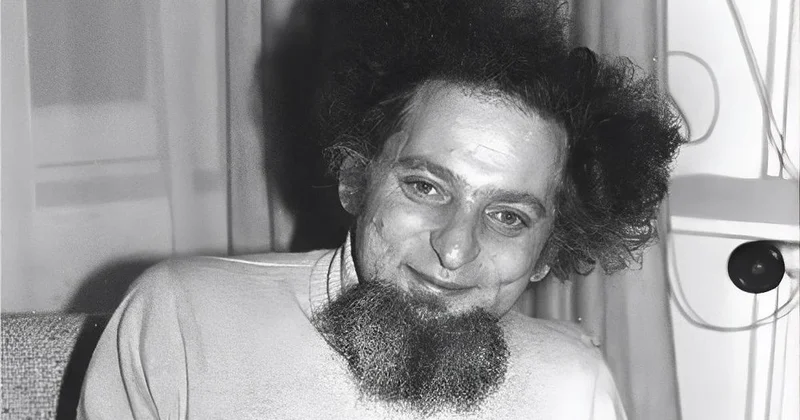
Two of Georges Perec’s French novellas have been brought together in Things: A Story of the Sixties with A Man Asleep – translations into English of Les Choses (1965) and Un homme qui dort (1967). They have been translated by David Bellos and Andrew Leak, respectively. Things was a runaway hit in French, making it to readers’ bookshelves as well as becoming prescribed reading at universities. The precise moment that it sought to capture – the 1960s – was especially recognised by the youth who were disproportionately affected by aggressive advertising of consumer luxuries. In comparison, A Man Asleep is a less popular work, which seems to capture the post-advertisement moment, where the accumulation of things no longer brings the joy that it once did. Interestingly, the characters in both novellas are in their early 20s.
Becoming consumers
In Things, considered a semi-autobiographical novella, we meet Jérôme and Sylvie, a 22-year-old couple living in Paris. They have dropped out of college and do door-to-door market research, a new field which will help advertisers and brands get as many customers as they possibly can. The questionnaires are simple but it is a physically demanding job. The couple knows that this is a stepping stone to a career, and not a career in itself. They are paid enough for small luxuries, and the work is certainly fancier than volunteering at charities and poorly paid teaching gigs.
They are too young to “settle down” or save up for the future – at 22, real life is still far away. So they immediately transition into consumers, buying furniture, cosmetics, clothes, knick-knacks. Almost everything they buy serves the immediate purpose of keeping up with the trends. They’re singularly focused on acquiring England-made clothes, convinced that nothing that is produced anywhere else can match their superior quality. Jérôme and Sylvie have some inkling about the fabrication of advertising, yet they are not immune to its hypnotic charm. Real life becomes a quest for having, eyes always set on the next best thing. Money is not an asset but something that can be quickly exchanged. It “consumes” the couple “entirely.”
Perhaps it is the freedom from any serious obligations that allows Jérôme and Sylvie to try to wrest themselves free from the clutches of things. In the second part of the novella, they try to “run away.” A teaching job in Tunisia seems like the perfect break. The revolution in the neighbouring Algeria was still hot. Jérôme decides not to work and Sylvie’s income is enough for a simple life. But it is not a life of permanence – they are outsiders, the predictable small-town living becomes boring and the glittering Parisian life is alluring once more.
Perec’s semi-autobiographical novel is an anomaly for the genre. There is no emotional manipulation of the couple – their greed and desires merely a clinical diagnosis of the time. We are told nothing of how survey groups react to their research or what their consumer habits are like. The focus is entirely on the young couple who are almost helpless against the excesses around them. They can possess with a little money, and that is the ultimate intoxication of the market. From the beggar to the baronet, everyone is told that they can be owners. The short stop in Tunisia serves a selfish purpose, the couple entirely unmoved by a different way of life or the turning tides of history.
The novella ironically ends with a quote from Marx: “…the quest for truth must itself be true.” Jérôme and Sylvie are not honest in their intention of wanting out; they simply needed a break.
Things gets more urgent with every passing day. Consumerism is at an all-time high, money is harder to keep than ever, and we can numb ourselves to any conflict as long as the next purchase is guaranteed. Yet, none of us wants out. Detox vacations and slow-living retreats are easier philosophical commitments than a staunch rejection of hyperconsumerism. And unlike Jérôme and Sylvie, we don’t have to roam the Champs-Élysées looking longingly into shops – window shopping is now a 24x7, remote activity.
Interestingly, Things was ‘remade’ in a more contemporary setting by the Italian writer Vincenzo Latronico, who set his version in 21st century Berlin and named it Le perfezioni. Translated into English by Sophie Hughes as Perfection, it was shortlisted for the 2025 International Booker Prize.
Inertia in life
The second novella, A Man Asleep, addresses the reader in an unsparing second-person narrative. The “you” is a 25-year-old student, living in Paris, who is suddenly overcome by inertia in life. He decides to withdraw, caring nought about the future. The rebellion starts with sleeping through an exam. This is followed by cutting off his friends and going to the country to live with his parents. However, he cannot stay away for long from Paris, “the centre of the world.”
Life here is uninspiring too. He wanders the city aimlessly, eats to survive, and the only luxury he allows himself is reading Le Monde from cover to cover. But words in the newspaper seem devoid of any real meaning. The young man hopes to carve out a singular life, free of any needless attachments, but that is no longer possible, especially if one is a young, city-dwelling, able-bodied creature. There is an incessant need to be productive. One can play a hermit for only so long.
Taken together, the novellas attempt to make sense of the relentless consumerism and youthful philosophical anxieties, which must have felt especially overwhelming in the 1960s when advertising was a new beast. The author is in no better position than the reader – still coming to terms with this condition of modern life, which he, too, is witnessing so up close that all of it is distorted and grotesque.
Things: A Story of the Sixties with A Man Asleep, Georges Perec, translated from the French by David Bellos and Andrew Leak, Penguin Vintage.
We welcome your comments at letters@scroll.in.