Brazil · Politics
Key Facts
—States secured. Lula has pre-candidacy alliances in 25 states plus the Federal District, versus 14–15 for Flávio Bolsonaro.
—Key partners. The coalition relies on center and center-left parties, mainly PSD, MDB, and PSB.
—Lone gap. Minas Gerais is the only state where Lula still lacks a defined gubernatorial ally.
—Flávio's struggle. Flávio Bolsonaro faces unresolved alliances in six states, including Goiás and Pernambuco.
—Campaign start. Official campaign advertising begins on August 16, with the first-round vote on October 4.
President Luiz Inácio Lula da Silva’s Lula 2026 alliances have locked down pre-candidacy support across 25 states and the Federal District, giving the leftist leader a wide organizational advantage over his main rival.
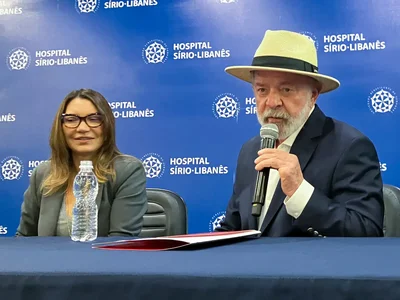
Brazil’s president leads a broad coalition of political parties supporting his administration.
One-stop reference
Company Intelligence
Every listed company in Latin America — financials, ownership and structure for 1,450+ companies across 26 exchanges, in one place.
RTAsk Rio TimesWhat this means, and what's next›
How Lula 2026 Alliances Reshape the Electoral Map
Brazilian President Lula has secured regional coalitions with heavyweight center parties like the PSD, MDB, and PSB. This broad front covers every region except for one holdout, Minas Gerais, where negotiations continue.
Meanwhile, right-wing challenger Flávio Bolsonaro of the Liberal Party (PL) has defined alliances in only 14 to 15 states. He remains deadlocked in the Northeast and lacks consensus in key battlegrounds like Goiás and Espírito Santo.
A Coalition Built on Center-Party Muscle
Lula’s strategy relies on sharing campaign platforms, called “palanques,” with powerful regional allies rather than running only Workers’ Party (PT) candidates. For example, in Pernambuco, he backs popular Recife Mayor João Campos of the Brazilian Socialist Party (PSB).
In Amazonas, the alliance supports Senator Omar Aziz of the Social Democratic Party (PSD). In Pará, it is Hana Ghassan of the Brazilian Democratic Movement (MDB).
This approach helps Lula tap into local political machines.
Flávio Bolsonaro's Narrower Path
Flávio Bolsonaro’s PL is betting more on its own party candidates, expecting to launch at least 11 gubernatorial bids. However, his coalition is limited to the PP, Republicans, and Podemos in just a handful of states.
As a result, his national reach is weaker. He faces impasses in six states, including Alagoas and Maranhão, which blocks his expansion in a region where his father, former President Jair Bolsonaro, previously showed strength.
What the Numbers Mean for October
Securing 25 state platforms gives Lula control over local resources and guaranteed media time when official campaigning starts on August 16. The first-round vote is set for October 4.
Because party conventions run from July 20 to August 5, the alliance map is nearly final. The only unresolved piece is Minas Gerais, where both camps await a decision between potential allies Marília and Cleitinho Azevedo.
Background: Why State Alliances Matter in Brazil
In Brazil’s sprawling federal system, gubernatorial candidates act as powerful local campaign managers for presidential hopefuls. They mobilize voters, organize rallies, and share precious television and radio advertising time during the official campaign period.
For foreign investors and expats, this patchwork of state-level deals is often more telling than national polls. A presidential candidate who lacks a local ally in a key state can be virtually invisible to voters there, no matter how strong their national message.
The Political Backdrop to Lula's Coalition Push
Lula’s alliance-building did not happen overnight. It reflects lessons learned from the bruising 2022 race, when he narrowly defeated Jair Bolsonaro in a runoff that exposed deep regional divides.
Back then, the PT struggled to find allies in several agricultural heartland states, forcing Lula to campaign with a thinner ground game than he wanted. This time, his team started negotiating much earlier, offering cabinet positions and federal budget commitments to centrist governors in exchange for their public backing.
The result is a coalition that looks more like the broad centrist fronts that dominated Brazilian politics in the early 2000s than a traditional leftist ticket.
What It Means for Expats and Investors
A Lula victory built on such a wide centrist coalition likely signals policy continuity rather than sharp leftward swings. The heavy reliance on PSD and MDB governors suggests a pragmatic governing style that markets generally find reassuring.
For expatriates living in Brazil, the alliance map also hints at local stability. States with defined, broad-based coalitions tend to experience smoother transitions and less political noise, which can affect everything from public services to local business climates.
How the Electoral Calendar Unfolds from Here
With party conventions wrapping up by August 5, the campaign enters a critical phase where television and radio slots become the most valuable currency in Brazilian politics. Lula’s 25-state network guarantees him a dominant share of this free airtime, dwarfing what Flávio Bolsonaro can muster with his narrower alliance map.
For ordinary Brazilians, this means the president’s face and message will be far more present in daily life between August 16 and the October 4 vote. In a country where television still shapes voter decisions, especially among lower-income households, that visibility gap could prove decisive long before any ballots are cast.
Frequently Asked Questions
Which parties are part of Lula's 2026 coalition?
The main allies are the PSD, MDB, and PSB, along with the PP, PDT, União Brasil, and Republicans in specific states. This broad front spans the center and center-left, giving Lula a reach far beyond his own Workers' Party.
How many states does Flávio Bolsonaro have alliances in?
As of July 2026, Flávio Bolsonaro has defined pre-candidacy alliances in only 14 to 15 states, far behind Lula's 25. His Liberal Party has struggled to build bridges with centrist governors, especially in the Northeast.
When is Brazil's 2026 presidential election?
The first round of the general and gubernatorial elections is scheduled for October 4, 2026, with official campaign ads starting August 16. Party conventions to formally nominate candidates take place from July 20 to August 5.